Qualcomm lost over a tenth of its value in a single session without issuing a single press release. The tremor came from across the street.
Intel slashed its quarterly forecast and warned of persistent personal computer declines, pinning the blame on acute memory shortages. When artificial intelligence server farms suck the global supply of memory dry, the shockwaves travel directly to the smartphone in your pocket. Qualcomm, which sells the silicon brain behind millions of mobile devices, found itself caught in that collateral damage.
The company's core engine is straightforward. Qualcomm designs the Snapdragon chipsets running many flagship Android handsets, bundling processors, graphics, and wireless modems onto single pieces of silicon.
At the same time, it operates an intellectual property tollbooth, collecting royalty checks on nearly every 4G and 5G device sold worldwide—even those powered by competitors. Think of Qualcomm as the architect who designs the master suite while charging the entire subdivision an annual maintenance fee just to unlock the front door. Selling physical chips provides the revenue scale; licensing provides the high-margin annuity.
| Price | $164.79 LIVE |
| Market Cap | $176.0B |
| Forward P/E | 16.2x |
| Total Revenue (TTM) | $44.07B |
| 52-Week Low | $121.99 |
| 52-Week High | $259.92 |
| Analyst Consensus | Hold (30 analysts) |
| Analyst Target Mean | $196.30 |
That lucrative dynamic now faces an aggressive bottleneck. Hyperscalers are pouring billions into cloud infrastructure, driving up demand for high-bandwidth memory chips and starving consumer hardware lines of raw silicon.
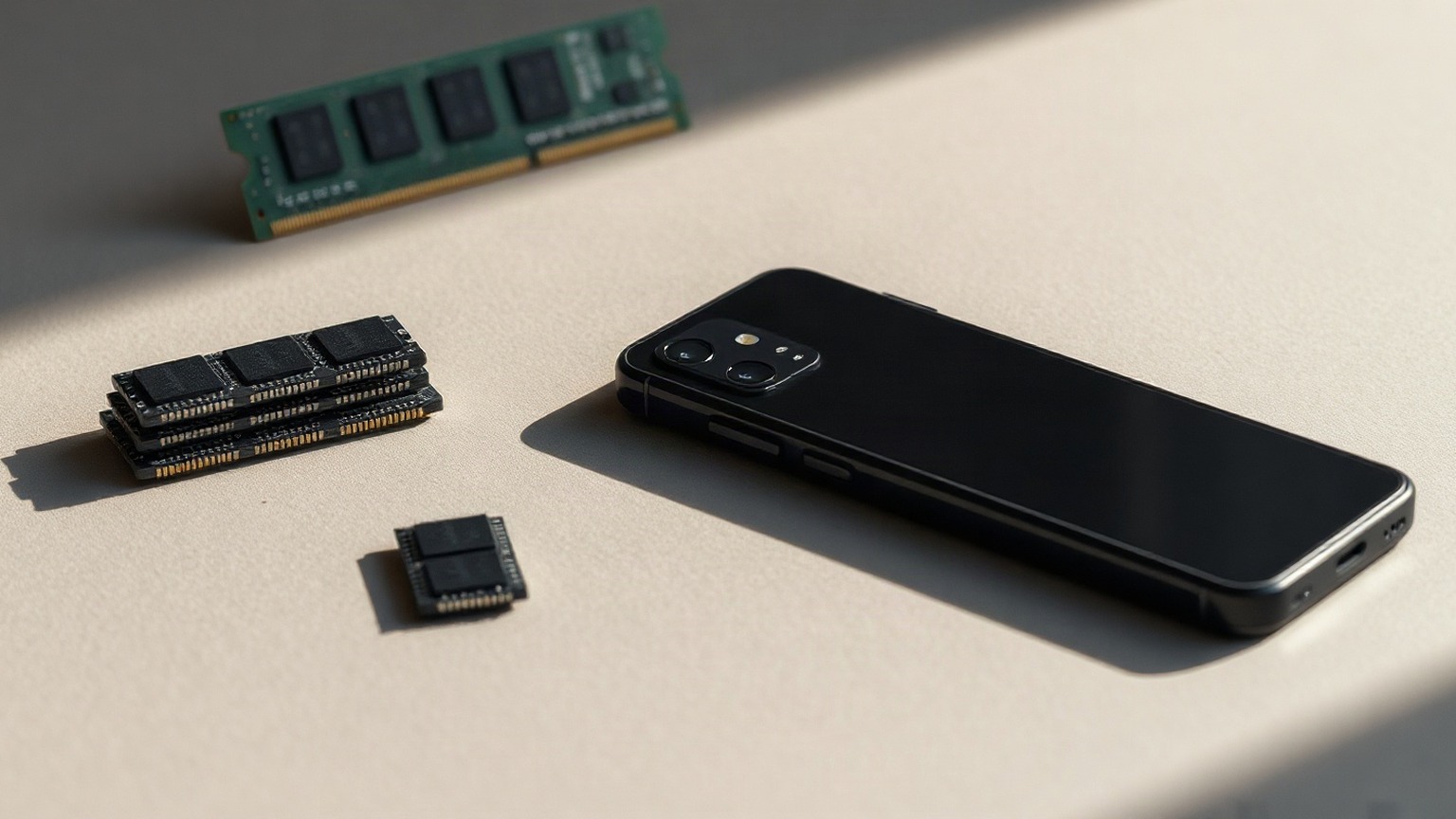
In response, memory foundries are raising prices across the board. Conventional DRAM contract prices jumped 10% to 15% heading into the fourth quarter, while NAND flash prices climbed up to 20%. The AI buildout is effectively outbidding consumer gadgets for basic parts, driving component inflation straight onto the factory floor.
Those price hikes hit mobile hardware where it hurts most. Memory components now make up roughly 43% of the bill of materials for budget handsets, while eating up more than 40% of the parts cost on flagship devices.
Handset makers have to choose between eating the margin hit or raising retail prices past what consumers will pay on a routine carrier upgrade. The fallout is already evident: industry tracker IDC expects full-year smartphone shipments to fall 16.7% to just over one billion units, marking the steepest contraction on record.
That makes Qualcomm's upcoming fiscal fourth-quarter report a high-stakes audit. In July, management asserted that Chinese handset revenue had bottomed out in the third fiscal quarter and would rebound with double-digit sequential growth.
That was an ambitious claim then; in the face of rising memory bills, it looks precarious. Consensus estimates project quarterly revenue around $10.14 billion and earnings per share of $2.17. That represents a 10% revenue drop and a 28% profit decline compared to the same period last year.
The bull narrative relies heavily on Qualcomm's attempts to outgrow its mobile roots. Its automotive segment posted a record $1.6 billion in sales last quarter, expanding 61% year over year as automakers plug in its digital cockpit platforms.
Qualcomm also inked a custom silicon deal with Amazon that could translate to $60 billion in data-center hardware orders over time. But these enterprise ventures remain tomorrow's business. In the present, mobile chips still pay the bills, and the bills are getting tighter.
The bear case is that Qualcomm remains an Android hostage trying to pitch itself as a diversified enterprise play.
Handsets accounted for over half of total company sales and roughly 60% of the semiconductor division last quarter.
Calling a bottom in an ecosystem where shipments are dropping double digits is merely gaining share in an emptying swimming pool.
Compounding the issue, Apple is actively weaning itself off Qualcomm modems, with Apple-related revenue expected to drop by half sequentially in the December quarter. With rival MediaTek pricing its latest flagship chip nearly 28% below Qualcomm's equivalent, a disappointing December forecast would prove the mobile bottom was an illusion.
For the stock to break out from its mid-teens forward multiple, Qualcomm must prove its core market has stabilized before the next growth wave arrives. The market refuses to reward speculative data-center projections until management can deliver a December forecast that matches consensus while absorbing the Apple step-down.
Investors need to see Android revenue expand sequentially despite mounting memory costs. The equity will not re-rate on the promise of the AI cloud; it re-rates when the company proves the handset cycle has stopped dragging it down.
We are watching whether Qualcomm can reaffirm sequential Android revenue growth for the December quarter without trimming its gross margin targets. If device makers cannot afford the memory to build the phone, they have no reason to buy the chip that runs it.
Disclosure: The Signal holds no position in QCOM. Positions may change. This is not financial advice.