You can beat quarterly forecasts, raise your full-year targets for the third straight time, and buy one of the world's premier grid suppliers, yet still watch your stock dump into the red by lunchtime. That was GE Vernova's morning on Oct. 28. The power-equipment heavyweight delivered blowout numbers, doubled its share repurchase plan to $20 billion, and unveiled a $9.0 billion buyout of Trench Group, only to see investors cash out at the opening bell.
GE Vernova makes the heavy industrial machinery that generates, moves, and manages electricity across the planet. Spun out of General Electric in early 2024, the company builds everything from massive natural gas turbines to the high-voltage transmission equipment that carries power over long distances. Think of electricity like municipal water: tech companies can install all the high-end faucets they want, but GE Vernova builds the high-pressure aqueducts that actually feed the reservoir.
| Price | $895.08 LIVE |
| Market Cap | $238.4B |
| Forward P/E | 35.5x |
| Total Revenue (TTM) | $44.04B |
| 52-Week Low | $530.16 |
| 52-Week High | $1,195.94 |
| Analyst Consensus | Buy (33 analysts) |
| Analyst Target Mean | $1,223.97 |
That plumbing job makes the company indispensable to the artificial intelligence buildout. Like unboxing a flagship smartphone without a charger in the box, an advanced computing cluster is useless without a dedicated power feed. Silicon Valley hyperscalers are ordering racks of chips faster than regional utilities can physically wire them up.
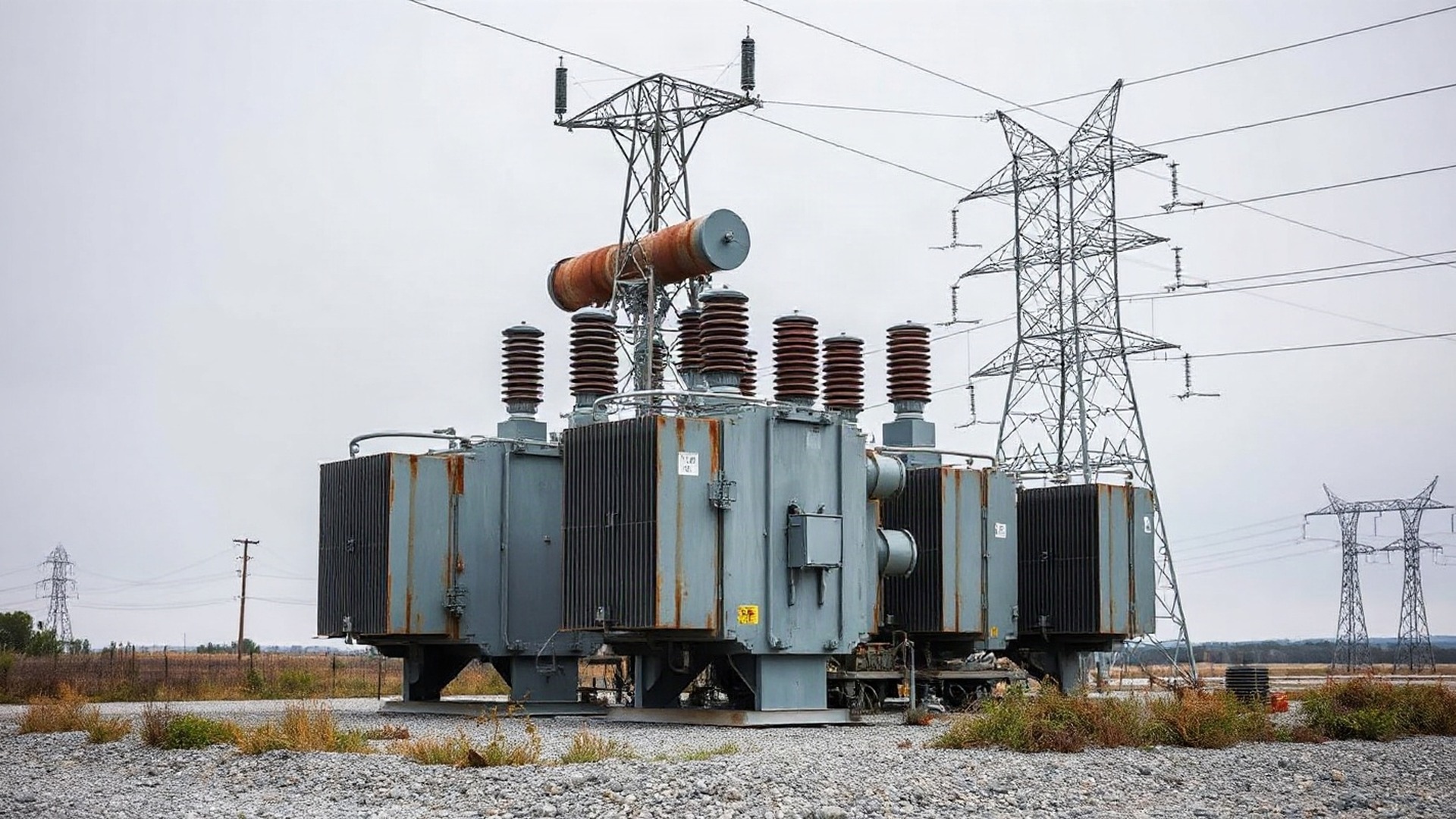
Connecting a gigawatt-scale data center requires high-voltage transformers and specialized switchgear, where factory wait times stretch up to five years. If you cannot secure those components, your server farm sits idle in the dark.
That is where Trench Group fits into the puzzle. Trench builds three narrow, ultra-critical product lines: high-voltage bushings, instrument transformers, and industrial coils. Its components route power through high-voltage transmission lines for more than 800 utilities and tech giants worldwide.
Instead of waiting in line as a regular customer, GE Vernova is spending $9.0 billion in cash and debt to bring one of its key suppliers completely in-house.
On paper, the operational machine is running hot. Third-quarter orders surged 96% organically, pushing total company backlog to a record $197 billion and on track to cross the $200 billion mark before year-end. Trench itself is on pace to generate roughly $1.4 billion in sales this year with thick 33% adjusted EBITDA margins, stepping up toward 36% by 2028.
Management felt confident enough in the cash engine to raise full-year free cash flow guidance to as much as $17 billion.
So why did traders hit the sell button? The debate on GE Vernova is no longer about whether grid gear is in short supply, but what multiple investors should pay once the company owns the bottleneck. GE Vernova already trades at a rich valuation of roughly 35 times this year's adjusted EBITDA.
Trench commands a headline valuation of 13 times 2028 adjusted EBITDA, but that multiple is based on 2028 projections for a transaction that will not close until late 2027. Investors are paying upfront for an option on future power lines rather than banking real near-term earnings.
The short case argues that buying at the top of an industrial cycle rarely ends well. Paying $9.0 billion equates to roughly 18 times Trench's 2026 adjusted EBITDA and 6.4 times sales. Cost synergies of under $100 million offer virtually no margin for error if demand cools.
Servicing the new buyout debt will siphon off roughly $0.2 billion a year in interest, eating roughly half of Trench's expected cash generation. Meanwhile, GE Vernova is still digesting its Prolec GE integration, and rivals Hitachi Energy and Siemens Energy are pouring billions into rival factory capacity. If that wave of new supply crushes high-voltage equipment pricing by 2028, GE Vernova will have bought the peak of the grid supercycle.
What we are watching next is whether grid equipment orders can rebound after dipping 9% organically this quarter, alongside management's ability to cross the $200 billion backlog milestone before the year ends. Buying the grid bottleneck secures the supply chain, but Wall Street hates waiting three years for the bill to pay off.
Disclosure: The Signal holds no position in GEV. Positions may change. This is not financial advice.