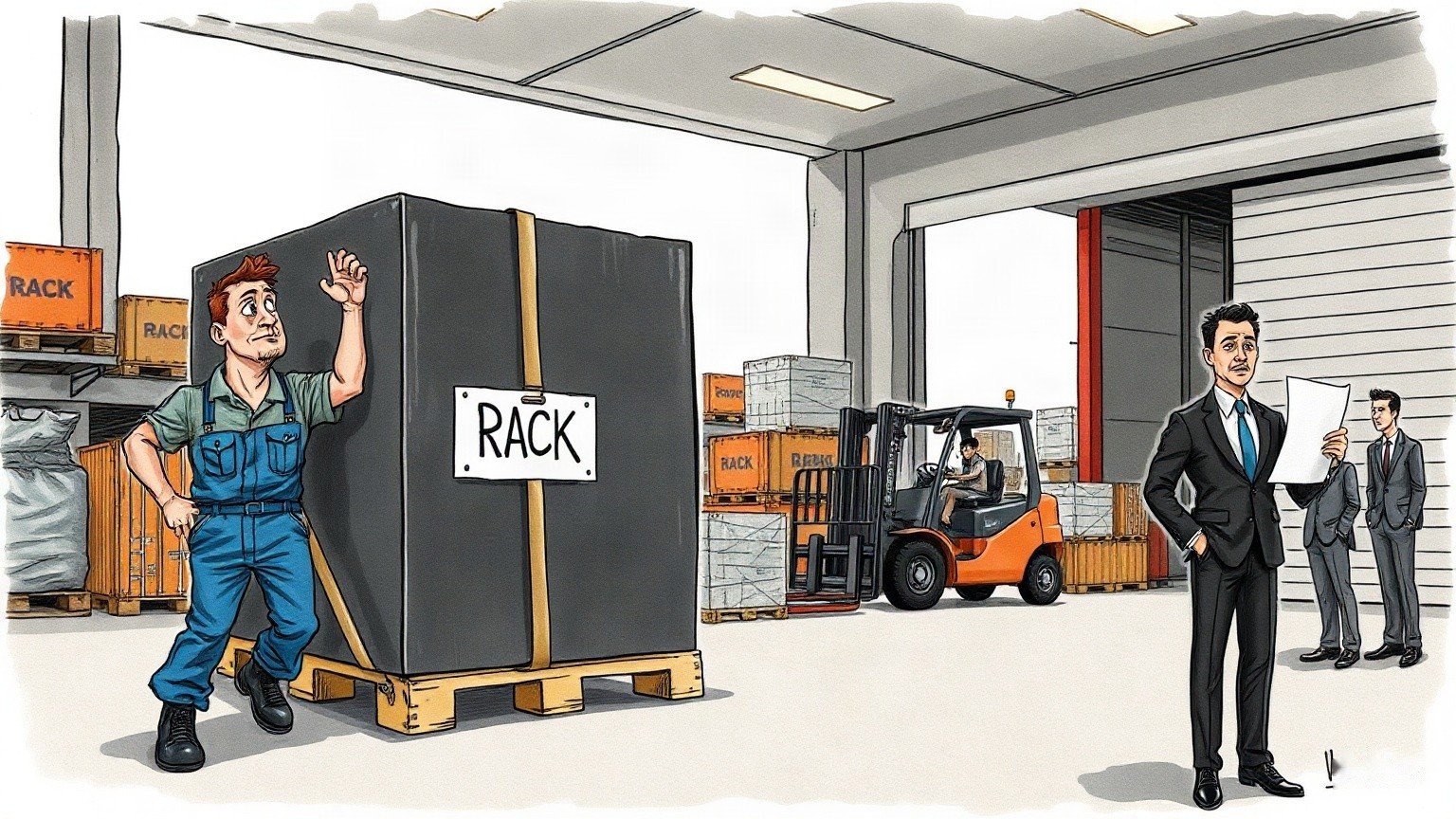
A Chinese firm walked into a Shanghai bank, requested a 96 million yuan loan, and offered collateral. It was not real estate or corporate equity. It was a single, two-metre-tall black metal cabinet weighing over 1,500 kilograms—roughly the size of an industrial refrigerator. Packed inside was Nvidia's crown jewel: a GB300 NVL72 rack holding 72 Blackwell Ultra processors and 36 Grace chips.
Nvidia designs the ultra-fast graphics processing units and integrated server racks that train and run artificial intelligence models. Think of modern AI as an electric vehicle: while others build the software dashboard, Nvidia manufactures the proprietary battery pack and motor. It sells these multi-million-dollar computing clusters to hyperscalers, neoclouds, and sovereign governments worldwide.
| Price | $149.30 LIVE |
| Market Cap | $3.6T |
| Forward P/E | 9.0x |
| Total Revenue (TTM) | $361.8B |
| 52-Week Low | $124.50 |
| 52-Week High | $243.37 |
| Analyst Consensus | Buy |
| Analyst Target Mean | $242.43 |
That hardware now sits at the Yangtze River Delta Project in Shanghai, a facility local media reports could house 800,000 servers. Bloomberg unraveled the mystery the way you trace a stolen phone: it plugged the rack's registered serial number into a public warranty database. The record led straight to Taiwan's Gigabyte, which packages Nvidia silicon into finished systems. Gigabyte stated that it complies with all laws and declined to identify the initial buyer.
Two other firms linked to the Shanghai site pledged advanced hardware for bank loans, including a Blackwell GB200 server, thirty-two disclosed H200 systems, and Super Micro and Dell racks. Megaspeed, a Singapore neocloud tied to the facility, denied wrongdoing, while Bloomberg found no evidence Megaspeed shipped the hardware. Nvidia did not respond to questions.
Jensen Huang previously argued these multi-ton systems were too massive to smuggle across borders. That defense just collapsed. Moving restricted hardware does not require trench coats; it happens through overseas intermediaries, and paperwork outlives the transaction. Every server rack carries a digital identity that survives resale. When borrowers pledged them for cash, Chinese bank filings converted serial numbers into forensic evidence. The chip was never the leak; the paperwork is.
Washington is shutting down that channel. An interim final rule announced November 16 requires export licenses for advanced AI chips shipped to Indonesia, Malaysia, Singapore, Thailand, and Brazil. It also enforces a global cap barring data centers from delivering more than 12 million aggregate units of total processing performance to companies headquartered in China and other restricted destinations. Days later, the Commerce Department placed seven firms on its Entity List, including Megaspeed and an Alibaba unit, under a presumption of denial.
Headlines about Shanghai hardware sound like a top-line crisis, but direct China revenue is already gone. China and Hong Kong generated just 8.2% of company revenue in the second quarter, with Hopper data-center shipments to China at less than 1% of data-center revenue. Nvidia openly considers itself effectively foreclosed from the market and guides China compute to zero. Last quarter, Nvidia generated $115.8 billion in revenue, with Data Center driving $107.6 billion. The core business is intact.
What actually moves the stock is what happens to the channel. Nvidia guided fourth-quarter revenue to $130.0 billion, but gross margin steps down from 74.8% to 71–72%—a 300-basis-point drop. The equity trades around nine times forward earnings because markets assume margin contraction is just a temporary byproduct of the Blackwell Ultra ramp. But that valuation relies on Southeast Asian neoclouds buying equipment at premium pricing. If Washington's licensing regime chokes off those regional buyers, Nvidia's $16.61 forward consensus earnings per share quickly unravels. The margin line, not the Shanghai headline, will re-rate this stock.
A short seller looks at this setup and sees a classic cyclical peak. Bulls argue that China is already zeroed out in guidance, but Nvidia's $130 billion quarterly outlook relies on intermediaries Washington is actively blacklisting. Watching gross margins compress by 300 basis points while revenue surges 103% is what an inflection point looks like from the inside. There is no shock absorber when Data Center represents 93% of revenue.
Add in boardroom drama—Jensen Huang resigned November 12 and returned November 23 after the board said it received input from senior levels of the U.S. government—and investors face severe governance risk. If Nvidia guides April revenue above $130 billion with gross margins rebounding past 73%, the bears are wrong. If January guidance stalls while margins erode, the bears are right.
Tracing hardware to a Shanghai bank vault proves that unit-level tracking is here to stay. Regulatory scrutiny has shifted from border customs to procurement forensics. The key test sits squarely in Nvidia's January guidance and gross margin trajectory, which will reveal whether export restrictions are finally eating into the order book.
Disclosure: The Signal holds no position in NVDA. Positions may change. This is not financial advice.