The AI buildout just hit full steam — and the company selling the shovels says demand is accelerating, not peaking. That's the real headline out of Nvidia's latest quarter, and it matters more than any single revenue number.
Quick refresher in case you're new here: Nvidia builds the chips that train and run today's AI models. Its GPUs are the engines inside nearly every frontier AI lab, every big cloud and every serious startup trying to build something intelligent. If an AI is thinking, there's a very good chance an Nvidia chip is doing the thinking.
That makes Nvidia the AI buildout's toll collector and its bottleneck at the same time. Anyone can announce an AI strategy; almost everyone has to buy a GPU to execute it. And they buy Nvidia's not just for the silicon but for CUDA, the software stack that makes the hardware usable — the moat that keeps customers locked in even as rivals sharpen their knives.
The numbers, quickly, because they prove the point: revenue hit $96.2B in the quarter ended July 26, up 106% from a year ago and 18% sequentially. Data center — the money engine — brought in $89.0B, 92.5% of everything, up 117% year over year. Gross margins held at 75% on both a GAAP and non-GAAP basis, and non-GAAP earnings per share climbed 120%. That's not a company coasting; it's one being pulled forward by its own market.
Huang's framing was characteristically blunt: "AI has reached its inflection point. It's doing useful work. Its tokens are productive and profitable. Now, compute is revenue." Read that twice — compute is revenue. Every token a model generates is a transaction, and Nvidia collects on the hardware behind all of them.
Then there's the demand math, straight from Huang: "demand is accelerating. This time last year, one lab alone was driving the buildout; today, we have a golden age of new AI labs and startups, multiple frontier labs scaling in parallel, a thriving open-model ecosystem and physical AI coming online... The AI infrastructure buildout is at full steam. Vera Rubin, now in full production, was built to power exactly this moment."
That last line is the product story. Vera Rubin — the platform that succeeds Blackwell — is now in full production, built for a moment when demand comes from everywhere at once. Guidance backs it up: the current quarter is guided to $108.0B in revenue, plus or minus 2% — another record at the midpoint.
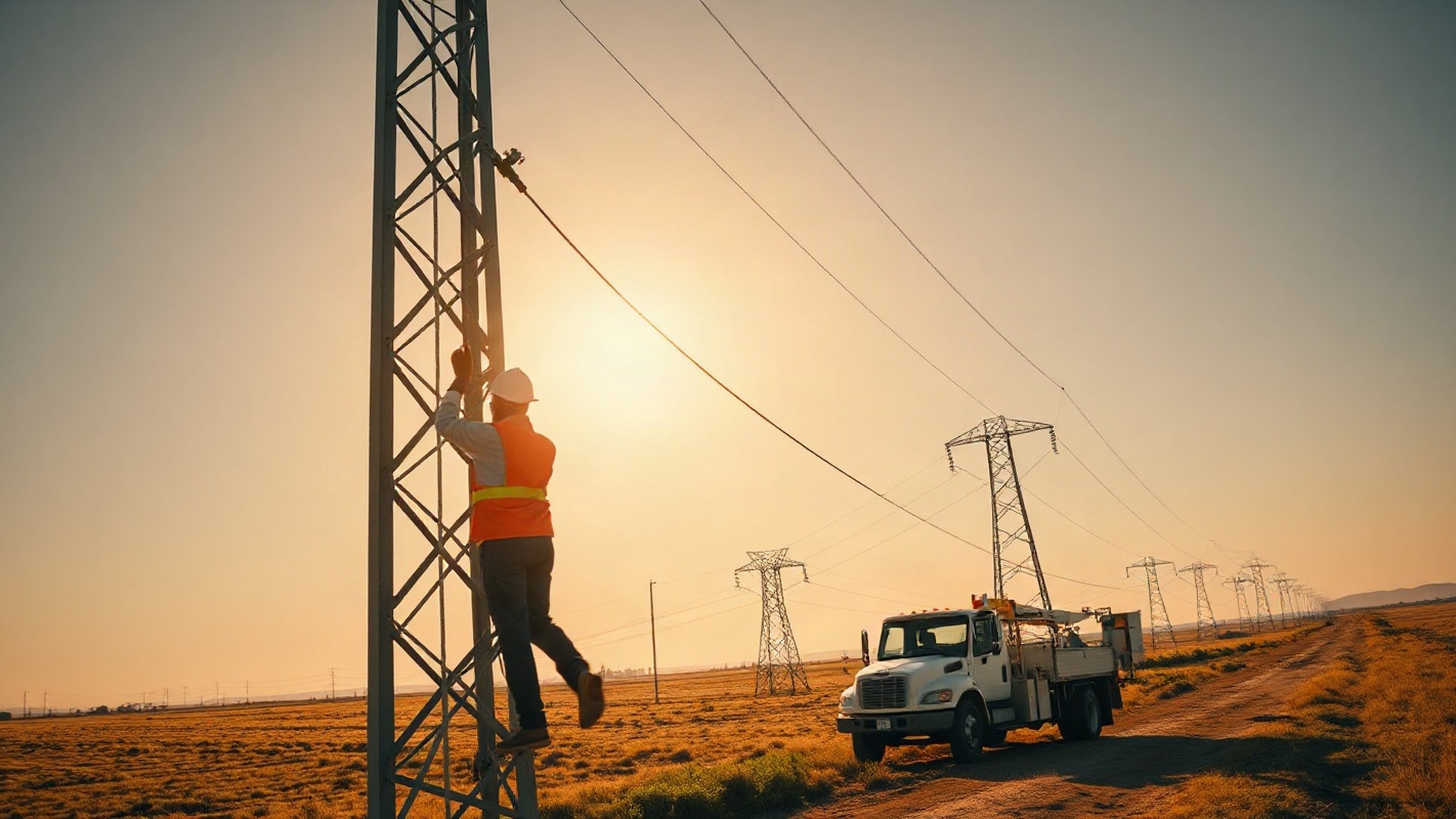
Here's the angle nobody's leading with: the bottleneck in AI is no longer chips — it's power. Nvidia has been quietly securing land, power and shell capacity, including deals tied to SB Energy and Ohio's PORTS-Pike Technology Campus, so it can host its own compute. When the chipmaker itself starts hoarding electricity, you know the constraint is real.
Then there's sovereign AI — countries building their own national infrastructure. South Korea is standing up gigawatt-scale compute with SK Telecom, NAVER and Brookfield; Japan is building its first national AI infrastructure. Nvidia is also running a program to bring up to $500 billion of third-party capital into AI infrastructure. Money it doesn't even need to spend itself.
And in a sign it wants to own more of the stack, multiple outlets reported Wednesday that Nvidia has agreed to acquire Hugging Face, the open-model hub, for around $12.9 billion — a deal the company hasn't confirmed.
None of this means the competition went quiet. AMD's MI400 is real, and hyperscalers keep designing their own silicon, with Google, Amazon and Marvell nibbling at the edges. But those nibbles are happening while the pie doubles. That's the difference between a moat under attack and a rising tide.
Shareholders got paid too: about $26.0B returned in the quarter, roughly $99.0B still authorized for buybacks, and the quarterly dividend now sits at a quarter a share.
Wall Street's reaction was as loud as the print: shares jumped about 7% in early trading Thursday, and the stock sits within striking distance of its highs, with the Street's average target implying roughly 45% upside.
So file this quarter where it belongs: not as a peak, but as proof the buildout just went full steam. The bears keep waiting for the AI capex cycle to roll over. Nvidia's order book — and its power bills — say it hasn't even peaked.
Disclosure: The Signal holds no position in NVDA. Positions may change. This is not financial advice.