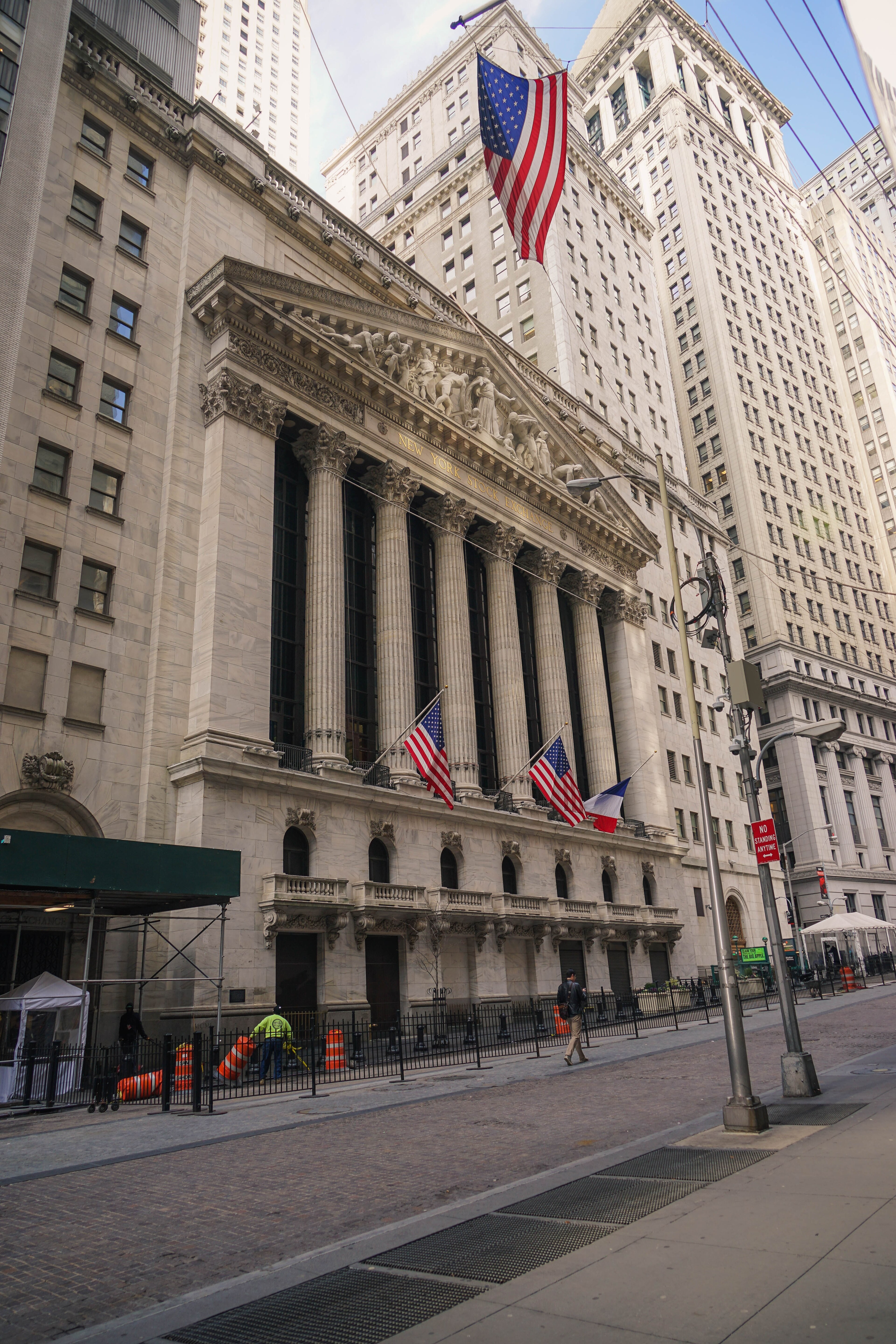
On Friday, May 29, the Dow Jones Industrial Average did something it has never done before: closed above 51,000. The final print — 51,032.46 — capped a week that saw the blue-chip index climb from 50,580 just seven days earlier, extending a rally that has left even the most bullish strategists scrambling to update their year-end targets.
But the headline number only tells part of the story. The S&P 500 closed at 7,580.06 — another all-time high, up from 7,473 the prior Friday — and in doing so stretched its weekly winning streak to nine consecutive weeks. That's the longest such run since February 2018, and it comes during a period when the old Wall Street adage says investors should be heading for the exits.
'Sell in May and go away' has been completely wrong this year. This is shaping up as one of the best Mays in market history.
The Nasdaq closed at 26,972.62, also a record high, and has posted its best two-month stretch in roughly 24 years. From the March 23 low of 6,369 on the S&P 500 to Friday's close of 7,580, the benchmark index has surged 19.0% — just shy of a bear-market-to-bull-market technical transition by some definitions, but well past it by any practical measure.
The Numbers Behind the Rally
The raw statistics are staggering. Roughly $11 trillion in market capitalization has been added to U.S. equities since the March lows. That's more than the entire market cap of every European stock exchange combined. The rally has been broad enough to sustain itself week after week, but concentrated enough that a handful of mega-cap names continue to do the heavy lifting.
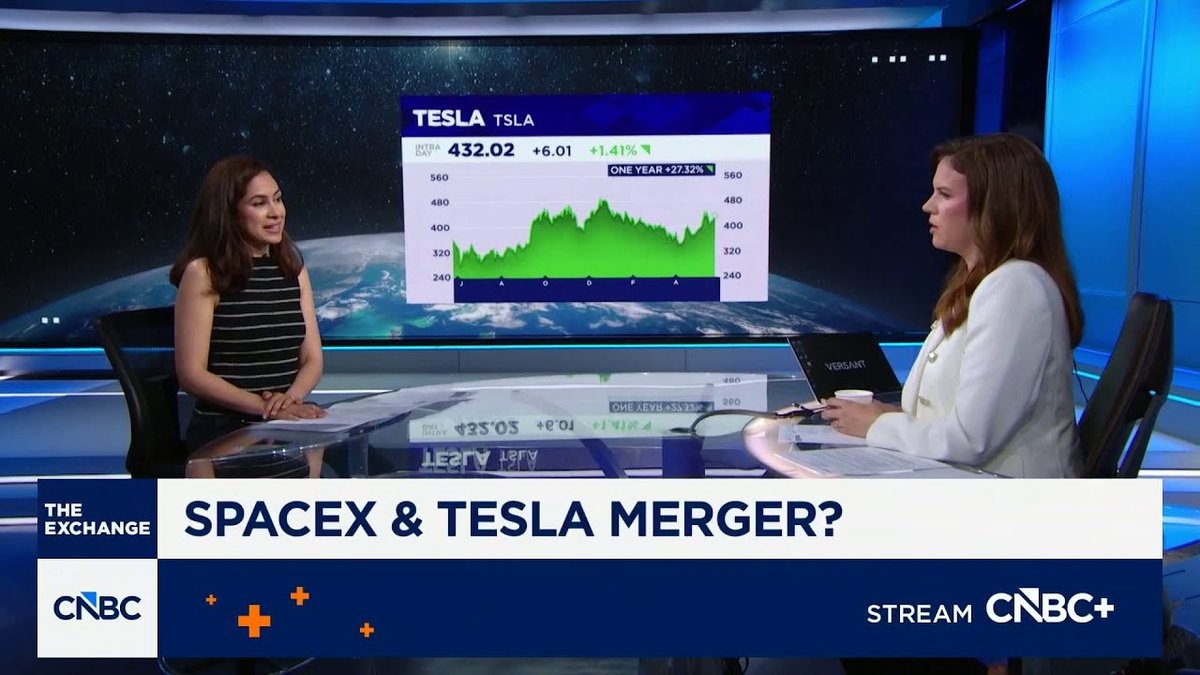
The Magnificent Seven — Apple, Microsoft, Alphabet, Amazon, Nvidia, Meta, and Tesla — remain the engine room of this market. Nvidia alone has added over $1 trillion in market cap since its own lows earlier this year, and the entire group continues to benefit from what analysts are calling the 'AI infrastructure super-cycle.'
On Friday, the poster child for the AI trade was Dell Technologies (DELL), which surged 33% in a single session after reporting blowout quarterly earnings. Revenue was up 88% year-over-year, fueled by demand for AI-optimized servers and enterprise data center buildouts. The move added tens of billions to Dell's market cap in a single day — a reminder that the AI tailwind is lifting not just chipmakers and cloud providers, but the entire hardware ecosystem.
'Sell in May' Gets Obliterated
The calendar-based wisdom that has governed portfolio positioning for generations has been turned on its head. The S&P 500's May performance is on track to be one of the top five Mays of the past 50 years. Seasonal patterns that called for rotating into defensive sectors, utilities, and healthcare have been steamrolled by a relentless appetite for growth, technology, and anything with an AI narrative.
Part of the explanation is simple momentum. The S&P 500 has now closed higher in nine of the past nine weeks. According to data from Bespoke Investment Group, streaks of this length are rare — only about 2% of all rolling nine-week periods since 1950 have produced gains in every single week. And when they have occurred, the forward returns have been mixed but generally positive over a six-to-twelve-month horizon.
Another explanation: the fundamental picture has genuinely improved. First-quarter earnings season was the best in two years, with 78% of S&P 500 companies beating estimates. Forward guidance has been consistently revised upward, particularly in technology, semiconductors, and AI-adjacent industrials.
What's Driving the Rally
The primary catalyst is unmistakable: artificial intelligence. The market is pricing in a productivity revolution that is expected to reshape corporate profit margins across every sector. Capital expenditures on AI infrastructure are running at levels not seen since the early days of the internet buildout. Cloud revenue is reaccelerating. Enterprise software is embedding AI features at a pace that is driving both higher average selling prices and expanded total addressable markets.
But it's not just AI. The macro environment has also turned more supportive. Inflation has moderated from its 2022 peaks, and while the Federal Reserve has not yet cut rates, the market has moved past the worst of the tightening cycle. The 10-year Treasury yield has stabilized in the 4.0-4.3% range, removing the valuation pressure that weighed on growth stocks throughout 2024 and early 2025. Corporate balance sheets are strong. Consumer spending — while showing some signs of fatigue at the lower end — remains resilient overall.
And then there is the FOMO factor. Institutional investors who sat out the rally in March and April have been forced to chase performance. Pension funds, endowments, and sovereign wealth funds that were underweight equities are now rotating back in. The positioning data from the latest CFTC Commitments of Traders report shows net long equity exposure at multi-year highs among leveraged funds.
The Risks Nobody Wants to Talk About
A nine-week winning streak and a 19% surge in two months naturally raises the question: is this sustainable? The bulls say yes — earnings growth is real, AI is transformative, and valuations, while elevated, are justified by the earnings trajectory. The bears see a market that has priced in perfection and is vulnerable to any disappointment.
Valuation concerns are the most obvious risk. The S&P 500 now trades at roughly 22.5x forward earnings — above the 10-year average of 18.5x. The Nasdaq's multiple is even more stretched. While elevated multiples can persist in a low-rate, high-growth environment, they leave little room for error. A single disappointing CPI print, a hawkish Fed surprise, or a geopolitical shock could trigger a sharp re-rating.
Geopolitical tensions remain elevated. The situation in Eastern Europe continues to simmer. U.S.-China tensions over technology and trade have not eased. Energy prices, while stable for now, remain vulnerable to supply disruptions. Any of these could act as a circuit breaker for the rally.
Market concentration is another growing concern. The top 10 stocks in the S&P 500 now account for over 35% of the index's total market cap — a level of concentration not seen since the dot-com era. If the Magnificent Seven stumble, there may not be enough breadth in the rest of the market to absorb the selling pressure. The equal-weight S&P 500 has significantly underperformed the cap-weighted index this year, a sign that the rally is not as broad as the headline numbers suggest.
And then there is the Federal Reserve. The market is currently pricing in two to three rate cuts by year-end. If stubborn inflation or a resilient labor market forces the Fed to hold rates higher for longer — or, in a worst case, to resume hiking — the equity market's reaction could be severe. Higher rates would pressure the long-duration, high-multiple names that have led this rally.
Some prominent bears have started to speak up. JPMorgan's quant team has noted that the current rally has the 'hallmarks of a blow-off top' in technology stocks. Mike Wilson at Morgan Stanley, while no longer the most bearish on the Street, has warned that earnings estimates for 2027 may need to come down as the AI capex cycle peaks. And the bond market is sending signals of its own — the yield curve remains inverted, a classic recession indicator that has not yet been proven wrong despite the equity market's optimism.
The Case for More Upside
To be fair, the bull case has been right at every turn. Those who called for a correction in April were steamrolled. Those who warned about May seasonality were proven spectacularly wrong. The momentum is real, the earnings are real, and the transformation driven by AI is arguably the most significant technological shift since the commercialization of the internet.
Goldman Sachs raised its S&P 500 year-end target to 7,800 last week. Some strategists are now whispering about 8,000 by year-end. If AI-driven productivity gains begin showing up in GDP data and corporate margins in the second half of the year, the rally could have further to run. The flow of funds into equities remains strong, and retail investors — a key marginal buyer — are returning to the market after a cautious 2024.
📡 The Signal Take
The Dow at 51,000 and the S&P 500 at 7,580 are not just numbers — they are mile markers on a road that has been defined by AI optimism, resilient earnings, and a complete rejection of bearish seasonal narratives. Nine consecutive weekly gains is not normal. It is extraordinary. And it reflects a market that is pricing in a genuinely transformative moment for the global economy.
But extraordinary rallies carry extraordinary risks. The concentration of this market in a handful of mega-cap names should give every investor pause. The 'Sell in May' crowd was wrong — but that does not mean the market is invulnerable. The moves we have seen since March have been historic, and history suggests that periods of such rapid gains are often followed by consolidations, corrections, or regime changes.
Our view: stay invested, but stay disciplined. The AI trade is real, but the entry point matters. If you have been riding this rally, consider trimming positions that have run too far, too fast. If you are sitting on cash, dollar-cost average in rather than chase. And if you are looking for the next leg of this cycle, look beyond the Magnificent Seven — the AI buildout is starting to benefit a second and third tier of companies that are not yet priced for perfection.
The bull market is intact. But the easy money has been made. From here, it's a stock-picker's market.
Disclaimer: This article is for informational purposes only and does not constitute investment advice. Past performance does not guarantee future results. Always conduct your own research or consult a licensed financial advisor before making investment decisions.
— The Signal Editorial Team
This article is for informational purposes only and does not constitute investment advice.

Discussion 0