For years, it was the dream scenario whispered in Tesla bull chats and Musk fan forums: what if Elon just folded SpaceX into Tesla and let public-market investors ride both rockets at once?
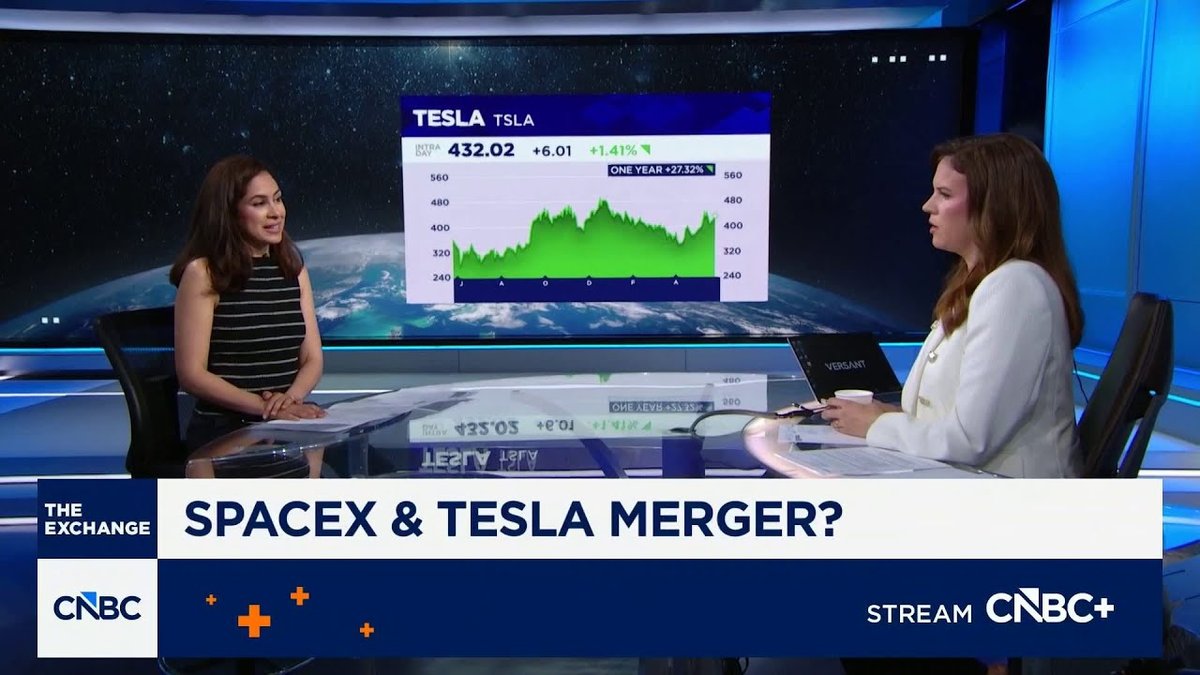
This week, that whisper became a roar. Bloomberg, Reuters, and CNBC all independently reported that Elon Musk is actively exploring a merger between SpaceX and Tesla — or, alternatively, merging SpaceX with xAI ahead of a blockbuster Nasdaq IPO. The chatter is so loud that $TSLA shares have been ripping higher all week.
Here's the setup. Tesla already owns roughly 19 million shares of SpaceX — a stake worth billions that most $TSLA investors barely know about. A full merger would turn every Tesla shareholder into a SpaceX shareholder overnight. And given that SpaceX is the most valuable private company on the planet — valued anywhere from $1 trillion to $2 trillion depending on who's estimating — the math gets staggering fast.
$TSLA currently trades at $442 with a $1.66 trillion market cap. Revenue hit $97.9 billion (up 15.8% YoY), and the company is generating $16.5 billion in operating cash flow. Analysts are bullish — 41 analysts cover it with a consensus Buy and a mean price target of $411. But that target doesn't include any SpaceX premium.
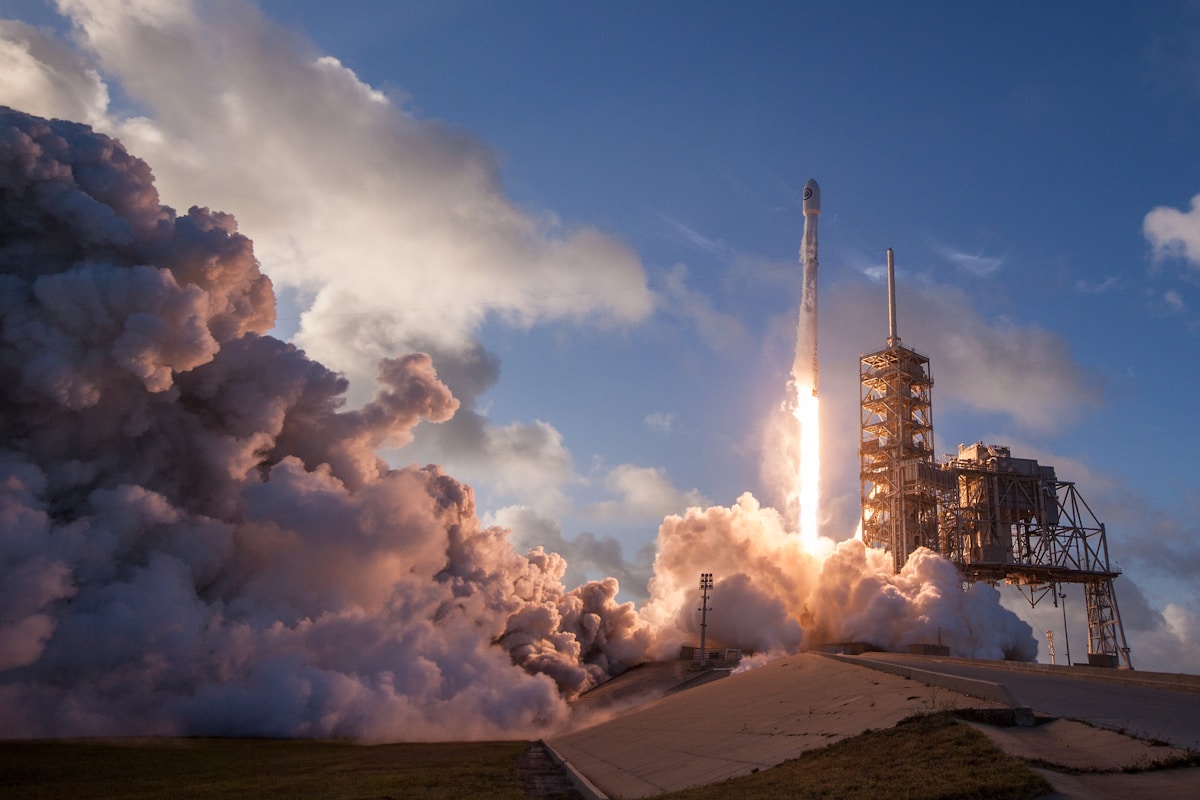
SpaceX, meanwhile, is a different beast entirely. The company's confidential S-1 filing with the SEC revealed a business that generated massive revenue from Starlink's consumer base, government launch contracts, and the Starship program. The company is hosting a three-day analyst meeting this week to woo Wall Street ahead of its IPO debut. The 38-page risk factor section in the S-1 is a wild read — everything from Starship failures to "Elon Musk himself" is flagged as a potential risk — but the revenue trajectory is undeniable.
So why merge now?
There are three theories making the rounds:
1. The Valuation Arb Play. SpaceX at an implied $1.5-2T valuation rolling into Tesla at $1.66T creates a combined $3T+ entity with the most diversified revenue stream in the world — cars, rockets, satellites, AI, robotics, tunneling, brain-computer interfaces. Wall Street would re-rate the combined company higher than either alone.
2. The Musk Control Consolidation. Musk has always hated the overhead of managing multiple public and private entities. Rolling SpaceX into Tesla simplifies his empire into one public company with one board, one set of filings, and one stock price. The man who fired the entire Twitter C-suite on day one is not allergic to restructuring.
3. The IPO Bypass. Taking SpaceX public via a reverse merger with Tesla avoids the underwriting fees, the S-1 roadshow drama, and the scrutiny of a traditional IPO. Tesla already has the public market infrastructure. Shareholders would vote on it — and given Musk's retail army, it would almost certainly pass.
Not everyone is convinced. Seeking Alpha analysts point out that a SpaceX-Tesla merger would be enormously complex — different accounting, different revenue recognition, different regulatory environments (NASA and SEC don't speak the same language). And some Tesla purists argue the stock should be valued on automotive and energy alone, not Musk's unrelated rocket hobby.
But here's the thing the bears are missing: the market is already pricing in a premium. $TSLA at $442 implies expectations far beyond the current automotive business. The stock trades at 176x forward earnings and 17x sales. That's not a car company multiple — that's a technology empire multiple. Investors are already betting on the Musk ecosystem, not just the Model Y production line.
A formal merger would simply make that bet explicit. And for long-term $TSLA holders, it could be the single biggest value unlock in stock market history.
Your move.