Everyone's got a watchlist. Most are 30 names deep and nobody actually owns half of them. These six aren't a diversified portfolio. They're a thesis. AI is eating the world, defense budgets are structural, and the companies supplying the picks and shovels are printing money while everyone else argues about valuations.
1. Broadcom — $AVGO
Q Revenue: $22.2B | Target: $523.73 (+39% upside)
Broadcom doesn't make headlines the way Nvidia does. That's exactly why you should care. While Jensen is on stage at Computex, Hock Tan is quietly locking in the actual infrastructure behind the AI buildout.
Their custom ASIC business — building bespoke AI chips for Google, Meta, and reportedly Apple — is the moat nobody talks about. They're not competing with Nvidia on general-purpose GPUs. They're building the custom silicon that hyperscalers use for inference at scale, which is where the real volume lives once models are trained.
Revenue hit $22.2B last quarter, up from $15B a year ago. That's 48% annualized growth from a company already worth over a trillion dollars. Their networking business is the spine of every AI data center — every GPU cluster needs switches, and Broadcom dominates that market the way Intel used to own x86.
The analyst consensus is $523. That's not a meme target. That's what happens when you're the only game in town for custom AI silicon at hyperscale.
2. Nvidia — $NVDA
Q Revenue: $81.6B | Target: $301.62 (+51% upside)
Nvidia is the obvious one. But being obvious doesn't make it wrong.
$81.6 billion in quarterly revenue, up from $44.1B a year ago. They're adding roughly $13-14 billion in new revenue every three months. Vera Rubin is already in production. The Arizona fab with TSMC isn't hypothetical — it's breaking ground. Every hyperscaler on earth is still capacity-constrained, not demand-constrained.
The $80 billion buyback tells you what management thinks about the stock price. Analysts see $301 — 51% upside. The bear case is always competition is coming, and it's been coming for three years while Nvidia's revenue compounded at a rate that would make a Ponzi scheme blush. The difference: this one's backed by physical silicon that customers are fighting over.
3. Palantir — $PLTR
Q Revenue: $1.6B | Target: $182.75 (+57% upside)
Palantir is the most controversial name here. Good. Controversy creates mispricing.
Revenue hit $1.6B last quarter, up from $1.4B, $1.2B, $1.0B, and $0.9B sequentially over the past five quarters. That's consistent 15-20% quarterly growth with a product that's genuinely sticky in a way most enterprise software isn't. Government contracts aren't slowing down — they're accelerating. Ukraine, the South China Sea, every conflict theater is a Palantir use case.
The commercial side is finally catching up after years of any quarter now. They're profitable, buying back stock, and the AIP platform is the operating system for the intelligence community's AI transition. That budget line item doesn't shrink in any political environment. Analysts see $182.
4. Constellation Energy — $CEG
Revenue (TTM): ~$30B | Market Cap: ~$87B
Constellation is the sleeper. Everyone's fighting over chips and models while the real bottleneck is power.
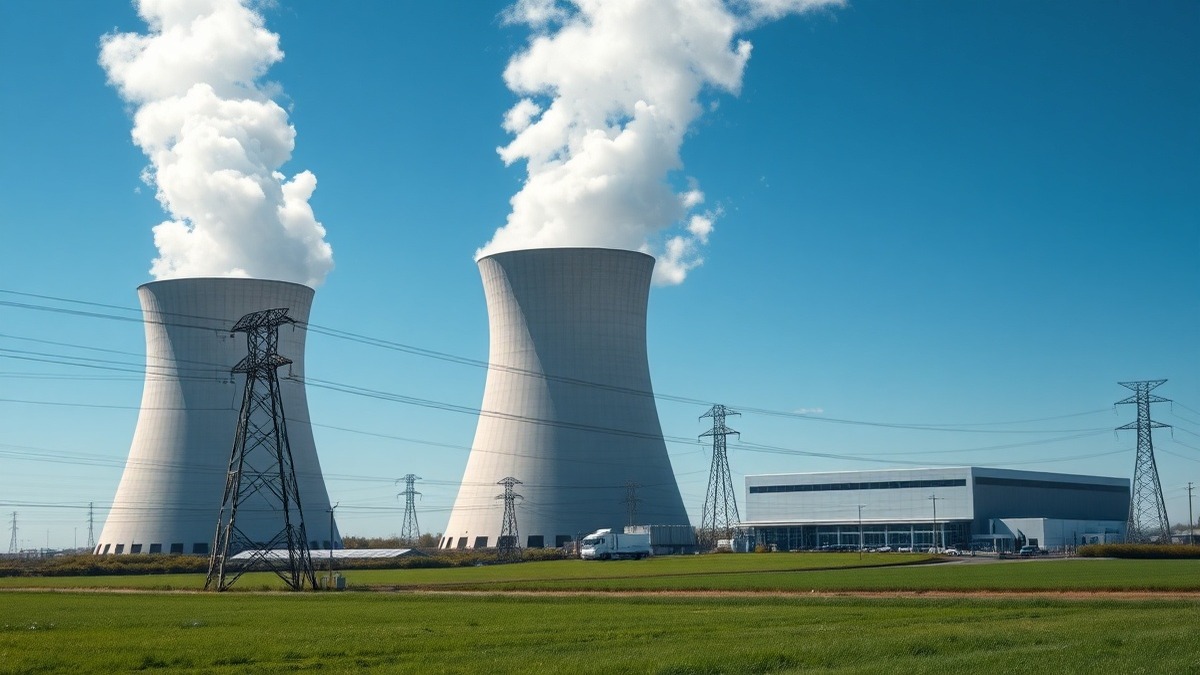
A single modern AI data center can draw 100 megawatts. That's a small city. Constellation owns the largest nuclear fleet in America — 21 reactors across 12 sites — and nuclear is the only carbon-free baseload power that hyperscalers can rely on 24/7. Solar doesn't run a GPU cluster at 3am.
The Microsoft deal to restart Three Mile Island wasn't a one-off. It's the template. Every hyperscaler needs reliable clean power, and Constellation's assets can't be replicated. You can't just build a nuclear plant because you feel like it. The regulatory moat alone is a decade wide. If you believe AI data centers are still in the first inning — and they are — the power suppliers are the real bottleneck play.
5. CoreWeave — $CRWV
Q Revenue: $2.1B | Target: $143.41 (+44% upside)
CoreWeave is the most aggressive bet here. Own it accordingly.
They're a GPU cloud provider with $2.1B in quarterly revenue, up from $1.6B, $1.4B, and $1.0B sequentially. Revenue has more than doubled in a year. They're one of the few places you can actually rent H100s and B200s at scale without waiting six months. Nvidia is both supplier and strategic partner — that allocation priority is worth more than any balance sheet ratio.
The bear case is their debt load. The bull case is that demand for GPU compute is so absurd right now that even a leveraged operator prints cash if they have inventory. Analysts see $143 — 44% upside. This one can drop 40% on a bad week. But the upside if they execute is genuinely asymmetric.
6. RTX — $RTX
Revenue (TTM): ~$90B | Market Cap: ~$266B
RTX rounds out the six with something these other names don't have: actual defense hardware in a world that's arming up faster than any point since the 1980s.
This isn't a software story or an AI narrative. It's missiles, radar systems, and the Patriot battery that every NATO country is suddenly trying to buy. Pratt & Whitney engines power the F-35. Raytheon missiles are backordered for years. The geopolitical environment isn't cooling off, and defense spending is the most reliable government expenditure that exists.
RTX gives you exposure to the defense supercycle without betting on a single program or contractor. It doesn't matter who's in the White House. The Pentagon's procurement machine doesn't stop. If you're heavy on AI and semiconductors, RTX is the ballast that keeps you sleeping at night when chip stocks sell off.
The Bottom Line
These six together aren't a balanced portfolio. They're a conviction bet on three things that aren't changing: AI infrastructure buildout, defense spending, and energy scarcity. AVGO and NVDA own the silicon. PLTR owns the intelligence layer. CEG powers the whole thing. CRWV is the levered play on GPU access. RTX is the hedge that isn't really a hedge because defense is also booming.
There will be volatility. There will be days where CoreWeave drops 12% on no news and Palantir gets downgraded by some analyst who's been wrong for three years. But the fundamentals under these names aren't fragile. They're supplying the inputs to the two biggest trends of the decade, and that's the kind of simplicity that actually works.
Disclosure: The Signal holds no position in AVGO, NVDA, PLTR, CEG, CRWV, or RTX. Positions may change. This is not financial advice.