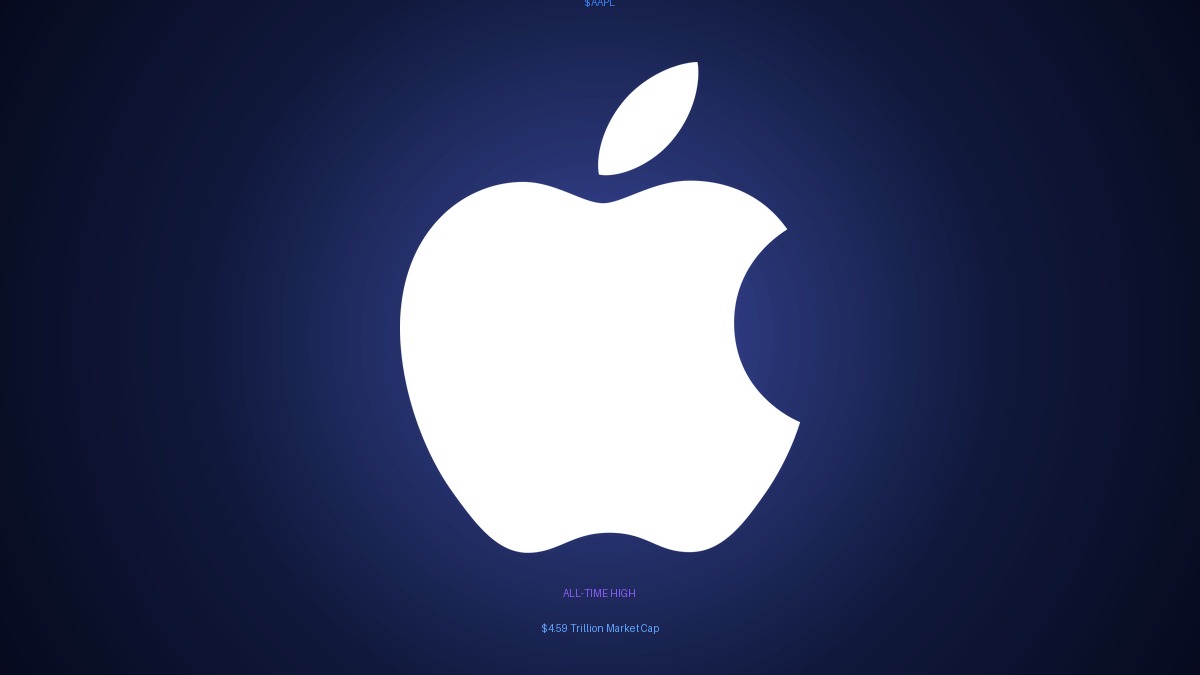
Apple just hit $312.51 — a new all-time high. Market cap: $4.59 trillion. And Tim Cook still hasn't uttered the words 'AI transformation' on a single earnings call. That's not a bug. It's the strategy.
While Microsoft, Google, and Meta have been laser-focused on telling Wall Street about their AI ambitions — spending billions on data centers, rolling out chatbots, rebranding entire product lines — Apple has been quietly doing what it does best: selling hardware at premium margins and collecting a growing services royalty.
The numbers tell the story. Apple's trailing revenue growth is 16.6% — faster than most analysts expected for a company its size. Return on equity? An eye-popping 141%. The company is generating cash so efficiently it can return $25 billion+ a year to shareholders through buybacks and dividends while still funding R&D at record levels.
$AAPL trades at 32.5x forward earnings — a premium, sure, but justified by the moat. The average analyst price target is $310.50, meaning the stock is essentially at fair value by consensus. But consensus has been wrong about Apple before. The iPhone upgrade cycle is accelerating on the back of Apple Intelligence features, and services revenue (App Store, Apple Music, iCloud, Apple TV+) now contributes over 25% of gross profit with near-80% margins.
The contrarian case is simple: every other mega-cap has priced AI hype into their valuation. Apple hasn't. When Apple eventually — and it's when, not if — lays out its AI monetization roadmap, the multiple expansion could be significant. Think of it as a free call option on the largest company in the world.
Wall Street rates it a Buy. The dividend yields 0.35% — modest, but growing at 5-7% annually. Apple has raised its dividend for 13 consecutive years. From the 52-week low of $195 to today's $312, the stock has already returned 60% in twelve months. The question isn't whether Apple can go higher. The question is whether you want to own the most capital-efficient company in history while the market is still arguing about AI.