You cannot download electricity from the cloud. Every prompt you run and every video you stream eventually lands on a server that burns real, physical power.
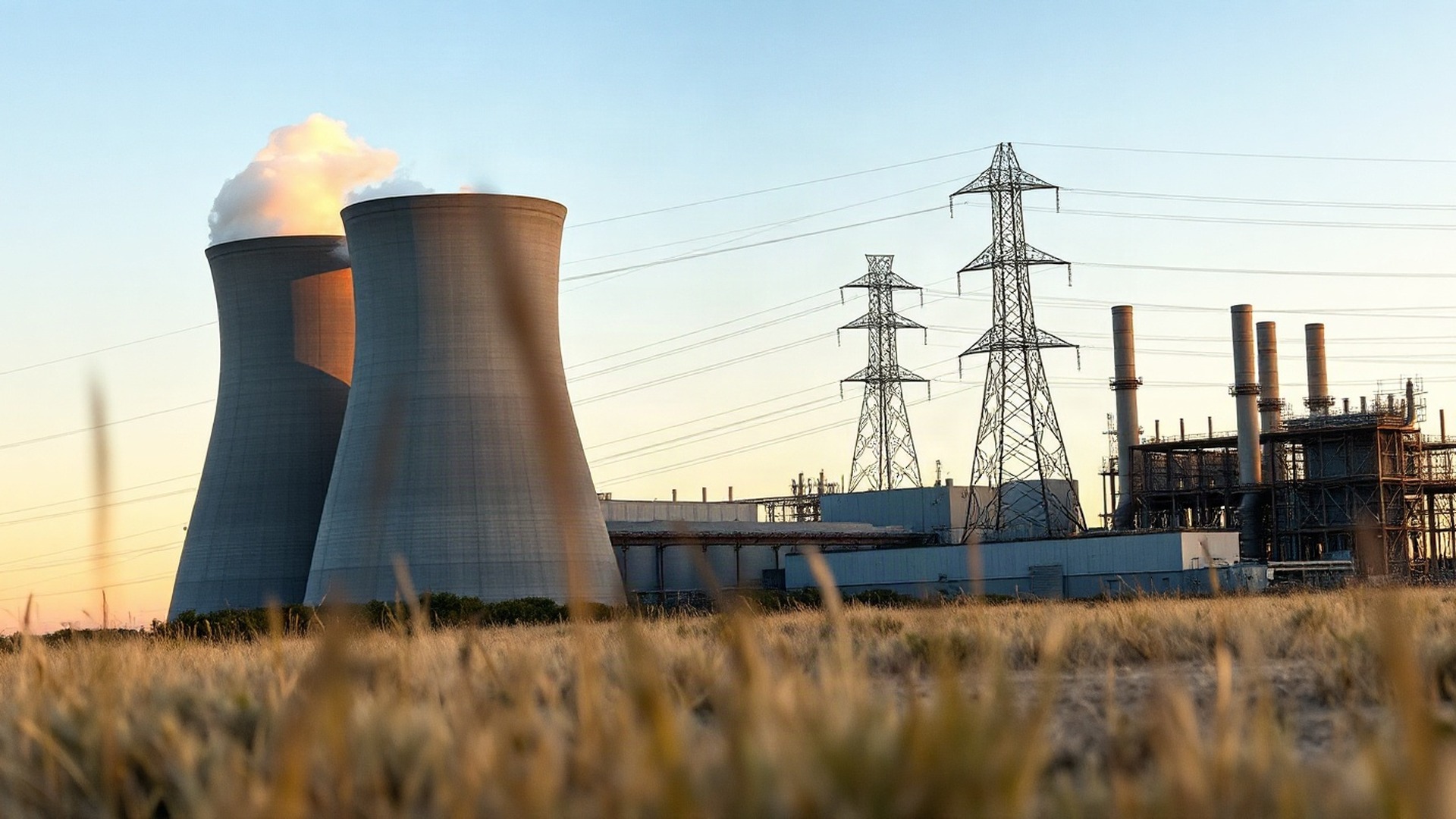
That basic reality turned Vistra from a quiet Texas power company into the darling of the AI trade. In plain English, Vistra is one of the country's largest competitive electricity producers. Unlike your local regulated utility, it does not get a guaranteed profit margin stamped by the state. It owns roughly 49,000 megawatts of power generation across gas, battery, and nuclear plants, selling that juice into wholesale markets or straight to corporate buyers. Think of Big Tech as building fleets of electric supercars; Vistra is the landlord who owns the only fast-charging stations with high-voltage lines already hooked to the dirt.
| Price LIVE | $133.01 |
| Market Cap | ~$45.1B |
| Forward P/E | 14.2 |
| Total Revenue (TTM) | $20.6B |
| 52-Week Low | $110.89 |
| 52-Week High | $189.29 |
| Analyst Consensus | Strong Buy (22 analysts) |
| Analyst Target Mean | $200.73 |
Tech giants realized early that the local grid could not handle their ambitions. To secure round-the-clock baseload power, companies like Meta and Amazon went directly to Vistra, signing 20-year contracts for thousands of megawatts from its nuclear fleet. Vistra quickly became the ultimate tollbooth for artificial intelligence. If Silicon Valley wanted to train the next frontier model, it had to pay Vistra for the electrons first.
Then Texas politics intervened. On November 3, Democrat Gina Hinojosa won the Texas governorship after campaigning on an immediate moratorium on new data-center approvals until lawmakers pass consumer protections. Vistra's stock tumbled roughly 14% the following session. Just under 40% of Vistra's generation earnings come from its Texas fleet, which runs entirely inside the ERCOT grid. When the governor-elect pledged to pull the emergency brake on data-center permits, Wall Street realized the AI power trade is governed by statehouses, not algorithms.
The central conflict comes down to two colliding clocks. When power companies hedge, they sell their future electricity today to lock in prices and protect their earnings from wild spot-market swings. Vistra's near term is airtight: roughly 100% of its expected 2026 generation is already sold, and 98% of 2027 is locked down. The election did not take a single dime from those two years. But by 2028, Vistra is only about 78% hedged, with its Texas fleet trailing even further behind. That creates a dangerous window. The year Vistra’s pricing shield drops is the exact year Hinojosa’s policy regime, grid congestion fights, and a pipeline of at-risk data centers all collide.
Meanwhile, physical assets can break regardless of who sits in the governor's mansion. In the third quarter, Vistra swallowed a $269 million non-cash write-down on its Moss Landing battery installation in California following a fire. It brings cumulative impairments on that site to roughly $824 million, with none of its three batteries currently running. It had nothing to do with Texas or artificial intelligence. It was simply an unglamorous reminder that running heavy infrastructure carries operational friction that no software valuation multiple can erase.
A short-seller looking at Vistra sees a cyclical commodity producer masquerading as a high-margin tech monopoly. Vistra does not control wholesale electricity prices, and its home state just chose leadership dedicated to cooling down its biggest growth driver. Chief Executive Jim Burke has already acknowledged "some depression" in Texas power forward curves, noting the company is not banking on power price recoveries. The company is carrying roughly $21.1 billion in total debt, meaning its leverage ratio rests entirely on hitting aggressive future profit targets. If Texas data-center approvals freeze and ERCOT 2028 wholesale power prices sink materially below what the forward curves now imply while the hedge book remains open, the thesis unravels.
For the equity to re-rate from here, Vistra must prove that long-term contracts can outrun state policy. The market is pricing 2028 political risk into cash flows that are already locked in for the next twenty-four months. Vistra still holds about 3.2 gigawatts of uncontracted nuclear capacity. If it signs another major hyperscaler to a multi-decade deal, or if state regulators lift the current permit hold with reasonable guardrails, the market will revalue that spare capacity as guaranteed infrastructure revenue instead of volatile merchant power.
What we are watching next is the ERCOT queue audit due in December 2026. A clean audit that allows power interconnections to resume will settle the market's nerves. An extended freeze into the 2027 legislative session will keep the political discount firmly in place.
Disclosure: The Signal holds no position in VST. Positions may change. This is not financial advice.