Here's the twist in the 2026 AI boom: the GPUs stopped being the bottleneck. The grid is. And Vertiv — the company that powers and cools more data center floor space than almost anyone — just agreed to spend up to $2.6 billion on the fix.
| VRT Price | $256.70 |
| Market Cap | $98.8B |
| Forward P/E | 28.2 |
| Total Revenue (TTM) | $11.48B |
| 52-Week Low | $118.70 |
| 52-Week High | $379.93 |
| Analyst Consensus | Strong Buy |
| Analyst Target Mean | $338.15 |
What is Vertiv, in plain English? It builds the power and cooling systems that keep data centers alive — uninterruptible power supplies, switchgear, busway, precision cooling, and the liquid-cooling gear, from coolant distribution units to rear-door heat exchangers, that the hottest AI racks demand. Buyers: hyperscalers, colocation giants, enterprises, telecoms. Vertiv also services what it sells across 130-plus countries, a recurring business worth roughly a fifth of revenue.
The roots run deep. The Liebert cooling brand dates to the 1960s, and the power lines grew out of Emerson Network Power before Platinum Equity carved the business out in 2016. Vertiv listed on the NYSE in 2020, employs roughly 34,000 people from Westerville, Ohio, and is quietly one of AI's most important names you've never heard of.
Here's why that matters. A single Nvidia GB300 NVL72 rack draws 120 to 130 kilowatts and must be liquid-cooled; the industry-average rack pulls about 7.6 kilowatts. Vertiv's rule of thumb: air below roughly 20 kilowatts per rack, hybrid with rear-door heat exchangers from 20 to 75, direct liquid cooling above that. Liquid cooling isn't just about heat — it trims a data center's total power draw by around 10%, because you stop air-conditioning the whole room.
Demand isn't the question. Amazon, Alphabet, Meta, and Microsoft plan a combined roughly $630 billion in 2026 capital spending — up about 62% from 2025, Amazon alone around $200 billion. Vertiv's order book proves it: a $15.0 billion backlog at the end of 2025, up 109%, on a book-to-bill near 2.9x.
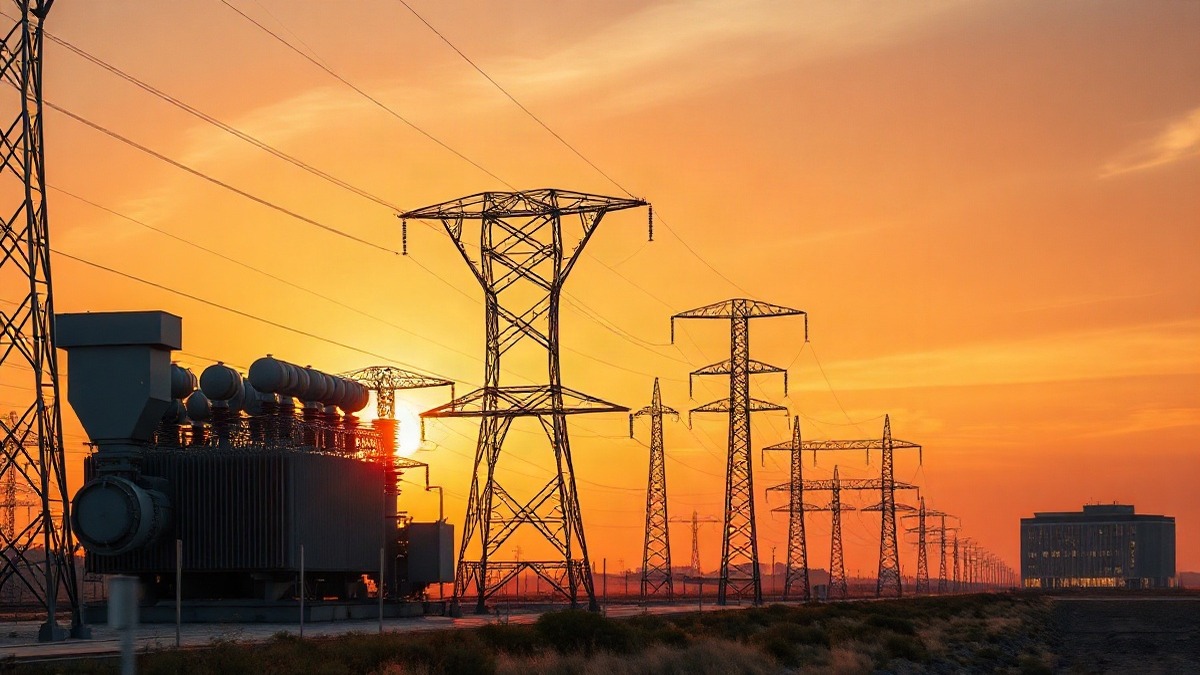
The catch: capacity is arriving faster than power is. ERCOT's queue of large-load interconnection requests hit roughly 410 gigawatts this spring — mostly data centers — and the national queue tops 2,000 gigawatts. New grid power for a single site can take two to six years, and Gartner expects shortages to constrain 40% of existing AI data centers by 2027. That's the gap Vertiv CEO Giordano Albertazzi calls “time to power” — competitive advantage increasingly comes down to how fast operators move “from site selection to first token.”
Enter UtilityInnovation Group. UIG, based in Raleigh with EU operations in Dublin, builds microgrid controls, onsite generation orchestration, and behind-the-meter power architecture that let a data center stop waiting on the utility and manage its own electrons. Vertiv is paying roughly $1.45 billion in cash at close plus up to about $1.15 billion in EBITDA earnouts — about 13x UIG's expected 2027 EBITDA at the base price — due to close in Q4 and accretive to adjusted earnings in year one. It extends Vertiv “upstream to the utility interconnect,” so one vendor owns the power train from grid connection to chip.
That “source to chip” claim is the moat — and it's why Vertiv keeps winning co-validation on NVIDIA reference designs, the blueprints for powering and cooling each new silicon generation. The installed base compounds: services and spares revenue grew about 29% last quarter to roughly $668 million, an annuity that fattens with every data center Vertiv equips. The balance sheet funds it — net cash and roughly $5.6 billion in liquidity at the end of Q2, with UIG the latest in a streak that added CoolTera, PurgeRite, Strategic Thermal Labs, and ThermoKey.
About that last quarter, because the tape told a funny story. When Vertiv reported Q2 in late July, sales ran about $100 million light of consensus on supply-chain and project-timing shifts, and the stock dropped roughly 17% in a day. But adjusted EPS grew 60%, adjusted operating margin hit 22.6%, free cash flow more than tripled, and full-year guidance went up for the second time. The demand signal was never the problem. Shares sit about a third below their spring peak but have still more than doubled over the past year — the market priced in perfection, and Vertiv keeps delivering growth that only looks ordinary against that bar.
Competition is real. Eaton and Schneider Electric are far larger, though data centers are one division among many for them; nVent, Modine, Boyd, CoolIT, and Munters chase slices of the same heat. Nobody else combines near-total data center focus, NVIDIA co-validation, and a service army across 130 countries. UIG is the bet that the industry's next choke point — electrons at the fence line — becomes Vertiv's next annuity. If power truly gates 40% of AI capacity by 2027, the company selling time to power just bought a head start.
Disclosure: The Signal holds no position in VRT. Positions may change. This is not financial advice.