TSMC spent four decades running the ultimate toll booth on global computing. Now it is quietly buying stakes in the cars. In a single board meeting, the company approved a massive $40.93 billion capital expenditure appropriation alongside up to $1.5 billion in strategic equity checks. That portfolio includes up to $500 million to launch a dedicated semiconductor investment firm. It also takes up to $500 million of Anthropic common shares at that company's upcoming initial public offering, plus up to $500 million of OpenAI preferred stock.
Setting aside $1.5 billion next to a $40 billion equipment budget looks like petty cash, but the signal is unmistakable. TSMC is no longer content simply billing the AI boom at the factory gate; it wants equity in the software giants driving the invoices.
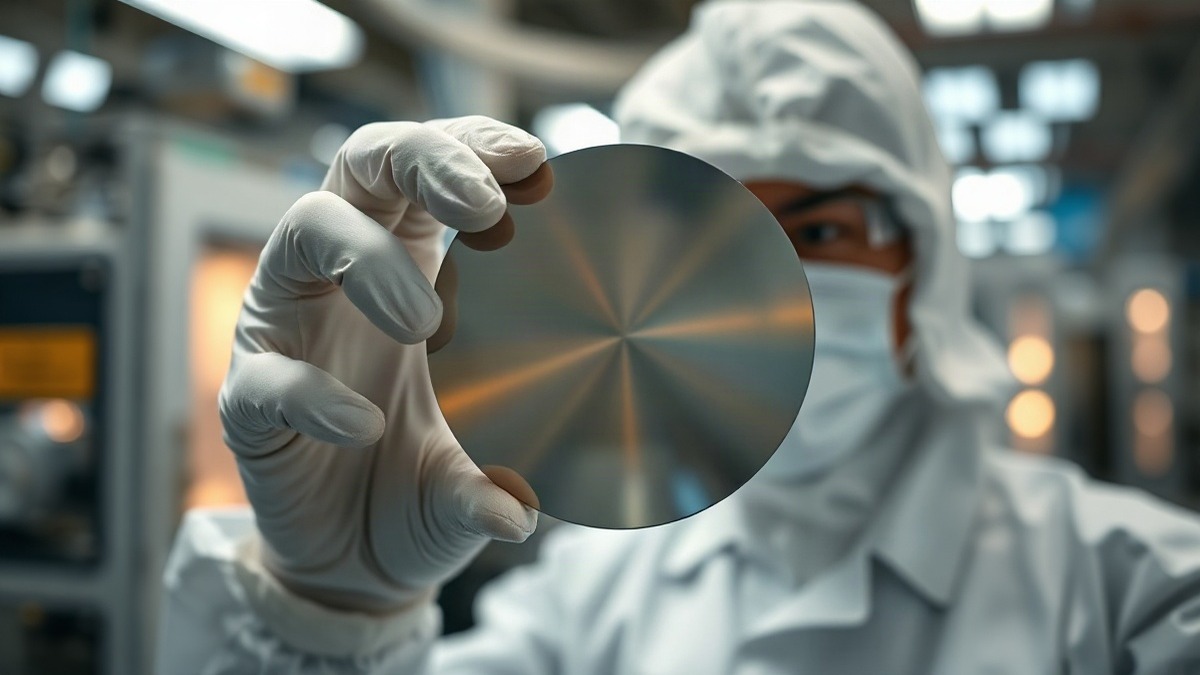
To understand why this matters, you have to look at what TSMC actually does. The company does not design algorithms or sell smartphones. It operates as the world’s contract manufacturer for silicon, functioning like the only commercial printing press capable of etching microscopic circuits onto wafers of silicon. When Apple designs the processor inside your phone, or Nvidia blueprints an AI accelerator, they hand the schematics to TSMC’s fabs in Taiwan. Last year alone, the foundry manufactured 12,682 distinct products for 534 separate customers. In the AI sector, it is the sole choke point: almost every top-tier chip accelerating a large language model on earth is printed on TSMC’s advanced manufacturing lines.
| Price LIVE | $398.73 |
| Market Cap | ~$2.07T |
| Forward P/E | 17.1 |
| Total Revenue (TTM) | $155.7B |
| 52-Week Low | $266.82 |
| 52-Week High | $487.47 |
| Analyst Consensus | Strong Buy (20 analysts) |
| Analyst Target Mean | $586.69 |
That dominance makes the timing of this push fascinating. Shares were down roughly 6% in early trading, leaving the equity about 23% below its October peak. The drag stems from Washington, where the US Commerce Department unveiled an interim final rule designed to choke off remote compute access for restricted nations. Under the framework, data centers worldwide face strict export licensing if their combined computing capacity exceeds roughly 750 high-end Nvidia accelerators and risks serving restricted markets like China. The rule does not ban TSMC from shipping wafers, but it threatens to slow down the data-center buildouts of its ultimate end-users. Add the sudden resignation of Nvidia’s chief executive and an upcoming earnings report from TSMC’s most vital customer, and global tech investors hit the sell button.
Yet TSMC’s physical bottleneck remains unmatched. Advanced nodes at or below seven nanometers now account for 79% of its wafer revenue, with high-performance computing driving 68% of the business. Demand for its chip-on-wafer-on-substrate packaging is so intense that the foundry just signed a seven-year agreement with Xintec to run back-end packaging steps inside its Taichung facility through 2033. Management expects full-year revenue to jump around 44% in US dollars, supported by an annual capital budget reaching up to $64 billion as it constructs nearly 20 new fabs worldwide. Deputy co-chief operating officer Kevin Zhang noted that the new investment arm will target the wider semiconductor footprint, potentially including the company's own equipment and materials suppliers.
The stock story comes down to a glaring valuation disconnect. The market prices TSMC around 17 times forward earnings despite guidance for 44% revenue growth, a multiple typically reserved for mature industrial cyclical firms rather than secular monopolists. That discount persists because Wall Street worries the company's 66% gross margin is a cyclical ceiling rather than a sustainable floor. Building overseas facilities across Arizona, Japan, and Germany creates friction: management has already acknowledged that foreign fabrication will create a two-percentage-point margin drag this year, widening to three or four points in later years. For the equity to re-rate, TSMC must prove that price hikes on its next-generation two-nanometer nodes can absorb those geographic inefficiencies and protect profitability.
The bear case rests on brutal customer concentration and the circular nature of the AI trade. TSMC’s top ten customers generate 78% of its revenue, with just two undisclosed buyers accounting for 36%. North America represents three-quarters of the entire business.
A short-seller looks at TSMC spending up to $64 billion this year and sees a manufacturer doubling down on capacity. All of it hinges on a tiny handful of American tech giants maintaining their capex splurge. If Washington’s new compute rules derail international cloud expansions, or if Anthropic and OpenAI see inference demand moderate, TSMC is left servicing immense fixed overhead for empty cleanrooms. Worse, spending $1.5 billion on customer equity looks uncomfortably like a supplier subsidizing the balance sheets of the very buyers whose compute orders validate its factory expansion. The bears will claim victory if fourth-quarter gross margins breach the guided 65% floor, or if capital guidance for next year softens.
The immediate test arrives when Nvidia reports earnings, delivering the first clear signal of whether AI hardware demand can outrun geopolitical friction. Beyond that, the market has 90 days to see how global data center operators navigate Washington’s new licensing maze. If enterprise compute budgets digest the regulatory shock and TSMC protects its mid-60s margin targets, the current multiple will look like an unwarranted bargain. TSMC still prints the chips everyone else argues about.
Disclosure: The Signal holds no position in TSM. Positions may change. This is not financial advice.