Imagine your favorite farm-to-table bistro decides to buy the farm that grows its heirloom carrots. Eventually, controlling the dirt guarantees fresh supply and cuts out the middleman. But on day one, the restaurant suddenly reports all the farm's bulk wholesale potato sales on its own menu receipt, making dinner revenues look four times bigger overnight.
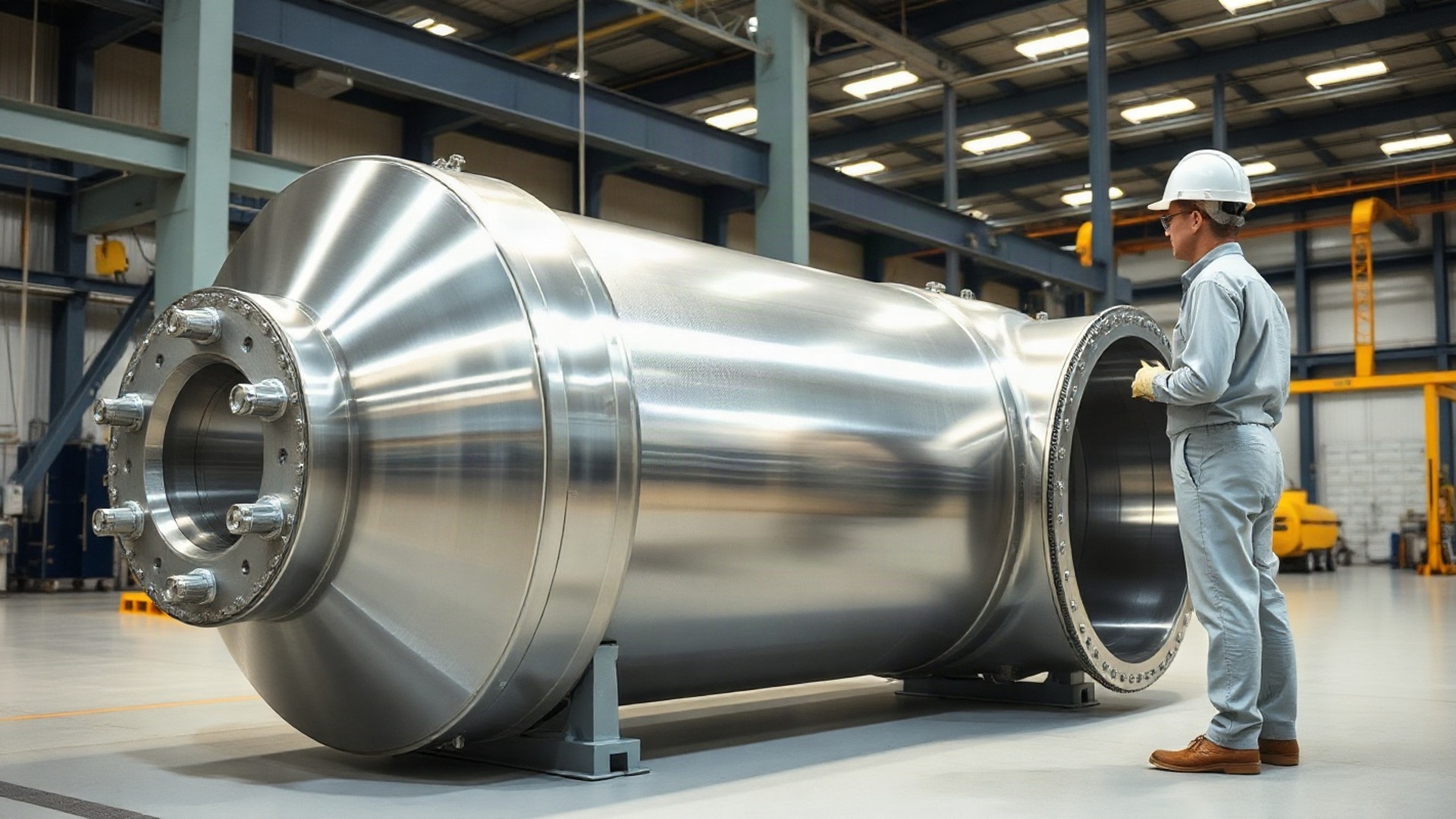
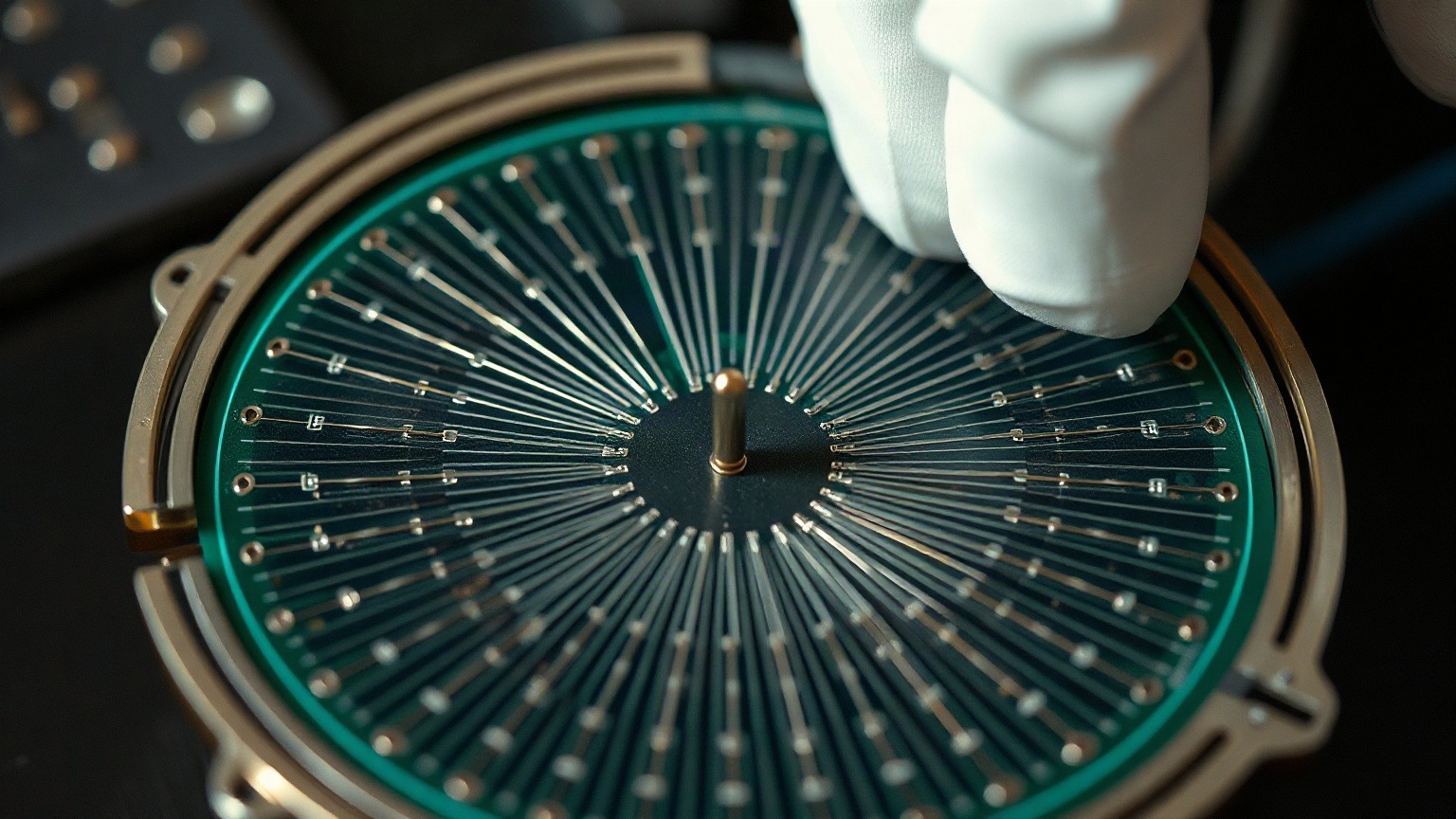
That is the playbook IonQ just executed. At its core, the company builds quantum computers using trapped ions, suspending individual ytterbium atoms in vacuum chambers with electromagnetic fields and manipulating them with precision laser pulses. Instead of etching fixed circuits into silicon, it lets floating atoms talk to one another directly. Big enterprise players from AstraZeneca to Nvidia rent time on these machines through AWS and Azure. They use them to simulate molecules and optimize networks that leave classical supercomputers choking.
In the AI race, quantum hardware is the ultimate long-term frontier. Today's data centers sweat through gigawatts of power running matrix math on classical silicon. Trapped-ion machines aim at problems no cluster of graphics cards can touch: cryptography, quantum chemistry, combinatorial math. If conventional chips hit an architectural wall, whoever controls the quantum fabric controls the next computing paradigm.
| Price LIVE | $34.06 |
| Market Cap | $15.8B |
| Forward P/E | N/A (loss-making) |
| Total Revenue (TTM) | $380.4M |
| 52-Week Low | $24.92 |
| 52-Week High | $73.65 |
| Analyst Consensus | Strong Buy (14 analysts) |
| Analyst Target Mean | $54.28 |
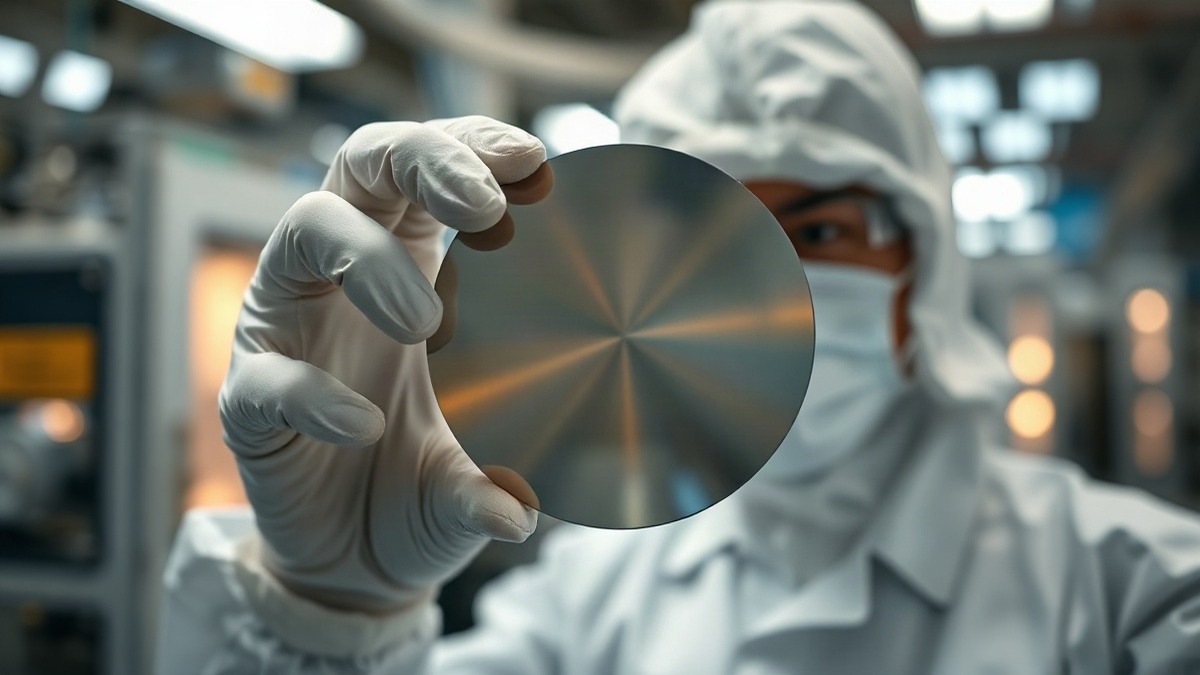
Yet IonQ's blowout third quarter carried a massive footnote. The company posted revenue of $173.8 million, up 336% year-over-year, sparking a roughly 23% single-day stock jump. But that eye-popping headline figure was largely manufactured: IonQ acquired SkyWater Technology in July for roughly $1.9 billion, and $83.5 million of the quarter's sales came entirely from that legacy foundry.
The full-year outlook tells the same story. In August, IonQ guided to $280 million to $290 million and said the range included nothing from SkyWater. Five weeks later it was $450 million to $460 million. Strip out the acquisition, and IonQ's organic quantum platform business grew a very respectable, but far less stratospheric, 127% to $90.3 million.
The immediate trade-off lands squarely on profitability. Before absorbing SkyWater, IonQ operated as a high-margin systems and cloud-access business. Running a physical silicon fab in Minnesota that etches legacy mixed-signal and rad-hard chips is an entirely different discipline. Consequently, consolidated gross margin excluding depreciation and amortization got sliced in half, plunging from 46.7% to 21.9%. Reported net income of $564 million was purely an accounting mirage driven by an $896.2 million non-cash gain on mark-to-market warrant liabilities, masking an underlying operating loss of $433.1 million. IonQ bought a factory to build its future, and the factory brought a factory's margins with it.
For the stock to regain the highs it surrendered earlier this year, the market has to believe this margin hit is a temporary down payment on hardware dominance. Owning a DMEA-accredited Category 1A Trusted Foundry gives IonQ a sovereign moat for Pentagon defense work, but equity investors do not pay pure-play quantum valuations for low-margin contract manufacturing. This is not a story stock with no orders, either: remaining performance obligations stood at $1.17 billion, about half of it due within a year, against roughly $3.7 billion of cash after October's raise.
The equity re-rate depends on whether IonQ can successfully migrate its architecture to its Superion platform. That shift swaps bulky laser hardware for standard CMOS electronics etched directly on-chip, targeting a 330x reduction in cost-per-qubit while already slashing production cycle times from nine months to two. If internal utilization pushes consolidated gross margin back toward 45%, the acquired revenue becomes a genuine competitive moat. If margin stagnates near 20%, Wall Street will price the stock like an industrial parts-stamper carrying a science project.
A short-seller looking at this tape sees a growth rate that was bought rather than built, running against an unforgiving clock. IonQ bought 62% of its dollar growth at half its historical gross margin while operating cash burn hit $570.3 million across nine months, nearly triple the burn from the same period last year. Management quietly dropped its adjusted EBITDA loss guidance after already breaching its full-year target. Aggressive share issuance and a fresh $2 billion capital raise diluted existing holders, and 100 million warrants struck far above current levels now overhang the stock.
More critically, IonQ still has not publicly demonstrated a single error-corrected logical qubit, while publicly traded peers like Quantinuum have showcased dozens. A single customer accounted for 30% of quarterly revenue, and implied fourth-quarter platform sales point toward a sequential contraction.
With benchmark yields hovering near 5% and hot inflation prints chilling appetite for cash-burning tech, investors have little patience for corporate engineering that mimics growth. Watch the fourth-quarter report in February for consolidated gross margin stability and organic platform sales stripped bare of foundry revenue.
Disclosure: The Signal holds no position in IONQ. Positions may change. This is not financial advice.