Every tech giant racing to build frontier AI models has hit the same wall. They have endless capital and warehouse-sized orders for chips. What they cannot find is electricity that runs every minute of the day. Wind and solar stop when the weather turns. Connecting a new gigawatt data center to traditional power lines takes nearly a decade. NuScale Power exists to solve that bottleneck with fission in a shipping container.
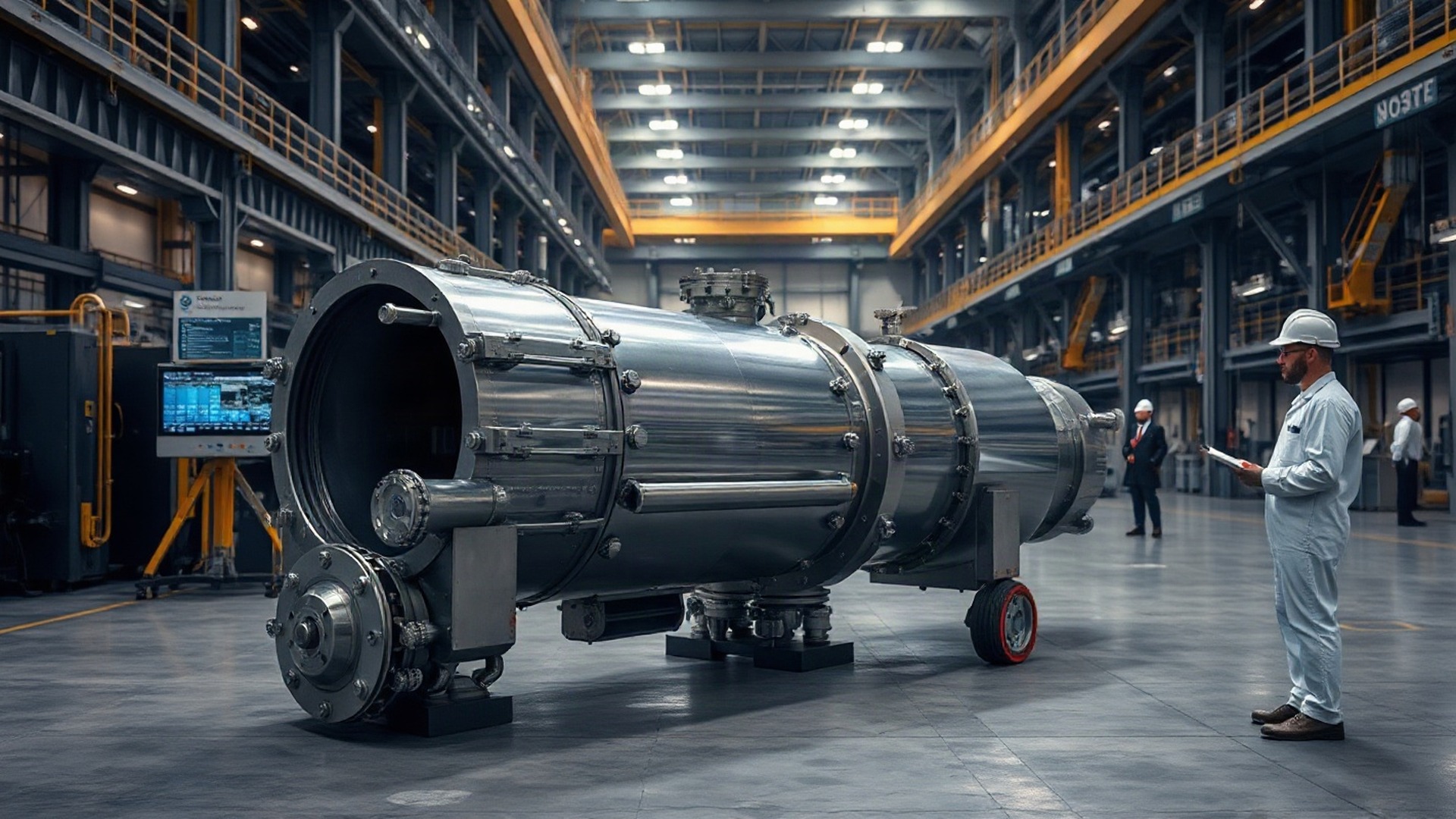
NuScale designs small modular reactors. Traditional nuclear power plants are bespoke megaprojects that require thousands of specialized construction workers, billions of dollars, and fifteen years of red tape. NuScale builds the Power Module: a compact, factory-fabricated 77-megawatt pressurized water reactor that can be clustered in groups of six or twelve. Think of it like modern container shipping versus hand-built wooden cargo boats. You build the reactor in a factory, truck it to a site, and drop it into a pool where physics cools it automatically without human pumps.
That architecture matters to the AI sector because tech companies cannot wait for utility bureaucracy. A single next-generation AI training cluster can demand as much electricity as a mid-sized American city. While rivals like Oklo and Kairos Power capture headlines with futuristic reactor concepts, NuScale holds the ultimate moat: federal permission. It is the only small modular reactor developer with a Standard Design Approval from the U.S. Nuclear Regulatory Commission. In nuclear power, an approved blueprint is the only currency regulators accept.
| Price LIVE | $7.68 |
| Market Cap | $3.36B |
| Forward P/E | -12.4 |
| Total Revenue (TTM) | $10.7M |
| 52-Week Low | $7.21 |
| 52-Week High | $57.42 |
| Analyst Consensus | Hold (15 analysts) |
| Analyst Target Mean | $11.97 |
To understand why the equity crashed more than 80% from its highs, you have to look past the engineering brochures and inspect the bank statements. Over the past twelve months, NuScale generated just $10.7 million in revenue while posting a net loss of $415.7 million. The company canceled its flagship Idaho demonstration project when municipal utilities balked at escalating power prices. NuScale survived by selling new shares, expanding its share count above 410 million and diluting early believers to stockpile over $1.0 billion in cash and short-term securities.
What has to happen for the stock to re-rate from here? The market refuses to price NuScale as an operating business because it treats every partnership as an unbinding press release. Management's commercial partner, ENTRA1 Energy, has a collaborative agreement with the Tennessee Valley Authority to evaluate up to six gigawatts of capacity. For the stock to move, NuScale needs a signed, binding engineering and procurement contract with an upfront cash deposit from a hyperscaler or utility. Until an actual customer cuts a check to pour concrete, Wall Street will treat the company as an expensive research laboratory.
The bear case against NuScale is that its reactors are too expensive to build before dilution wipes out existing equity holders. When cost estimates for its original Utah Associated Municipal Power Systems project jumped from $58 to $89 per megawatt-hour, the customers walked away. Competing energy developers can install utility-scale battery storage and combined-cycle natural gas turbines in twenty-four months at a fraction of the capital cost. If NuScale spends three more years burning cash while selling shares into every rally, investors face permanent capital impairment long before the first Romanian module produces electricity.
Keep your eyes on the RoPower Doicești project in Romania and the Tennessee Valley Authority review milestones over the coming months. If NuScale converts either program from preliminary study into a financed manufacturing order, the stock will reprice its licensing head start overnight.
Disclosure: The Signal holds no position in SMR. Positions may change. This is not financial advice.