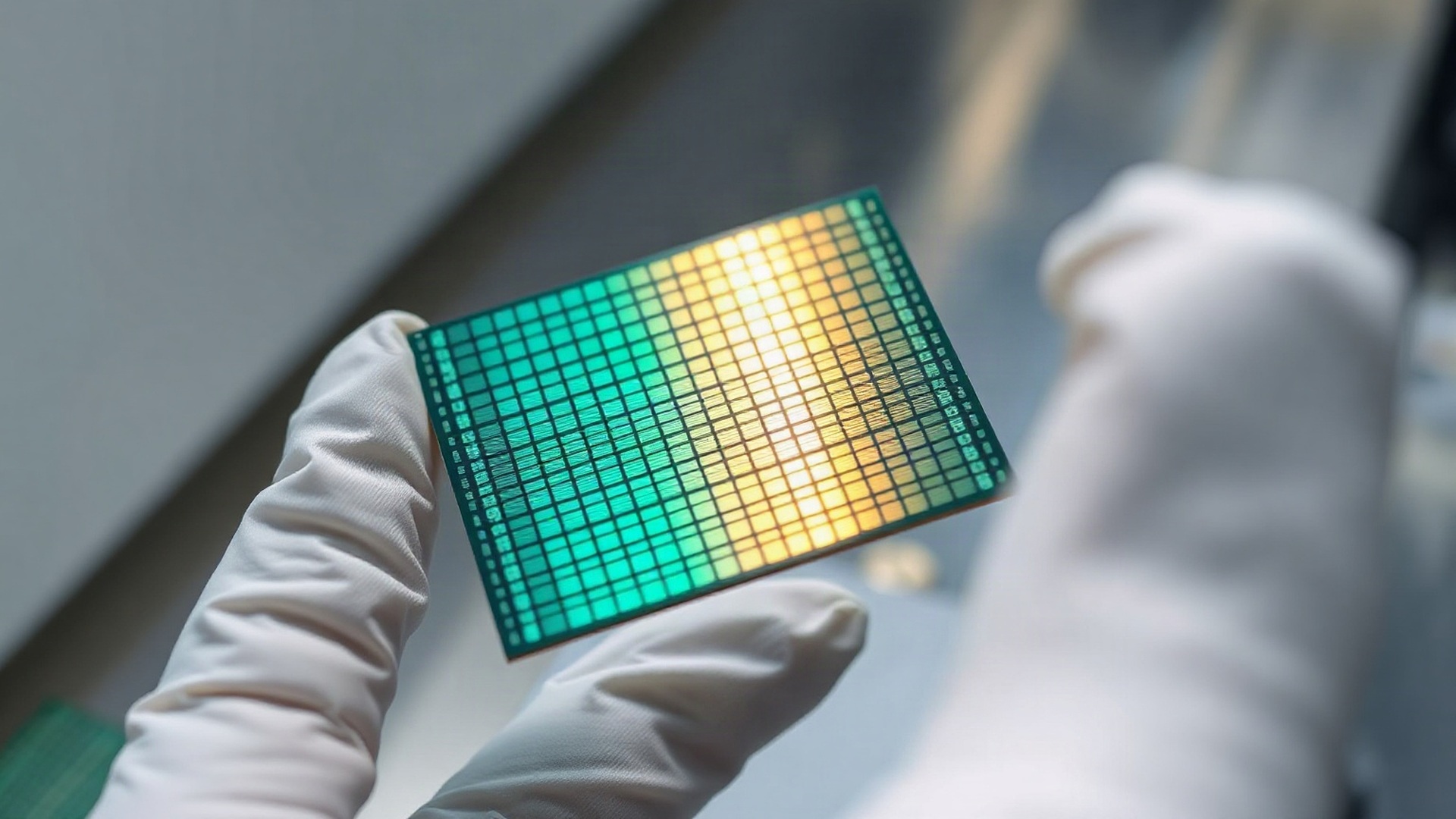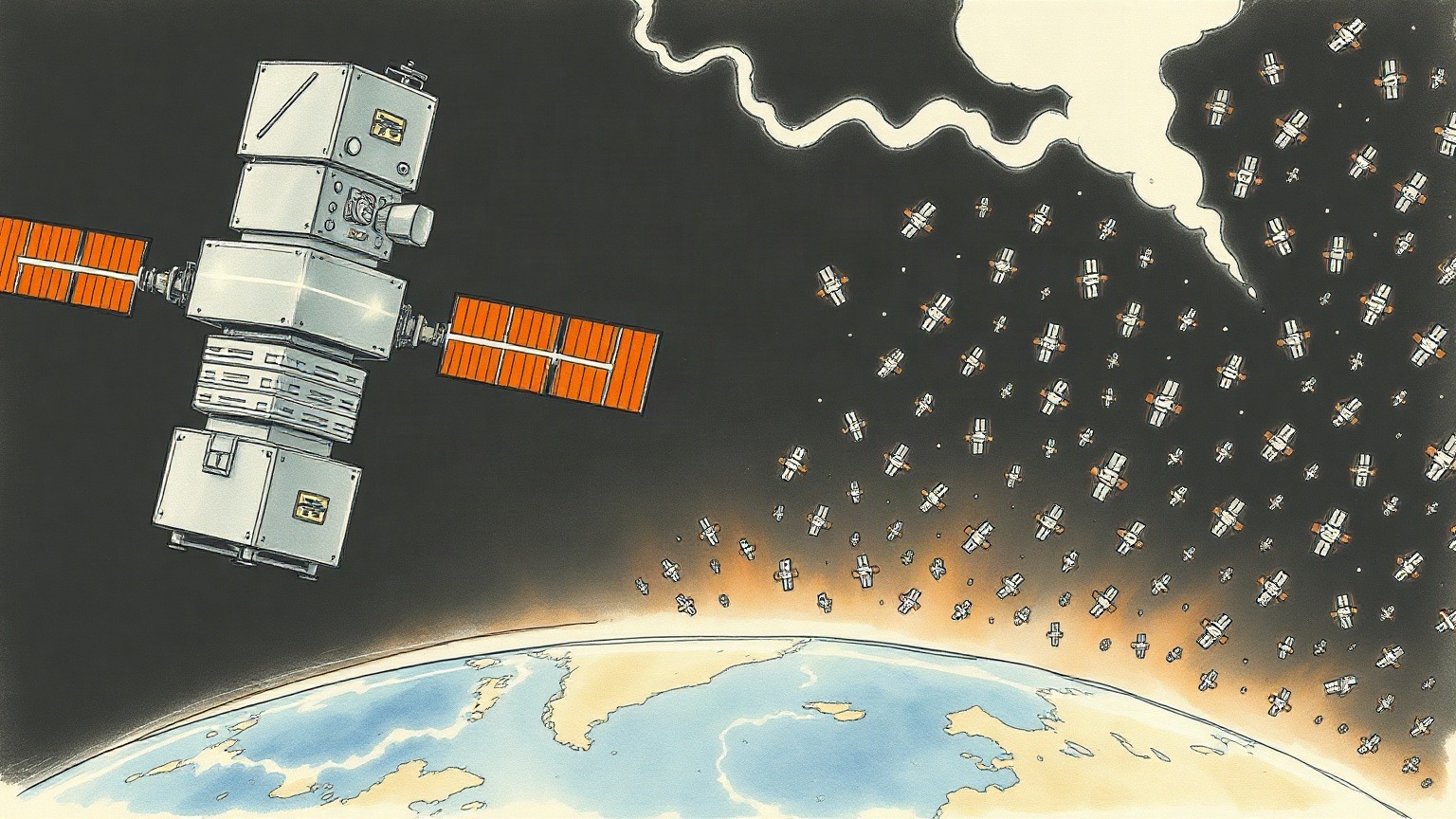
On paper, a federal regulator just gave Elon Musk permission to duplicate human spaceflight thirty-five times over. The FCC approved SpaceX’s application to launch up to one million computing satellites into low Earth orbit for a constellation called Starmind.
To put that in perspective, humanity has launched fewer than 29,000 satellites since Sputnik in 1957. A single million-node filing makes every satellite currently circling the planet look like a rounding error.
| Price LIVE | $127.44 |
| Market Cap | $1.73T |
| Forward P/E | 46.5x |
| Total Revenue (TTM) | $32.0B |
| 52-Week Low | $104.83 |
| 52-Week High | $225.64 |
| Analyst Consensus | Buy (38 analysts) |
| Analyst Target Mean | $256.25 |
SpaceX builds reusable rockets, operates the Starlink satellite internet network, and now rents out raw artificial intelligence horsepower. Think of the business like a busy shipping port that figured out the warehouse next door rents for considerably more than moving the freight.
That pivot to compute is already rewriting the income statement. Revenue reached $14.58 billion in the third quarter, more than doubling from the prior year, as its AI division quietly generated more than half of that top line.
Yet the regulatory victory comes with fine print. The FCC did not grant SpaceX a blank check to run orbital internet hubs; it approved narrow backup frequencies for emergency tracking and command. The satellites’ heavy data traffic must run over optical laser links between spacecraft.
More importantly, the license sets a strict timer. SpaceX must place its first operational satellite in orbit by late 2033 and finish all one million by late 2040.
For the broader AI sector, moving servers into the stars is the ultimate workaround for an exhausted electrical grid. Terrestrial data center developers spend years begging power utilities for substation interconnections. Putting silicon in orbit bypasses local utility queues entirely while capturing uninterrupted solar power—up to eight times the yield of a terrestrial solar farm. If your primary bottleneck is power access, orbit is the only roof left without a landlord.
Before anyone moves your cloud backups to orbit, engineers have to solve a nasty thermodynamics problem. On Earth, cooling a roaring cluster of graphics processors is simple: you blow cold air across the metal or run chilled water through pipes. Space is cold, but because it is an absolute vacuum, there is no air to carry heat away.
A data center in orbit acts like a thermos bottle, trapping thermal energy inside until it cooks its own chips. Thermos, not refrigerator.
The only way to shed that heat is through radiation, which requires colossal surface area. Dumping a single megawatt of waste heat requires roughly 2,000 square meters of radiators. Scale that to a standard 100-megawatt data center, and you need 200,000 square meters of specialized panels protruding into the void.
That thermal tax balloons costs. Levelized compute in orbit runs near $10.91 per processor-hour versus $2.49 on the ground, according to SemiAnalysis. Space-qualified chips that survive cosmic radiation can easily run ten to a hundred times the price of off-the-shelf silicon.
That disconnect between engineering science and paper filings forms the foundation of the bear case. Short sellers view Starmind as a placeholder filing designed to feed a narrative engine rather than a practical engineering roadmap.
The deployment math verges on comedy. Launching one million satellites over seven years requires lofting 391 spacecraft every single day. Even if Starship carries 100 satellites per trip, SpaceX would need 10,000 launches—an absurd leap for a business logging roughly 130 flights this year.
Gartner analyst Bill Ray labeled orbital compute "peak insanity," while AWS chief Matt Garman noted bluntly that the world simply lacks enough rockets. If SpaceX quietly downscales its constellation or slips past its initial 2033 deployment deadline, the orbital compute thesis evaporates into pure science fiction.
What matters for the equity today has almost nothing to do with orbital servers. SpaceX shares trade at a steep forward earnings multiple while sitting more than 40% below their summer highs. The company burned through $40.2 billion in negative free cash flow over the trailing twelve months, driven by nearly $56 billion in capital expenditures. Those outlays include massive terrestrial supercomputing campuses in Texas and Arizona alongside a multi-billion-dollar processor debt facility.
The market is already pricing SpaceX as an inevitable AI monopoly, leaving zero room for capex bloat. Starmind will not generate a dime of cash flow this decade.
For the stock to re-rate upward, SpaceX must prove in its February quarterly results that its terrestrial AI margins can outrun its breathtaking hardware spending.
We are watching for margin stability in the February filings and the first signs of a Starmind orbital prototype launch schedule. The ground buildout pays the bills long before the sky catches up.
Disclosure: The Signal holds no position in SPCX. Positions may change. This is not financial advice.