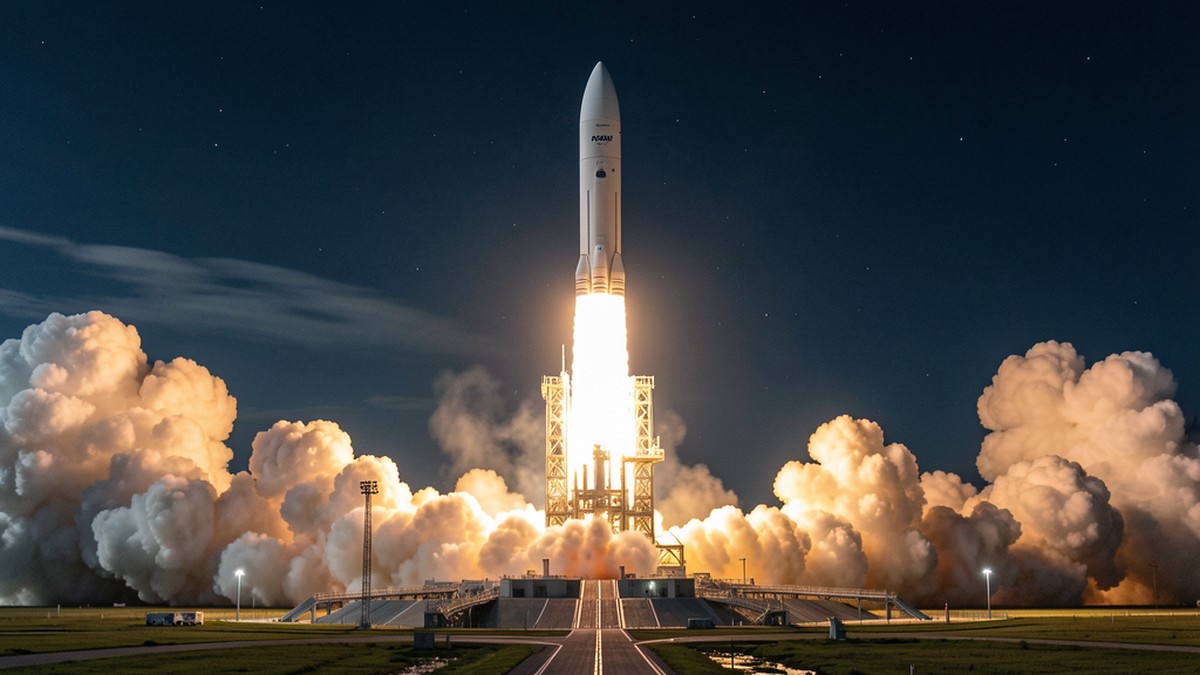
Let's be clear about where Starship actually stands in May 2026: the most ambitious rocket ever built is still in testing — and the results are genuinely impressive.
But here's what most coverage gets wrong: the vehicle that SpaceX calls Starship — Super Heavy booster plus the Starship upper stage — has launched 12 times total as of this month, with 7 successes and 5 failures. Every single flight has been a test flight. There have been zero commercial payload deployments, zero Starlink V3 launches, zero NASA cargo missions. Not yet.
The real story is how fast the testing is accelerating. After the first Block 1 failures in 2023-2024, SpaceX iterated to Block 2 (debuting on Flight 7), then Block 3, and now Block 4 is in production. Each iteration gets closer to the fully reusable, high-cadence vehicle SpaceX promised.
Starship's Real Trajectory
Here's what the test program has actually proven:
- Booster catch success rate: SpaceX has successfully caught the Super Heavy booster at the launch tower on multiple flights — a feat no other company has attempted, let alone accomplished.
- Ship reentry: Starship upper stage has survived reentry and executed controlled splashdowns in the Indian Ocean. Heat shield tiles, flap control, and landing burns are being refined flight by flight.
- Raptor engine reliability: 33 engines firing in parallel, with hot-staging separation working consistently. Engine-out capability has been demonstrated multiple times.
- Rapid reusability: Booster turnaround times are shrinking, though the program hasn't yet demonstrated an orbital relaunch of a recovered vehicle.
The aspirational target — $100 per kilogram to low Earth orbit — is the north star. It's not achieved yet. Falcon 9 currently delivers at roughly $1,500/kg, which is already the industry's best by a wide margin. Getting from there to $100/kg requires solving reusability, high cadence, and mass production simultaneously. That's the bet SpaceX is making.
What SpaceX Has Actually Achieved
While Starship remains in testing, SpaceX's existing business is stronger than ever:
- Falcon 9 continues to fly ~100 missions per year with unmatched reliability. It remains the world's workhorse rocket.
- Starlink has surpassed 6 million subscribers with over 10,000 satellites on orbit — the largest satellite constellation in history by an order of magnitude. Revenue run rate is estimated in the $10B+ range and growing.
- NSSL Phase 3: The Space Force awarded SpaceX a multi-billion dollar contract as part of the National Security Space Launch Phase 3 program, covering launches through the late 2020s. Starship's heavy-lift capability is expected to compete for the most demanding Lane 2 payloads.
- Artemis HLS: NASA's Starship Human Landing System passed key milestones. The uncrewed lunar demo is targeted for 2027, with a crewed landing likely in 2028. The orbital refueling campaign — requiring multiple tanker flights — remains one of the hardest engineering challenges SpaceX has ever faced.
The Real Financial Picture
SpaceX is private, so hard numbers are scarce. Here's what credible estimates show:
- Estimated 2026 revenue: Launch services ($8B+) + Starlink ($10B+ run rate) + government contracts = roughly $18-22B. Strong, but not yet the $25B+ some project.
- Debt: SpaceX carries meaningful debt from its Starlink buildout — recent bond offerings suggest $3-5B in outstanding notes. The frequently cited "$29B" figure appears to conflate debt with total liabilities including deferred revenue, lease obligations, and accounts payable. Not a fabrication, but not the scary number critics make it out to be.
- Valuation: The confidential S-1 filing reportedly targets a valuation range that would make SpaceX one of the world's most valuable companies — a reflection of its unique position across launch, satellites, and deep-space infrastructure.
- Market share: SpaceX carries roughly 85% of all US orbital launch mass and a dominant share globally — a concentration of market power unprecedented in space history.
The Competition Problem
The uncomfortable truth for competitors: even if Starship never reaches $100/kg, the combination of Falcon 9's reliability and Starlink's captive revenue makes SpaceX nearly impossible to undercut on price. ULA, Blue Origin (New Glenn), and Rocket Lab (Neutron) are all targeting different niches, but none can match SpaceX's vertical integration from engine production to satellite internet operations.
That's not a monopoly in the traditional sense — it's a structural advantage built over 20 years of iterative engineering. Antitrust scrutiny is inevitable, but the DoD and NASA actively depend on having multiple providers, and SpaceX has been a cooperative partner on national security and Artemis programs.
Bottom Line
SpaceX is further along with Starship than any competitor's heavy-lift program, but it hasn't reached orbit with a payload yet — let alone hit $100/kg. The real achievement is the testing velocity: 12 flights in three years, each iteration learning from the last, with Block 3 and Block 4 vehicles incorporating years of lessons into every weld and engine bell.
Starship is the most consequential rocket development program since Saturn V — but it's still a program, not yet a product. The moment it starts deploying Starlink V3s and flying national security payloads, the economics of space change permanently. That moment hasn't arrived. It's getting closer every flight.
This is not investment advice. The Signal provides analysis and perspective, not financial recommendations. Always conduct your own due diligence before making investment decisions.