
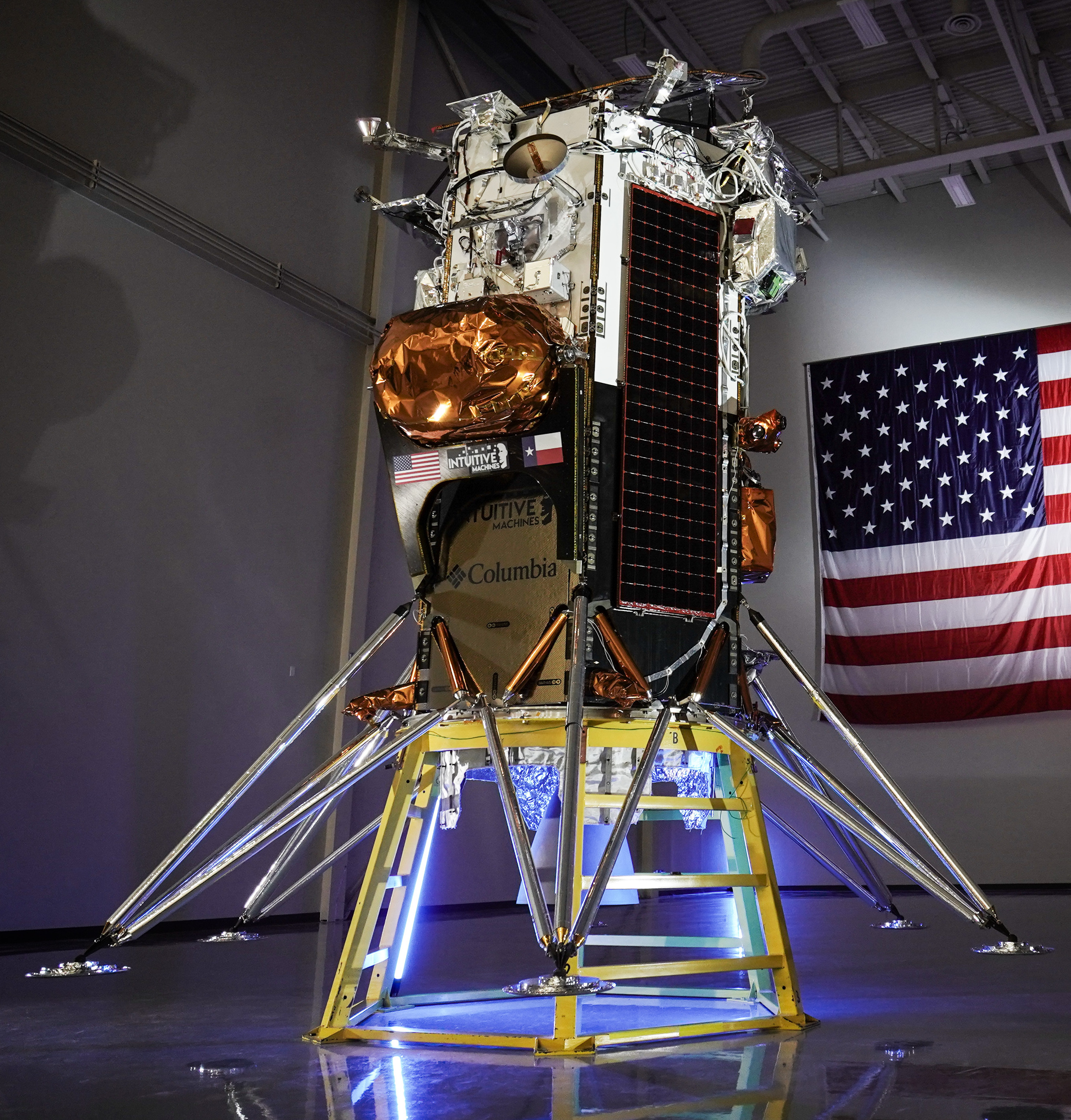
The commercial space race just graduated from speculative vaporware to pure corporate execution. If you're looking to deploy capital into the micro-to-mid-cap aerospace arena, the market is presenting a wild paradox. You have two frontrunners riding the exact same macro tailwinds: Redwire Corporation (RDW) and Intuitive Machines (LUNR). But under the hood, their operational architectures, capital runways, and risk profiles couldn't be more polarized.
Deciding which one to lock into your portfolio for the long haul comes down to a fundamental question: Do you want a diversified, cash-flowing infrastructure play, or do you want an asymmetric, high-stakes moonshot?
Redwire (RDW): The Pure Infrastructure Flex
Let's get it straight: Redwire isn't trying to build flashy rockets or manually plant flags on distant rocks. They are the ultimate "picks and shovels" play for the entire sector. RDW designs and manufactures the critical, non-negotiable components that everyone else needs to exit the atmosphere — think advanced satellite mechanisms, high-performance sensors, and their industry-standard Roll-Out Solar Arrays (ROSA).
What makes RDW a structural heavyweight is its defense profile and massive diversification. They aren't dependent on a single government agency or commercial contract. Instead, they act as a tier-1 or tier-2 supplier across civil space (NASA, ESA), national intelligence, and private commercial satellite constellations. If a defense prime wins a massive satellite contract, or if a tech giant launches a new broadband constellation, Redwire is usually providing the hardware behind the scenes.
| Space Infrastructure | ROSA Solar Tech, Navigation Sensors, VLEO Spacecraft |
| Tactical UAS | Penguin Mk3, Stalker Drone, Military ISR |
And if you thought they were strictly a space hardware player, guess again. Redwire has quietly built out a serious footprint in the tactical uncrewed aerial system (UAS) market. Thanks to their acquisition of Edge Autonomy, RDW is now a major defense drone manufacturer. They build the Stalker — a silent, all-electric drone utilized heavily by the U.S. Marine Corps and Special Operations Command — and the combat-proven Penguin Mk3 tactical UAS. They recently locked down a massive high-eight-figure multi-year contract with a NATO ally for their Penguin drone systems, adding immediate long-term visibility to their defense revenue.
Financially, RDW is flexing real operational maturity. Trailing twelve-month revenue is pushing toward $371 million, their backlog sits at a record $498 million, and they are achieving a massive milestone for a de-SPAC space equity: positive free cash flow. For a long-term hold, positive cash flow means they don't have to dilute shareholders to survive.
Intuitive Machines (LUNR): The High-Stakes Lunar Monopoly
If Redwire is the diversified infrastructure provider, Intuitive Machines is the high-conviction, concentrated moonshot. LUNR doesn't want to be a component supplier; they want to own the entire logistical pipeline for the emerging lunar economy.
LUNR's business is built on three massive pillars: lunar landers (the Nova series), deep-space data/communication relay networks, and orbital services. They are the tip of the spear for NASA's Commercial Lunar Payload Services (CLPS) initiative. When the U.S. establishes a permanent footprint on the Moon, LUNR intends to be the primary data highway and cargo delivery service keeping it alive.
Financially, LUNR plays a high-variance game. On one hand, they hold an enviable capital cushion of roughly $622 million to fund their scaling operations. They are also landing monumental contract allocations, like their jaw-dropping $4.8 billion NASA Near Space Network (NSN) award.
However, LUNR remains unprofitable on a trailing GAAP basis. Their revenue model is inherently "lumpy," dictated by massive milestone payments and highly anticipated, high-stress launch windows. Each mission carries severe binary risk. A successful lunar touchdown sends the stock into the stratosphere; a minor telemetry issue or landing anomaly can instantly shred institutional sentiment and market cap.
Side-by-Side: The Technical Breakdown
| Strategic Vector | Redwire (RDW) | Intuitive Machines (LUNR) |
|---|---|---|
| Core Operational Focus | Space hardware + Military tactical drones | Lunar logistics, landers & deep-space data |
| Revenue Quality | High diversification; insulation via multi-domain supply chain | High concentration; anchored to mega-scale federal contracts |
| Cash Profile | Positive free cash flow; steady, predictable scaling | High burn, pre-profitable; insulated by a $622M cash pile |
| Primary Downside Risk | Margin compression, macro supply chain friction | Binary mission failure, political/budget shifts |
The Signal: Portfolio Allocation Strategy
For long-term capital deployment, the move comes down to your personal risk tolerances.
Redwire (RDW) is your foundational, compound-interest machine. By pairing secular space manufacturing with high-demand tactical defense drones, they've created a resilient revenue stream that can handle macro headwinds. Their self-sustaining free cash flow makes them an incredibly safe, reliable vehicle to ride the broader aerospace boom.
Intuitive Machines (LUNR) is your high-alpha tactical asset. LUNR shouldn't be the bedrock of a conservative portfolio — it's an asymmetric growth weapon. If they fully execute and successfully monopolize the Moon's transportation and communication pathways, the upside is unparalleled.
The Signal's Bottom Line: Smart macro players looking for space exposure aren't choosing one over the other; they are overweighting RDW for its cash-flowing defensive moat and taking a calculated, high-upside position in LUNR. The picks-and-shovels play keeps you in the game; the moonshot is where the alpha lives.