Here's the part of the AI boom that never makes the keynote slides: the cables. Everyone wants to know which chip is fastest and which cluster is biggest, but every one of those chips has to talk to the network — and that conversation happens inside a building owned by someone else. Equinix is that someone else.
In plain English: Equinix runs roughly 270 data centers planted in the world's business hubs across 36 countries — the places where networks, clouds and companies physically plug into one another. Founded in 1998 and based in Redwood City, California, it became a REIT in 2015 and is run today by CEO Adaire Fox-Martin. Its business model is almost insultingly simple: rent the space, then charge a recurring monthly fee for every cable that connects two customers inside the building.
That second part is the moat nobody's shorting. The platform now carries about 500,000 interconnections linking more than 10,000 cloud, AI, network and SaaS providers, and Q2 2026 set a record with roughly 9,700 net new cross-connects added in a single quarter. Those aren't one-off sales — they're monthly tolls that keep ringing as long as the cable stays plugged in.
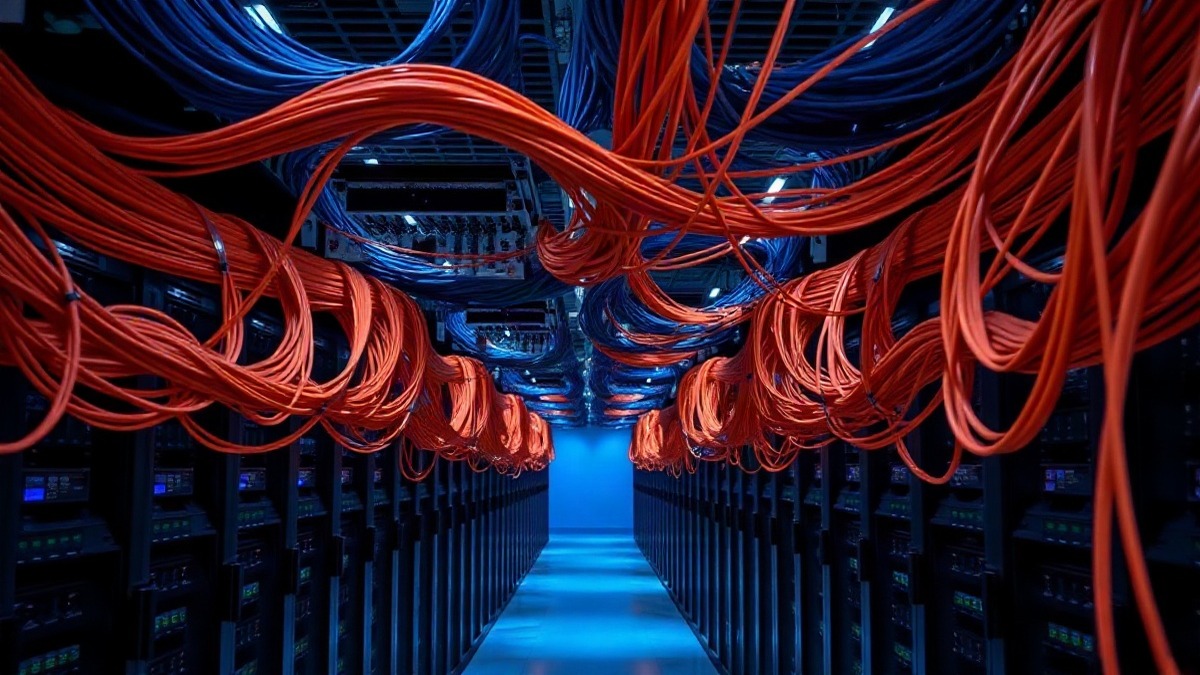
Why should the AI trade care? Because AI traffic doesn't look like the internet traffic of old. Training runs and inference workloads move data sideways — GPU to GPU, rack to rack — in what the industry calls east-west traffic, and all of it has to cross physical cables in physical buildings. A cross-connect sounds technical, but it's really just a cable one customer orders to reach another — ordered like a utility, billed like a subscription.
The more models companies train, the more cross-connects they buy, and the more tolls Equinix collects. It's a network-effect loop hyperscalers can't replicate by renting GPU clusters — you can't copy half a million physical cables with a software update.
The numbers back up the story without stealing it. Q2 revenue grew 16.4% year over year, interconnection revenue climbed 11.3%, adjusted EBITDA hit a record at roughly a 53% margin, and AFFO — the metric that actually matters for a REIT — rose 20%. Management raised full-year guidance, now expecting revenue growth of 11-12% and AFFO growth of 13-14%, while the dividend yields close to 2%.
If you're new to REITs, one translation note: don't sweat GAAP earnings here. Payout ratios above 100% of reported EPS are normal for the structure — the right lens is AFFO, and that's compounding nicely. Interconnection revenue is only about 17% of the total, but it's the highest-margin, most-recurring line on the income statement, which is exactly why you should watch the cable count, not the rent roll.
One honest caveat before the hype sets in: Q2's growth got a nine-figure one-time boost from xScale fees, so the organic picture runs a touch cooler than the headline. Strip those out and the story still compounds — it's just not superhero strong.
The bull-bear argument, then, isn't really about the quarter. Shares have climbed roughly 40% over the past year and trade near their highs, with the Street's average target implying about 14% upside from here. Bears point to a valuation that makes classic REIT investors wince and to the usual rate sensitivity of anything with a dividend — and so far, the cable count has outrun every one of those worries.
The story was never the revenue beat. It's that the cables in the building — not the chips in the racks — are the AI bottleneck nobody's shorting. Hyperscalers can spin up a GPU cluster in months; they can't spin up half a million cross-connects in a neighborhood that already has power, fiber and 10,000 customers.
Next time someone shows you a photo of a gleaming GPU cluster, ask where it plugs in. Equinix's answer is already in the ground, and it bills by the month.
Disclosure: The Signal holds no position in EQIX. Positions may change. This is not financial advice.