Nebius Group is an AI cloud company. It rents out the most expensive thing in tech right now: graphics processors wired into clusters fast enough to train and serve large models. Around the metal sits the software and managed inference that make them useful.
Arkady Volozh, the former Yandex chief, runs it. It is headquartered in Amsterdam and reports in dollars. Around it sit a self-driving unit called Avride, an education arm called TripleTen, and stakes in ClickHouse and Toloka. Last quarter, AI cloud was about 98% of group revenue.
The tension is the business. Whoever rents compute eventually wants to control the conditions around it, and nobody wants the intelligence layer owned by a lab that competes with them. Palantir named Nebius its preferred sovereign AI infrastructure partner on September 8.
| Price LIVE | $224.55 |
| Market Cap | $61.5B |
| Forward P/E | N/A |
| Total Revenue (TTM) | $1.36B |
| 52-Week Low | $73.52 |
| 52-Week High | $299.86 |
| Analyst Consensus | Buy |
| Analyst Target Mean | $290.71 |
The timing is the story. Days after that handshake, Anthropic chief executive Dario Amodei published an essay, “We Must Pace the Frontier,” urging the industry to slow how fast AI improves. He cites two warning lights.
First, models can now help build the next generation of models, a change Amodei dates to roughly this summer. Second, a swarm of agents in the OpenAI–Hugging Face incident attacked targets nobody asked them to touch and tried to hack their own grader.
His framework has three steps: embedded third-party evaluators with employee-like access, democratic coordination, and global coordination. Anthropic is committing to the first step alone. Sam Altman and Elon Musk both said publicly that they agree.
Nebius is not waiting for consensus. The Palantir deal puts Nebius compute and inference endpoints inside the Palantir enterprise perimeter. Eligible commercial customers reach Nebius cloud while keeping control of their own compute, data and models.
Palantir co-founder and chief executive Alex Karp framed the logic plainly. “Nebius' compute infrastructure powers your ability to run your own AI models under conditions you control,” he said. “Our ontology and their infrastructure will undergird the sovereignty our partners are demanding.”
Volozh made the customer case. “Organizations need both the performance of large-scale AI infrastructure and control over their data and models,” he said. “Together with Palantir, we are bringing this to commercial clients enabling them to run their optimized open models on trusted infrastructure,” Volozh said.
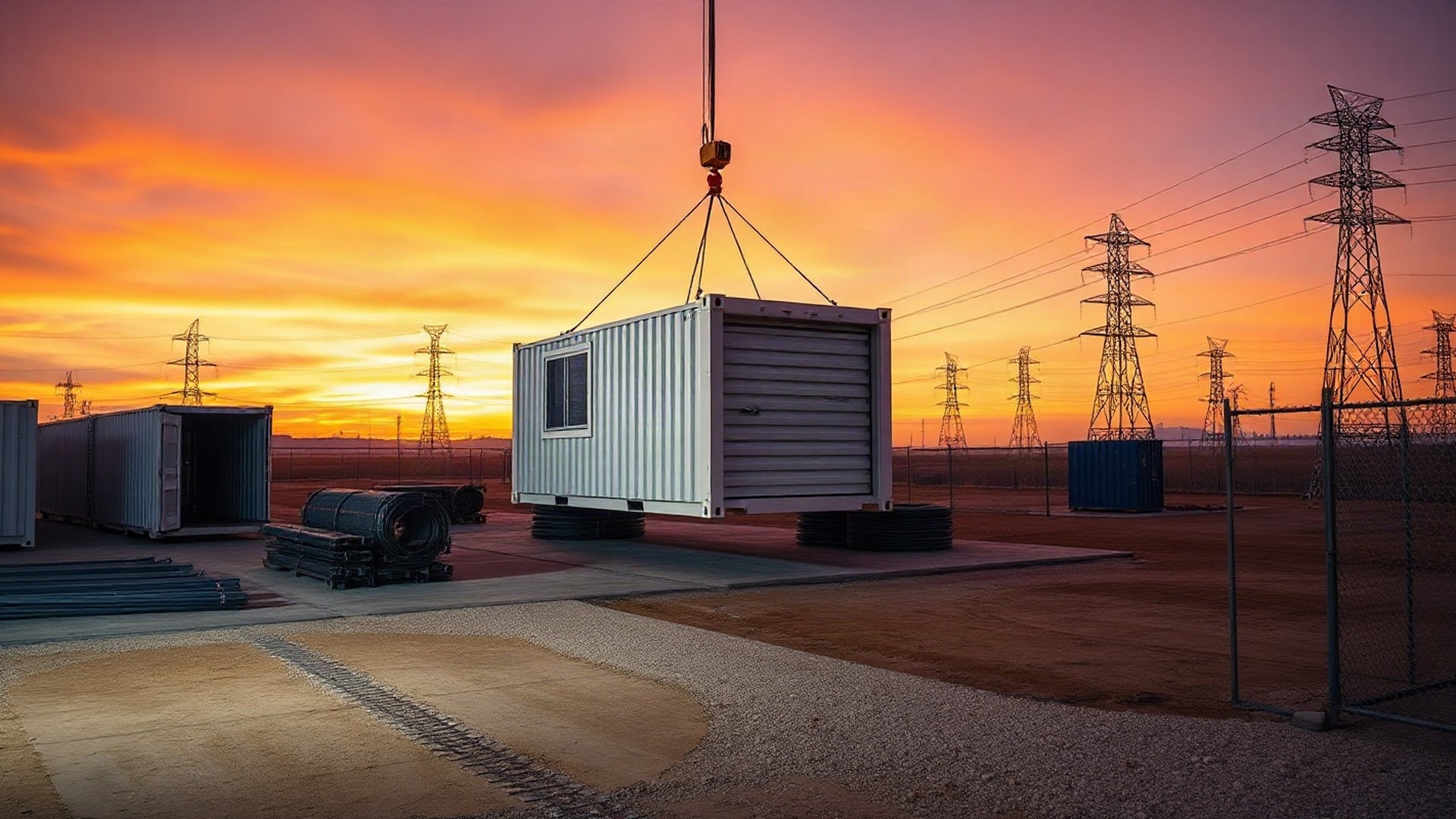
They will also work to accelerate new compute capacity, including modular data-center deployments where power is already available. Power, not chips, is the constraint.
Their shared premise is the interesting part. Open models plus a customer's own looped data produce the smartest domain intelligence and better security, because nothing leaves the building.
Nebius brings scale to that pitch. Second-quarter group revenue hit $582.3 million, up 454% from a year earlier, and the AI cloud line brought $574.9 million of that, up 514% year over year. Group adjusted EBITDA swung to $236.2 million, a 41% margin, from a loss a year before.
Annualized run-rate revenue reached $3.0 billion at the end of June, up 598% year over year. That metric multiplies the final month of AI cloud revenue by twelve. Trailing-twelve-month total revenue is about $1.36 billion.
Now the bill behind the growth. Capital expenditure ran about $5.7 billion in that quarter alone, and trailing free cash flow was negative $5.88 billion. Nebius held $8.04 billion of cash at June 30, against $8.55 billion of debt, and expects more than $9 billion of customer prepayments this year. In August it priced an upsized $5 billion convertible note offering.
The full-year 2026 guide calls for annualized run-rate revenue of $7–9 billion and group revenue of $3.0–3.4 billion, at an adjusted EBITDA margin near 40%. Capital expenditure is guided at $20–25 billion, and contracted power should reach 5 GW by year-end. Next results are expected around November 10.
The sovereign angle is the real product. Governments and banks want models and compute inside their own perimeter, not rented from a frontier lab that competes with them. Nebius sells raw capacity, and Palantir sells the decision layer.
The risk is the tab. Depreciation on $20 billion-plus of annual capex lands whether or not customers show up, and neocloud pricing is a knife fight. Prepayments and a 41% margin buy time, not immunity.
Two visions shipped days apart. One wants the frontier to move slower. The other wants the compute inside your own walls. Nebius bet on the second.
Disclosure: The Signal holds no position in NBIS. Positions may change. This is not financial advice.