RGTI
Rigetti Just Built a Department for Installing Quantum Computers — Right as Washington Bet $2B on the Sector
Rigetti created a Systems Delivery unit to ship on-prem quantum systems at scale — days before a sector-wide rally on renewed attention to the federal government's $2B quantum LOI program, where Rigetti holds a spot worth up to $100M.
Aug 23, 2026
5 minutes
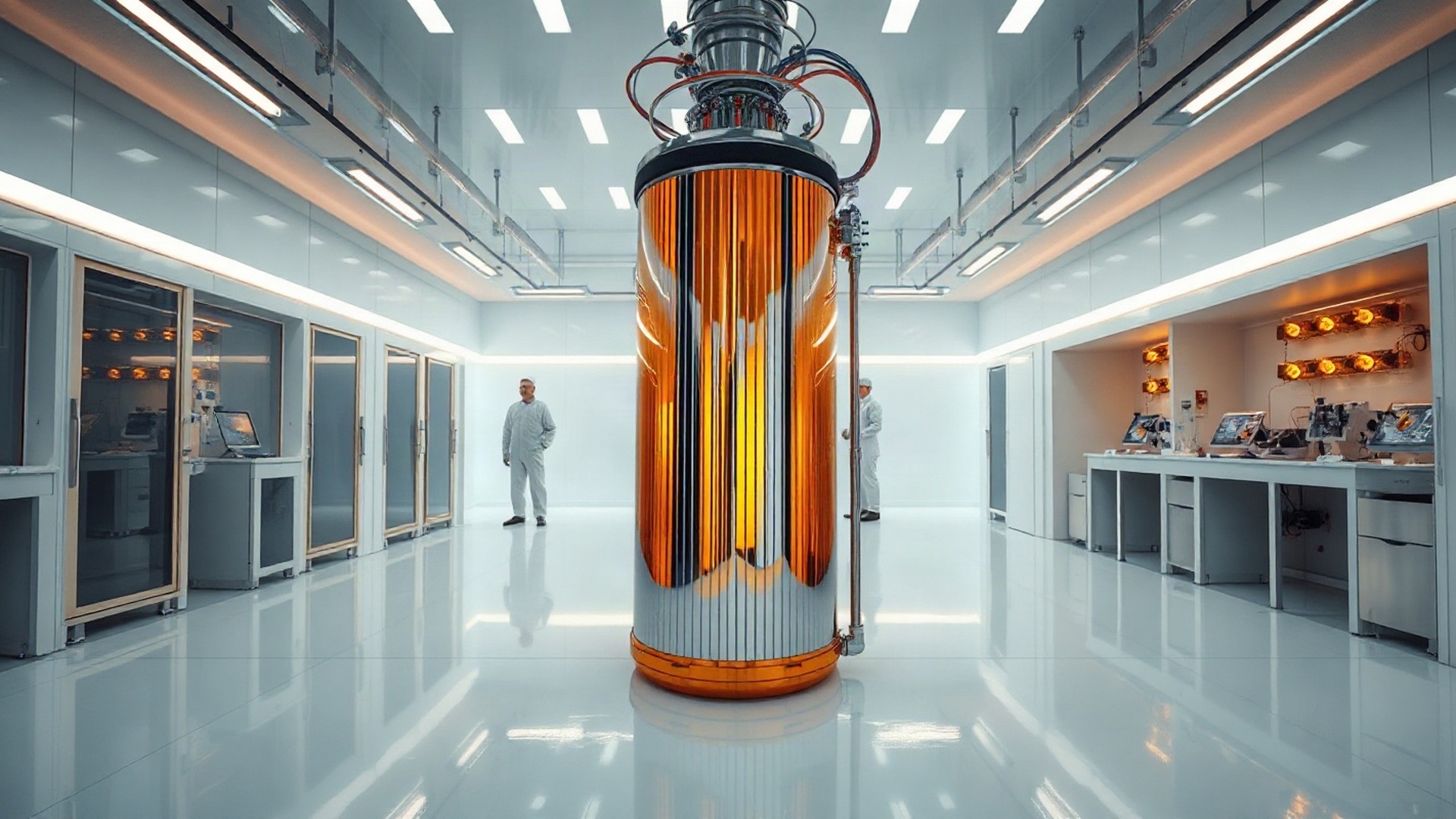
Here's a sentence you don't hear every day: Rigetti Computing just created a department whose entire job is showing up at a customer's site and installing a quantum computer. Not a demo. Not a cloud dashboard. A real machine, bolted in, wired up, running.
And the punchline? Days later, the whole quantum sector ripped higher as Wall Street rediscovered the federal government's $2 billion bet on the industry — with Rigetti's name on a slice worth up to $100 million.
So what does Rigetti actually do, in plain English? Founded in 2013 and based in Berkeley, it builds full-stack quantum computers out of superconducting qubits — think chips, made the semiconductor way. It's one of the few that manufactures its own processors, at Fab-1, the industry's first dedicated quantum chip fab.
And it sells real products: a 9-qubit Novera QPU that plugs into a customer's existing cryo and control gear, up to the 108-qubit Cepheus-1-108Q — the industry's largest multi-chip quantum computer. National labs, governments, universities, and research centers buy them. Prefer not to own the hardware? You can rent time on Rigetti's machines through its cloud service on AWS Braket, Azure, and qBraid.
The Numbers That Matter
| RGTI PriceLIVE | $17.91 |
| Market Cap | $6.0B |
| Forward P/E | N/A |
| Total Revenue (TTM) | $13.4M |
| 52-Week Low | $12.53 |
| 52-Week High | $58.15 |
| Analyst Consensus | N/A |
| Analyst Target Mean | $28.81 |
Price refreshes live · All other figures as of August 21, 2026
The company calls the new unit Systems Delivery, and it's more than an org chart. On-prem demand now spans 9-qubit Novera starters to 108-qubit Cepheus-class systems, and install-and-support used to live inside engineering — like a carmaker keeping its dealerships inside the factory. Now there's end-to-end accountability for getting machines to customer sites.
Engineering, meanwhile, gets to focus on the roadmap — including a target of 99.5% median two-qubit gate fidelity on Cepheus-1-108Q, up from roughly 99.1% today. Two veterans moved up: David Rivas, CTO since 2023, becomes COO; Andrew Bestwick, the chiplet architect, becomes CTO. Both report to CEO Subodh Kulkarni, who pointed to 'growing deployment activity.'
Wall Street's first reaction? A shrug, honestly. The next day quantum names slid with the broader tape, headlines muttered about a 'leadership shake-up,' and a routine insider sale for taxes hit the wires. Then Friday happened.
Rigetti popped more than 12% intraday and closed up 11.5%; IonQ and D-Wave climbed roughly 8%; Infleqtion soared 12%. The sector ETF barely moved — up less than 1%. That's a pure-play group trade on the funding pipeline, not any single company's news.
The funding pipeline is the Commerce Department's $2.013 billion quantum program under the CHIPS Act — announced back in May, mind you, not this week. Nine companies are in, and Uncle Sam takes non-controlling equity stakes — treating quantum like semiconductors: national-security infrastructure. GlobalFoundries is in line for up to $375 million for a secure quantum foundry, and IBM gets $1 billion for Anderon, a 300mm pure-play quantum wafer fab in Albany.
Seven hardware vendors round out the list, including Rigetti with up to $100 million over three years. This week's coverage simply re-lit the sector as investors re-engaged with the letter-of-intent-to-contract pipeline — and Rigetti's own LOI has been signed since May.
Here's why this matters beyond the trading tape. Quantum is the next compute layer after GPUs, and the federal program explicitly funds hardware optimization and data-center-compatible systems. Translation: quantum as an installed piece of the future data center, the same buildout logic as AI chips.
The near-term bridge is hybrid: HPE and the Pittsburgh Supercomputing Center are standing up TangleLab, an NSF-funded testbed with a Novera from Rigetti inside. Rigetti pitches its cloud as a quantum co-processor for classical and AI workloads, and banks and pharma firms are already piloting it for portfolio optimization and drug discovery. Pilots become contracts if the next-gen 100+ qubit system lands late this year.
The on-prem orders are real and global. India's C-DAC ordered a 108-qubit system for Bengaluru. The UK's National Quantum Computing Centre already runs a 36-qubit Rigetti machine. An Asian tech manufacturer and a California AI startup bought Novera systems.
One honest caveat: recognized backlog is still small — about $2.7 million at the end of June — so the bull case was never booked revenue. It's the order pipeline plus the federal LOI, backed by $541 million in cash, zero debt, and revenue up 185% year over year. Growth is the story; scale is the assignment.
Watch three things in the coming quarters: LOIs converting to definitive agreements, Cepheus deliveries actually landing at customer sites, and the fidelity number ticking toward 99.5%. If the lab-to-data-center story holds, Rigetti stops being just a quantum trade and becomes an infrastructure company with the government as co-investor. That's a different company than the one that went public in the SPAC era — and it finally has a department built for the job.
Disclosure: The Signal holds no position in RGTI. Positions may change. This is not financial advice.
— The Signal Editorial Team
This article is for informational purposes only and does not constitute investment advice. The Signal may hold positions in securities mentioned. Past performance is not indicative of future results. Always conduct your own research before making investment decisions.