
Kratos Defense & Security Solutions (NASDAQ: KTOS) is not a household name. It doesn't build fighter jets or aircraft carriers. But it builds the systems that make those platforms obsolete — drones, loitering munitions, hypersonic testbeds, and satellite propulsion. And that niche is becoming the center of gravity in modern defense spending.
The numbers tell the story. Revenue hit $1.42B in the trailing twelve months, growing 18.5% year-over-year. Net income sits at $29.4M — thin on an absolute basis, but the trajectory matters more. EBITDA of $81.2M and a forward P/E of 52.3x reflect a company investing aggressively into production capacity for programs that are still ramping.
The median analyst target of $111.00 implies 97.6% upside from current levels near $56. Consensus rating is Buy with a mean score of 1.58 (where 1 = Strong Buy). Sixteen analysts cover the stock — none rate it a Sell.
The Valkyrie Catalyst
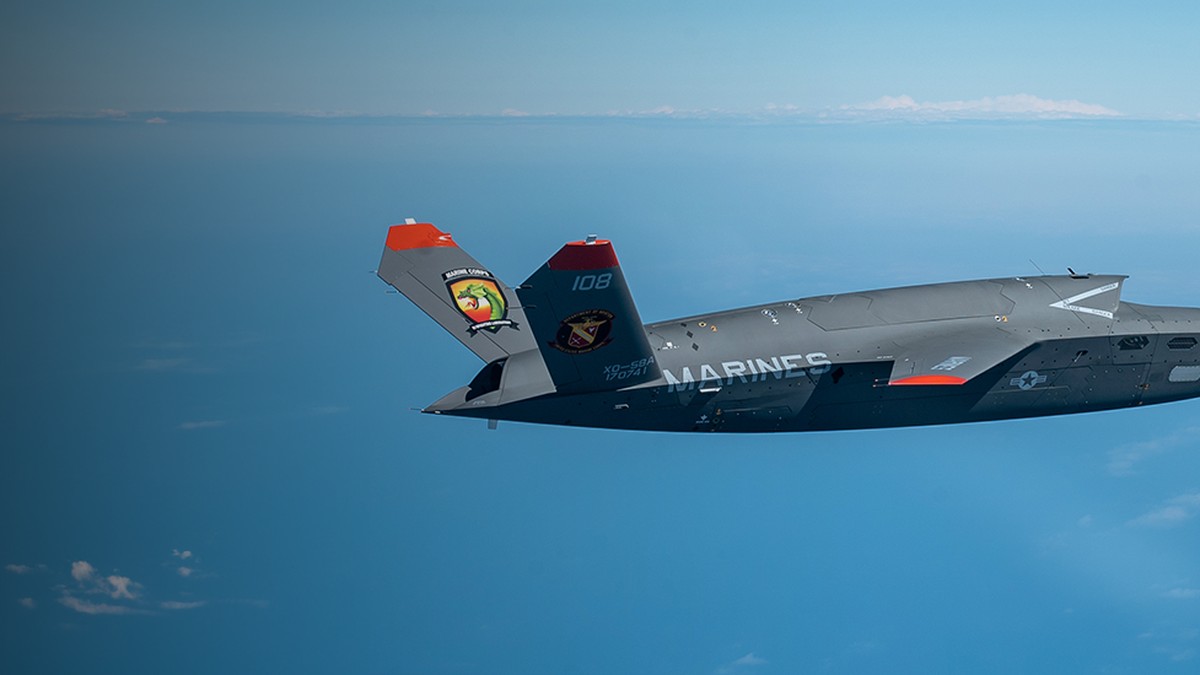
The crown jewel in the Kratos portfolio is the XQ-58A Valkyrie, an experimental stealthy unmanned combat air vehicle (UCAV) designed to operate alongside manned fighter jets like the F-35 and F-22. The Valkyrie program has been funded through multiple Air Force test campaigns, and a production decision could transform Kratos's revenue profile overnight.
Unlike the large primes (Lockheed, Northrop, Boeing) that build crewed aircraft, Kratos positions itself as the affordable, attritable drone supplier — meaning their drones are designed to be cheap enough to risk losing in combat. This attritable philosophy is gaining traction across the Pentagon as peer conflict scenarios demand mass, not just exquisite capability.
Beyond Drones: Missiles and Space
Kratos's missile systems division produces target drones (the BQM-177A, which simulates anti-ship cruise missiles), loitering munitions, and hypersonic test vehicles. The company's Erinyes hypersonic testbed recently completed a successful flight for the Pentagon, cementing Kratos as a trusted partner in the hypersonic race.
In space, Kratos provides satellite propulsion systems, command-and-control software, and ground systems for both government and commercial customers. As the space economy expands, Kratos benefits from dual-use demand — their propulsion systems fly on both military and commercial satellites.
Valuation: The Risk Is Execution
A trailing P/E of 330x looks absurd at first glance. But normalize for investment phase — Kratos is pouring cash into Valkyrie production readiness, hypersonic test capability, and space manufacturing capacity. The forward P/E of 52.3x is still elevated but reasonable for a defense technology company growing revenue 18.5% and trading at a fraction of the large primes' multiples on a growth-adjusted basis.
With a market cap of $10.5B, Kratos is one of the smaller pure-play defense technology companies — but its exposure to three simultaneous spending cycles (drones, hypersonics, space) makes it a leveraged play on the largest defense budget increases in a generation. The quiet compounder is building an earnings base that could support today's share price in 18-24 months even without multiple expansion.


Discussion
Comments powered by Giscus — sign in with GitHub to join the discussion.