Here's a name that doesn't get enough love in the defense-industrial conversation: GE Aerospace ($GE).
| geStockPrice | 292 |
| geYearHigh | 356 |
| geYearReturn | 0.357 |
| geForwardPE | 22 |
| geBacklog | 40000000000 |
| geOperatingMarginExpansion | 0.02 |
| geCommercialEnginesInService | 18000 |
| geMilitaryEnginesInService | 26000 |
| gePriceTarget2028 | 400 |
| rtxForwardPE | 24 |
| axonForwardPE | 45 |
| pltrForwardPE | 60 |
While everyone's obsessed with Palantir's software moat and Lockheed's F-35 pipeline, GE Aerospace has quietly rallied 35.7% over the past year, won a major Air Force contract for next-gen adaptive cycle engines, and stacked a $40 billion backlog that spans the next decade of commercial and military production. And at $292 — roughly 18% off its 52-week high — it looks like the kind of compounder you kick yourself for not buying in five years.
This isn't your father's GE. The aerospace spin-off from the old General Electric conglomerate is a focused, lean, cash-generating machine. And the market hasn't fully priced it in yet.
The Numbers That Matter
GE Aerospace's Q1 2026 earnings told a clear story: this is a company in the middle of a structural growth cycle, not a cyclical bounce. Revenue beat estimates by a wide margin. Operating margins expanded 200 basis points year-over-year. Free cash flow came in well above guidance.
Here's the math that matters for investors:
- $40B+ total backlog — 3.5x annual revenue
- $292 current share price — 18% below the 52-week high
- 200 bps operating margin expansion in Q1 alone
- 18,000+ commercial jet engines in service, growing
- 26,000+ military engines in the global fleet
- GE426 adaptive cycle engine selected for next-gen autonomous combat jets
That backlog is the key number. Most industrial companies dream of a 1.5x book-to-bill. GE Aerospace is running at levels that suggest multi-year visibility on revenue that most defense primes would envy.
The Air Force Just Gave Them a Blank Check
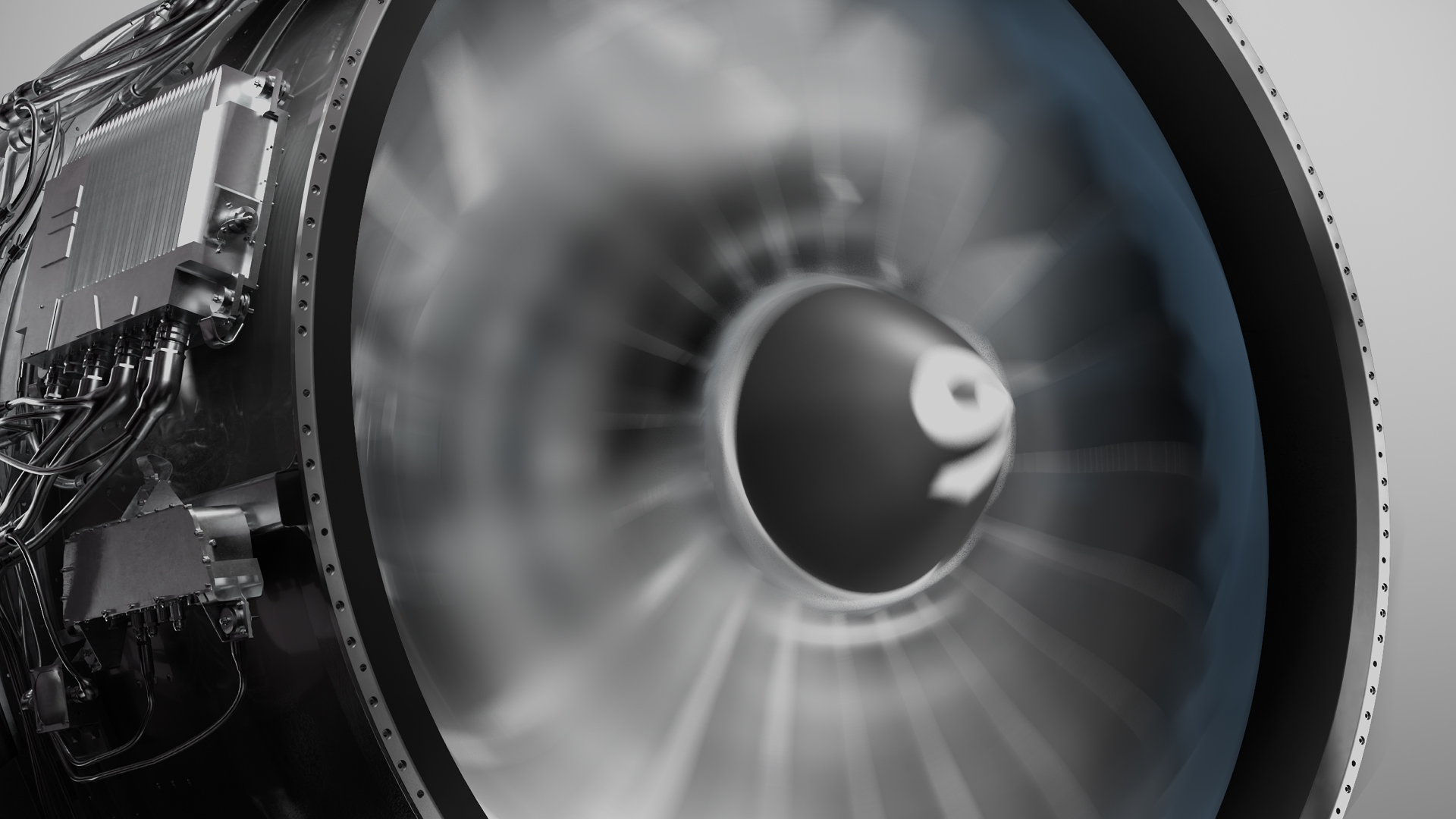
The U.S. Air Force's selection of the GE426 adaptive cycle engine to power future autonomous combat jets is the kind of program win that defines decades. The adaptive cycle engine represents a generational leap — three-stream architecture that switches between high-efficiency cruise and high-thrust combat mode in real time.
This isn't a contract. It's a technology franchise. Once GE's engine architecture is baked into the next generation of U.S. combat air power, the sustainment and upgrade revenue runs for 30+ years. Think Pratt & Whitney's F135 on the F-35 — except starting from scratch with a clean sheet design.
The Barron's Call: 'Unfairly Punished'
Barron's recently published a piece calling GE Aerospace stock "unfairly punished" — and the thesis is compelling. The stock pulled back from its highs on macro fears (Iran conflict, tariff noise), not on any company-specific deterioration. Meanwhile, the underlying business is accelerating:
Commercial aviation is in a super-cycle. Airlines are retiring older, less efficient fleets and replacing them with next-gen narrowbodies powered exclusively by GE Aerospace and its joint ventures (CFM International with Safran). Every LEAP engine that ships today generates 30+ years of aftermarket service revenue — at margins that expand over the engine's life.
On the military side, the push toward autonomous combat systems and allied interoperability means engine demand is structurally growing, not cyclical. Every allied nation upgrading its fighter fleet needs GE power.
The Sleeping Giant Thesis
Why "sleeping giant"? Because GE Aerospace operates in plain sight but gets none of the premium multiple that defense software or space stocks command. At roughly 22x forward earnings, GE trades at a discount to RTX (24x), a steep discount to AXON (45x+), and an absolute bargain versus Palantir (60x+).
Yes, GE Aerospace is an industrial company, not a software company. But the aftermarket economics of jet engines are closer to a subscription business than a traditional manufacturer. Once an engine is on the wing, the parts and services revenue is recurring, contractual, and high-margin.
The bull case is simple: if GE Aerospace can expand margins by another 300-400 bps over the next three years — which management's guidance trajectory supports — and the market re-rates the stock even to 25x earnings, you're looking at a $350-400 stock by 2028.
The bear case? A recession hits commercial air travel, airline CapEx freezes, and the engine delivery pipeline slows. Fair. But that's a timing risk, not a thesis-breaker — the backlog doesn't disappear, it just shifts right.
Right now, the market is pricing GE Aerospace like a legacy industrial. The numbers suggest it's becoming something far more valuable. That gap is the opportunity.