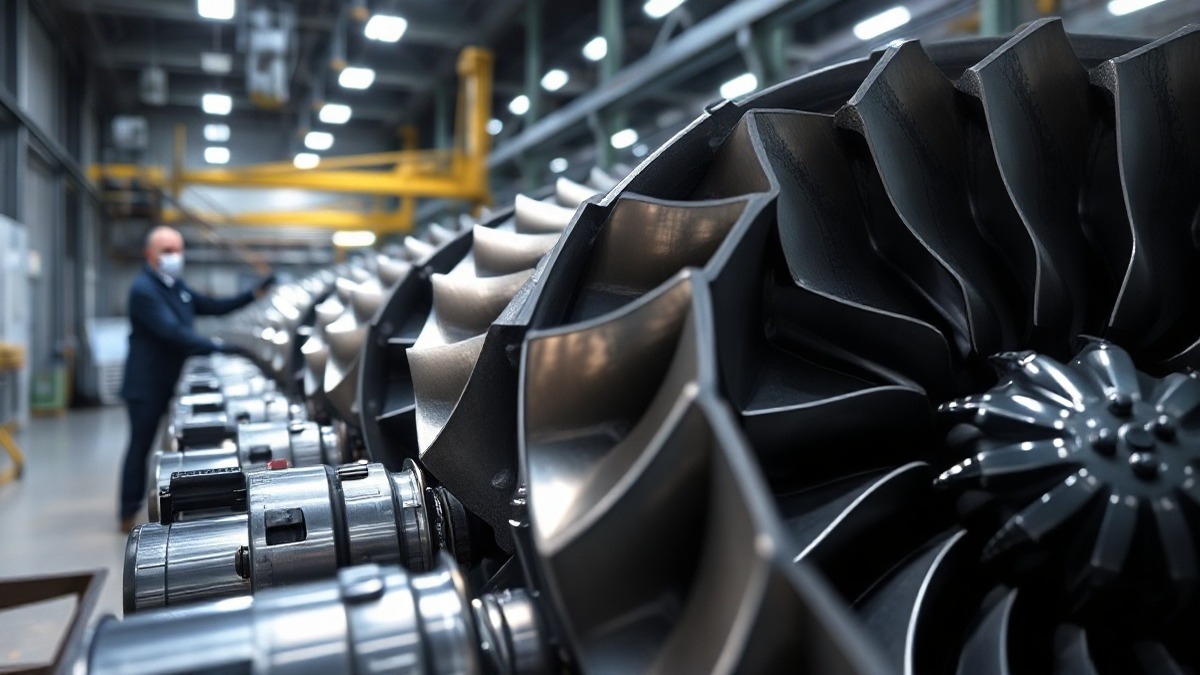
Every jet engine in the sky passes through a toll booth, and the toll collector is Howmet Aerospace. The company doesn't build the planes, and it doesn't slap its name on the nacelle. But nothing with wings takes off without its parts — the single-crystal turbine blades that live in the hottest section of the engine, spinning at tens of thousands of RPM in temperatures that would melt steel. If you fly, you pay Howmet. If you invest, you should understand why.
The numbers say the tolls are rising. Howmet's first quarter delivered revenue up 19 percent year over year and adjusted earnings per share up 42 percent, beating the high end of its own guidance. Trailing revenue sits at $8.62 billion, free cash flow at roughly $1.7 billion, gross margins around 35 percent, and operating margins near 28 percent. The stock has been trading near highs, and at roughly 65 times trailing earnings — 46 times forward — the market is paying up. The question is whether the moat justifies the multiple.
Start with the moat, because this is one of the rarest in all of manufacturing. Perhaps two or three companies on Earth can cast single-crystal turbine blades at scale — Howmet, PCC, and a couple of captive in-house operations. That's not marketing; it's physics. Growing a single crystal of superalloy through a blade that must survive 2,000 degrees Fahrenheit, spinning fast enough to shred a bird, takes decades of process knowledge you can't buy off the shelf.
Now add the regulatory lock. Every blade Howmet sells has to be qualified with the FAA and the engine maker, a process that runs five to seven years from drawing board to approved part. Once qualified, the supplier is written into the program's bill of materials for its entire life — 20 to 30 years of demand. Boeing, Airbus, GE Aerospace, and Pratt & Whitney don't casually multi-source this stuff, because requalifying a blade mid-program is a nightmare nobody wants. The customer list is short and concentrated, but these are captive relationships, not fragile ones.
There's a reason pricing power keeps showing up in the margin line. Precision Castparts, Howmet's chief rival in structural castings, spent much of 2025 fighting production delays — and engine shops don't wait around. Work moved to Howmet, and Howmet got to charge for it. When your competitor stumbles and you're one of three suppliers in the world, you don't just hold share. You price like it.
The demand side is a rare double engine. Commercially, Boeing is pushing the 737 MAX back toward full rate while Airbus drives the A320neo family toward 75 aircraft a month, and the widebody recovery is finally pulling big engines along with it. Every one of those frames needs new engines, and every new engine needs Howmet blades before it can be bolted on.
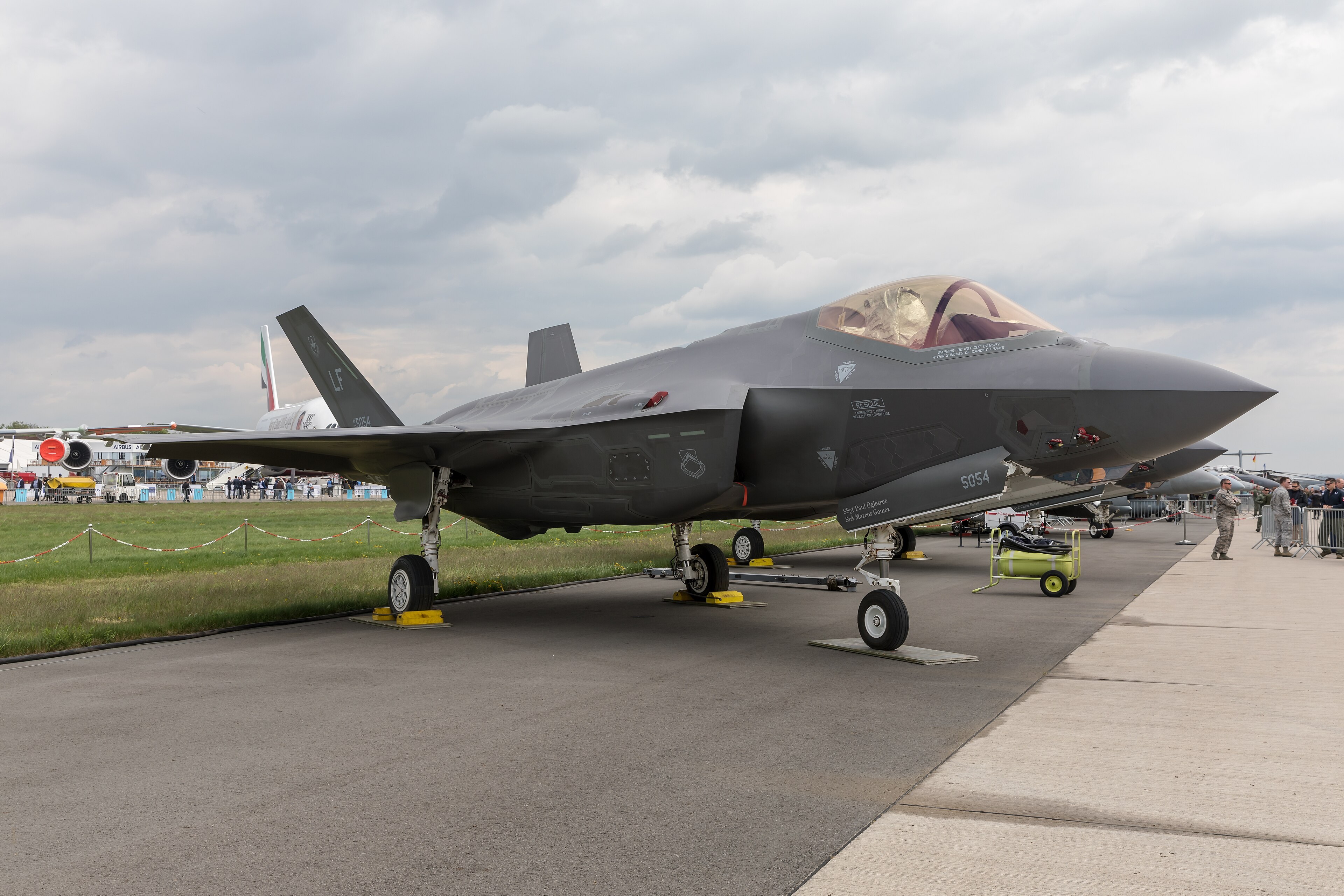
On the defense side, the F-35 keeps churning, next-generation adaptive engines are gearing up for a new class of fighters, and the missile defense build-out consumes turbine hardware nobody pictures when they think of a warhead. Defense is about 17 percent of revenue today, and it's the fastest-dialing part of the mix when the world gets hot.
Then there's the annuity — the real reason to own this thing. Spare parts for engines already in service are roughly a fifth of Howmet's revenue, and that line grew 33 percent last year and 36 percent in the first quarter. Engines fly for 20 to 30 years, and every shop visit, every hot-section overhaul, means a fresh purchase order. New engines get the headlines; the aftermarket is where the toll booth prints money. It's the GE Aerospace playbook, and it's why investors call these businesses toll roads.
None of this means the stock is risk-free. Aerospace is brutally cyclical, and when build rates turn, multiples compress fast. Titanium supply leans on Russia's VSMPO, though Howmet has been methodically diversifying that chain. And at 65 times trailing earnings, the market is paying for the moat in full. If the ramp stumbles or aftermarket growth normalizes, the air comes out of this valuation quickly.
The bull case is simple: Howmet owns the inside of every jet engine that matters, and the world is about to build and fly more of them over the next two decades than in the history of aviation. The toll booth doesn't care which plane wins the order war — it collects either way. At these levels you're paying a premium price for a premium asset, but with sole-source lock-in, an accelerating aftermarket annuity, and a rival that keeps tripping, this is one toll worth paying.
Disclosure: The Signal holds no position in HWM. Positions may change. This is not financial advice.