Over 170% in three years. That's what SHLD — the Global X Defense Tech ETF — has done since mid-2023. And the craziest part? Almost nobody's talking about it. While the financial internet was busy arguing about whether Nvidia's multiple made sense or if crypto was finally dead, this fund was quietly stacking returns by owning the companies that build the hardware and software the world is spending trillions to buy.
It is not a meme. It is not a momentum trade. And if you look at what's inside the portfolio, you'll realize this isn't a short-term story at all.
This Isn't Your Grandpa's Defense ETF
Most defense ETFs are boring — they just track U.S. primes and call it a day. SHLD is different because it goes global. The top ten holdings span four continents and cover everything from fifth-gen fighters to AI surveillance platforms to Korean artillery systems. It's also the only pure-play defense ETF that doesn't bundle in commercial airlines or Boeing recovery bets. No dilution. Just the companies that supply the world's militaries.
The top ten reads like a map of where defense spending is headed:
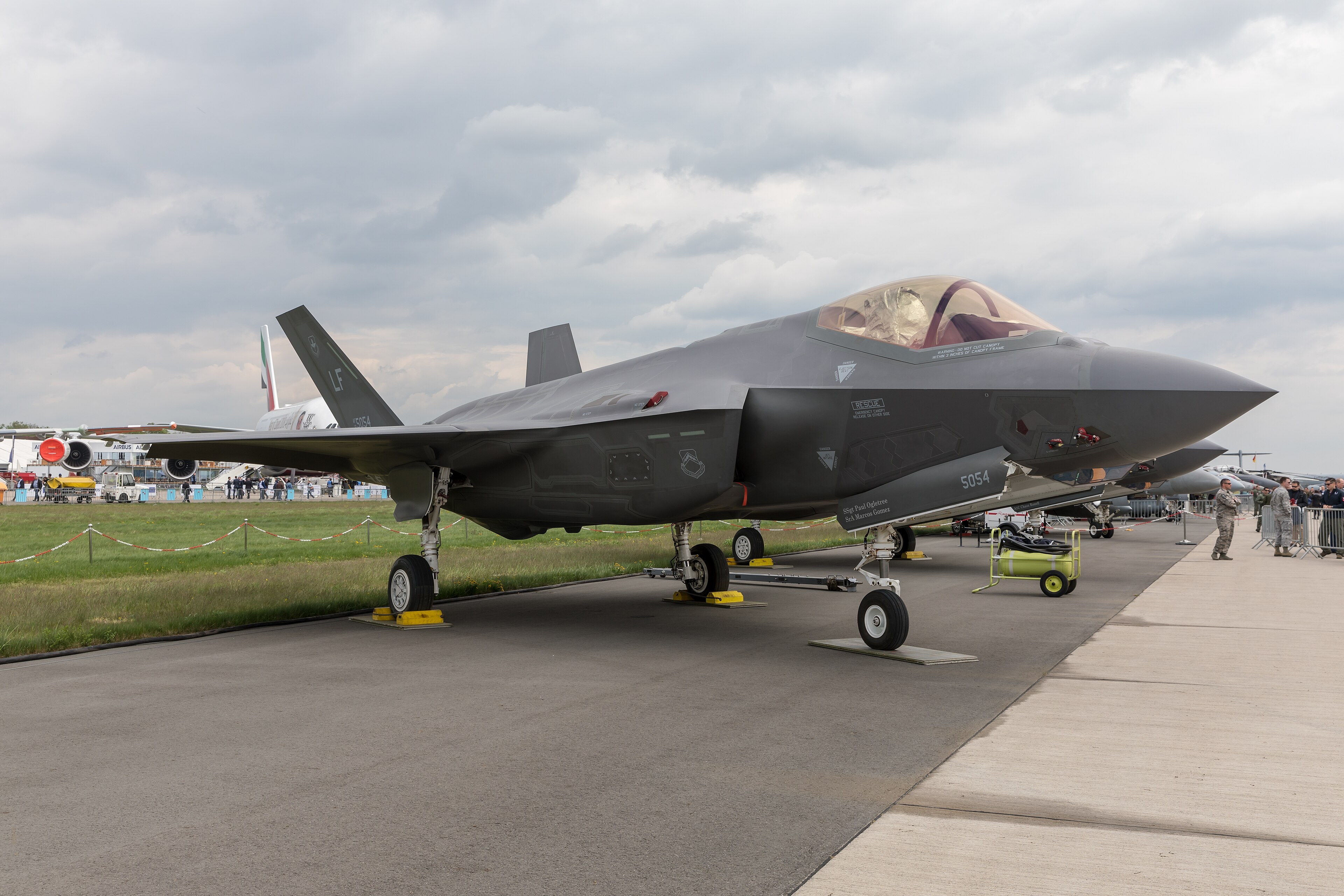
Lockheed Martin and RTX — the American anchors. F-35s, Patriot missiles, hypersonics. These two alone carry backlogs that stretch years deep. General Dynamics builds the submarines that the Navy's Pacific strategy depends on — Virginia-class and Columbia-class boats with build schedules that run into the 2030s. Northrop Grumman is the stealth and space play — B-21 bomber, missile warning satellites.
Then it gets interesting. Palantir is in there at a real weight — the AI/software layer. As the Pentagon pushes into data-driven warfare, Palantir's Gotham platform is baked into allied defense infrastructure. That's the 12% tech slice of a fund that's otherwise 88% industrials.
Rheinmetall (Germany), Hanwha (South Korea), BAE Systems (UK), and Leonardo (Italy) round out the top ten. That's not a coincidence — NATO's 3.5% GDP target means Europe and Asia are re-arming faster than the U.S., and these are the companies collecting those checks. Rheinmetall is the purest European re-armament play on the market. Hanwha is exporting artillery and ships to Poland and Australia. BAE is the UK's prime across naval and electronic warfare.
This is the angle most people miss about defense: it's not just a U.S. story anymore. The spending is global, the procurement cycles are multi-year, and SHLD captures the whole picture.
Why the Thesis Sticks
When you buy SHLD, you're not betting on next quarter's earnings or some geopolitical headline. You're betting on a structural reality: the world is spending more on defense, and that trend doesn't reverse because of an election or a treaty.
NATO's 3.5% GDP commitment — agreed by all 32 members in April 2026 — means European defense budgets have a multi-year runway. The U.S. defense budget has grown every year for over a decade. Asian allies are accelerating their own builds. The primes in this fund carry backlogs that span five, ten, sometimes fifteen years — locked-in revenue that doesn't care about rate cuts or tariff headlines.
The F-35 program alone covers 19 nations and runs into the 2040s. Virginia-class submarines are contracted through the next decade. Rheinmetall's order book is growing faster than its factories can fill. These are not quarter-to-quarter dynamics.
The Bottom Line
SHLD is not a headline trade. It does not 3x in a month. But over the last three years it did 170% while most people weren't looking, and the forces driving that return — global re-armament, NATO spending targets, multi-year backlogs — are still accelerating, not fading.
You buy this not because you know where the next conflict is, but because you know that every major government in the developed world is spending more on defense than it was five years ago, and that trend has no obvious off-ramp. The companies in this fund build the stuff those governments are buying. That's the thesis. It doesn't expire next quarter.