This is not a drill. The United States Space Force just dropped $3.2 billion on the biggest missile defense contract since Ronald Reagan's Strategic Defense Initiative — and this time, it's not sci-fi.
⚡ GOLDEN DOME — BY THE NUMBERS
- Contract Value: $3.2 billion (initial tranche)
- Program Timeline: 2026–2035 (full operational capability target)
- Contractors Selected: 12 companies
- Lead Primes: LMT, RTX, LHX, NOC, GD
- Mission: Space-based interceptor constellation for boost-phase missile defense
- Historical Parallel: Largest since SDI ("Star Wars," 1983)
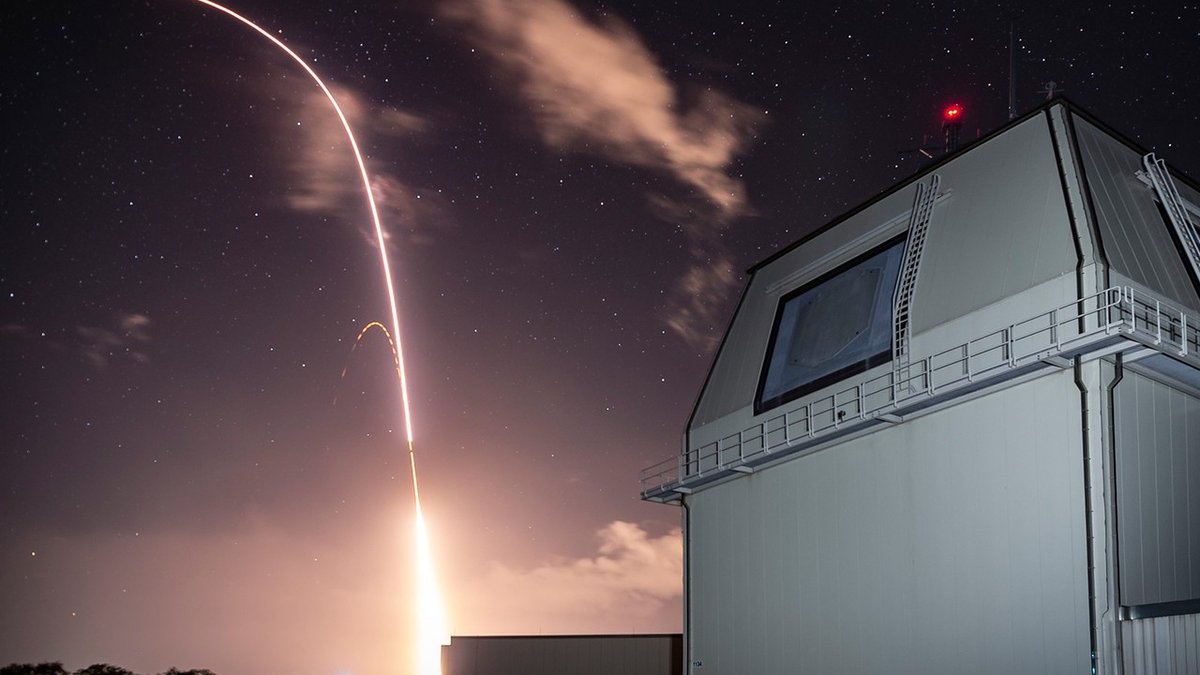
The Golden Dome program — officially designated the Space-Based Interceptor Layer — represents a foundational shift in how America defends itself against ballistic missile threats. Instead of relying solely on ground-based interceptors in Alaska and California, the Pentagon is moving the fight to orbit. The logic is brutal and simple: shoot down a missile in its boost phase, when it's slow, hot, and predictable, rather than trying to hit a reentry vehicle traveling at Mach 20.
The 12 companies selected span the entire defense industrial base. Here's the full roster:
- Lockheed Martin ($LMT) — Lead integrator candidate, deep space sensor heritage
- RTX Corporation ($RTX) — Raytheon's missile-kill-vehicle expertise
- L3Harris Technologies ($LHX) — Satellite bus and sensor integration
- Northrop Grumman ($NOC) — classified space payload pedigree
- General Dynamics ($GD) — Battle management command and control
- Boeing ($BA) — Directed energy and kinetic interceptor work
- SpaceX — Launch services and Starshield satellite bus
- Blue Origin — Orbital infrastructure and heavy lift
- Rocket Lab ($RKLB) — Small satellite bus and rapid launch
- Anduril Industries — AI-powered battle management software
- Kratos Defense ($KTOS) — Hypersonic and missile defense testbeds
- Leidos ($LDOS) — Systems engineering and integration
The contract structure is a mix of cost-plus and fixed-price incentive fee awards, with multiple awardees getting initial study and prototyping funds before a down-select to 3–4 primes for the build phase. The Space Force is deliberately spreading the wealth — this isn't a single-prime lockout. This is a decade-long industrial mobilization.
The SDI comparison is unavoidable. Ronald Reagan's Star Wars program in the 1980s envisioned a space-based missile shield that never materialized — the technology wasn't there. But in 2026, it is. SpaceX launched 200+ Falcon 9 missions last year at $67M per launch. Satellite bus costs have dropped 80% in a decade. AI-powered sensor fusion can track hundreds of simultaneous threats. And hypersonic glide vehicles from China and Russia have made the older ground-based interceptor strategy increasingly obsolete.
The geopolitical trigger is obvious: North Korea's Hwasong series, Iran's growing ICBM infrastructure, and China's expanding silo field all point to a world where the U.S. can no longer rely on geography alone. Golden Dome is the answer — a space-based shield that can engage threats from the moment they leave the launch pad.
For investors, this is a structural catalyst. Lockheed Martin's missile defense revenue alone could double over the next five years. RTX is sitting on a $200 billion backlog that just got bigger. L3Harris and Northrop Grumman are both adding satellite production capacity. The downstream winners include mid-cap names like Rocket Lab ($RKLB) for launch cadence, Redwire ($RDW) for space structures, and Kratos ($KTOS) for test range services — all of which are tied into the Golden Dome ecosystem.
The Pentagon's FY2027 budget request, expected in February, will be the first real tell on program scale. Early whispers suggest Golden Dome could grow to $15–20B over five years if prototyping succeeds. This is the defense story of the decade. Don't blink.