Friday was the kind of session that makes you check your screen twice to confirm the connection. The S&P 500 tumbled 1.82%, the Nasdaq 100 sank 3.46%, and semiconductor stocks absorbed a 7.2% beating.
That capped a third straight losing week for the major averages. The Nasdaq 100 now sits 9.5% below its early October peak, parked right on the edge of an official correction.
The damage was not an accident of sentiment. Alphabet shed roughly $500 billion of market value in a single Thursday collapse after advertising revenue missed expectations. Intel dropped 28.6% on Friday, marking its worst day since 1974, after pointing to a crippling memory shortage that is pricing buyers out of personal computers.
Meanwhile, Amazon reported negative free cash flow of about $42 billion while its capital spending stays at record levels. In market terms, free cash flow is simply the cold cash a company banks after paying all its bills and buying all its equipment. When that number flips negative, investors stop looking at slide decks and start looking at debt loads.
The core argument has shifted. Nobody is questioning whether society wants artificial intelligence models. The fight is over who pays for the physical buildout, on what timeline, and whether that cash ever makes its way home.
Big tech is funding data centers with fresh debt, and institutional money is running for cover into Coca-Cola, Walmart, and Eli Lilly. Wall Street left the daydream phase and walked straight into the audit room.
Yet the panic treats every balance sheet as if it owes the exact same sum. That creates an opening. This week, we are looking at four businesses with four completely different exposures to that infrastructure tab, each priced for a different set of risks.
Scorecard: Who Holds the Bill
Last week, we set four specific hurdles. Here is how those calls performed through Friday's close.
Microsoft reported solid numbers on Wednesday. Total revenue climbed 19% to $92.28 billion, and adjusted earnings per share topped estimates at $4.89. Azure cloud revenue jumped 48% at constant currency, comfortably clearing our 45% hurdle.
Capital spending reached $45.2 billion, coming in below the $50 billion Wall Street feared. Free cash flow dropped 27%, and the stock finished the week down about half a percent. Our verdict was to wait for a better entry point.
The business executed, but the equity went nowhere. Waiting cost nothing.
Constellation Energy gained 3.5% on the week after our call to accumulate. Regional grid operator PJM refiled its backstop procurement proposal on Thursday, shifting grid costs toward heavy electricity users without derailing the 2027 timeline. Add a conditional $5 billion government loan for nuclear plant upgrades, and our call is working.
Broadcom rose 1.4% across five sessions despite Friday's chip rout. A banking syndicate lined up a massive $63 billion lease structure to fund custom processors for AI startup Anthropic. We called to accumulate, and the investment case is intact, though Broadcom's balance sheet is now taking on deeper customer commitments.
Micron added 0.8% on the week but gave up over 5% on Friday, leaving it down about 19% over the past month. Memory contract price growth is slowing down. Our call to wait has kept us out of the way of a falling knife.
1. RTX Corporation (RTX) — The Toll Collector on Rearmament
Think of RTX as the landlord of Western defense logistics. If an aircraft leaves the tarmac or an armed service fires an interceptor, somebody pays them rent.
RTX manufactures the core machinery that keeps global aviation operational and military arsenals stocked. Its Collins Aerospace arm supplies cockpit avionics, flight controls, and passenger cabins while running a massive maintenance business for commercial airlines. Its Pratt & Whitney division builds aircraft engines, including the powerplants on the Airbus A320neo family and the frontline F-35 fighter jet.
Its Raytheon division builds high-end missile platforms, including the Patriot, AMRAAM, and Tomahawk systems. The customer base consists of commercial airlines, plane makers like Boeing and Airbus, and Western governments.
The operational numbers demonstrate clear commercial traction. Third-quarter sales climbed 11% to $24.965 billion, while organic revenue, which excludes currency swings and acquisitions, expanded 12%. Raytheon's missile business earned a 14.1% segment margin, up from 12.2% a year earlier.
Total order backlog hit a record $340 billion, split between $176 billion in commercial aviation and $164 billion in government defense contracts. That is up roughly 35% from last year. Management raised full-year guidance across the board, forecasting adjusted sales of up to $97.5 billion and adjusted earnings per share of up to $7.75.
The stock remains about 12% below its 52-week high, trading at roughly 25 times this year's expected earnings. That valuation reflects real investor hesitation. While tech giants wrestle with data center depreciation, RTX answers to government procurement offices.
A valuation multiple of 25 times earnings is not cheap for an industrial contractor, especially when free cash flow in the third quarter dropped 47% to $2.1 billion. Furthermore, about 25 cents of that adjusted profit came from a tariff refund that will not repeat. Pratt's reported segment margin was 6.6% against 10.5% adjusted, dragged by a $363 million customer bankruptcy charge.
The central problem sits in the contracting structure. Several major missile awards booked this quarter are technically undefinitized. That means the Pentagon agreed on the physical quantities of munitions it wants, but Congress has not actually appropriated the funding.
Under temporary budget rules, defense agencies cannot legally lift production volumes above prior-year levels. If budget legislation stalls in Washington, production schedules push out by several quarters while investors are already paying full price.
What we're watching: The chief financial officer speaks at an industrial conference in mid-November, providing the first public update since earnings. Beyond that, the fourth-quarter report in late January must deliver roughly $3 billion in free cash flow to meet management's full-year target of $9.0 billion.
Our take: Accumulate. A $340 billion backlog is the sturdiest asset in American manufacturing, and the market is already discounting Washington budget gridlock that typically resolves under geopolitical pressure.
2. Netflix (NFLX) — The Price-Hike Machine
Netflix runs the premier entertainment toll booth: it sells a monthly media subscription that consumers view as a basic utility, just like running water or home broadband.
The business model is straightforward. Netflix produces and licenses television series, movies, and live sporting broadcasts, delivering them to households across roughly 190 countries.
Subscribers pay a recurring monthly fee, while brands pay to run commercials on a lower-priced, ad-supported tier. Following a ten-for-one stock split late last year, the company is guiding toward $51.1 billion in full-year revenue.
The core platform remains intensely profitable. Third-quarter revenue grew 11.8% to $12.87 billion, matching Wall Street estimates. Operating margin hit a company-record 34.6%, and net income rose 44% to $3.66 billion.
Management repurchased $4.8 billion worth of stock during the quarter, supported by a healthy $22.3 billion remaining buyback authorization. Full-year operating margins are projected to land at an enviable 31.5%.
Despite those figures, the stock has dropped roughly 47% from its 52-week peak, sitting just above a two-year low and trading at about 16.5 times forward earnings. A forward price-to-earnings ratio measures what an investor pays today for each dollar of profit the company expects to generate next year. For a dominant media giant, 16.5 times is a deep discount.
It got there because revenue growth has decelerated for five consecutive quarters, slowing from 17.6% down to an expected 11.5% in the holiday quarter. A failed studio merger earlier this year, the departure of co-founder Reed Hastings from the board, and a thousand corporate layoffs have left investors nervous.
The bear argument centers on the mechanics of that top-line growth. Total viewing hours on the platform rose only about 2% in the first half of the year while revenue grew nearly 12%. That divergence means nearly all growth came from hiking subscription prices and squeezing out ad slots, not from attracting new viewers.
To make matters worse, management trimmed full-year advertising revenue targets by $300 million to $2.7 billion. If user engagement is flatlining, price increases eventually hit a ceiling. Meanwhile, cash reserves fell from $12.3 billion to $8.2 billion over six months as management spent more on share repurchases than the business produced in free cash flow.
What we're watching: Fourth-quarter earnings in January, where management will introduce full-year 2027 guidance. The single metric that settles the debate is whether 2027 revenue growth is guided above or below 10%.
Our take: Accumulate. The consumer habit is exceptionally sticky, and paying 16.5 times earnings prices Netflix like a stagnant legacy cable network rather than a dominant global distribution engine.
3. Applied Materials (AMAT) — The Machine Shop
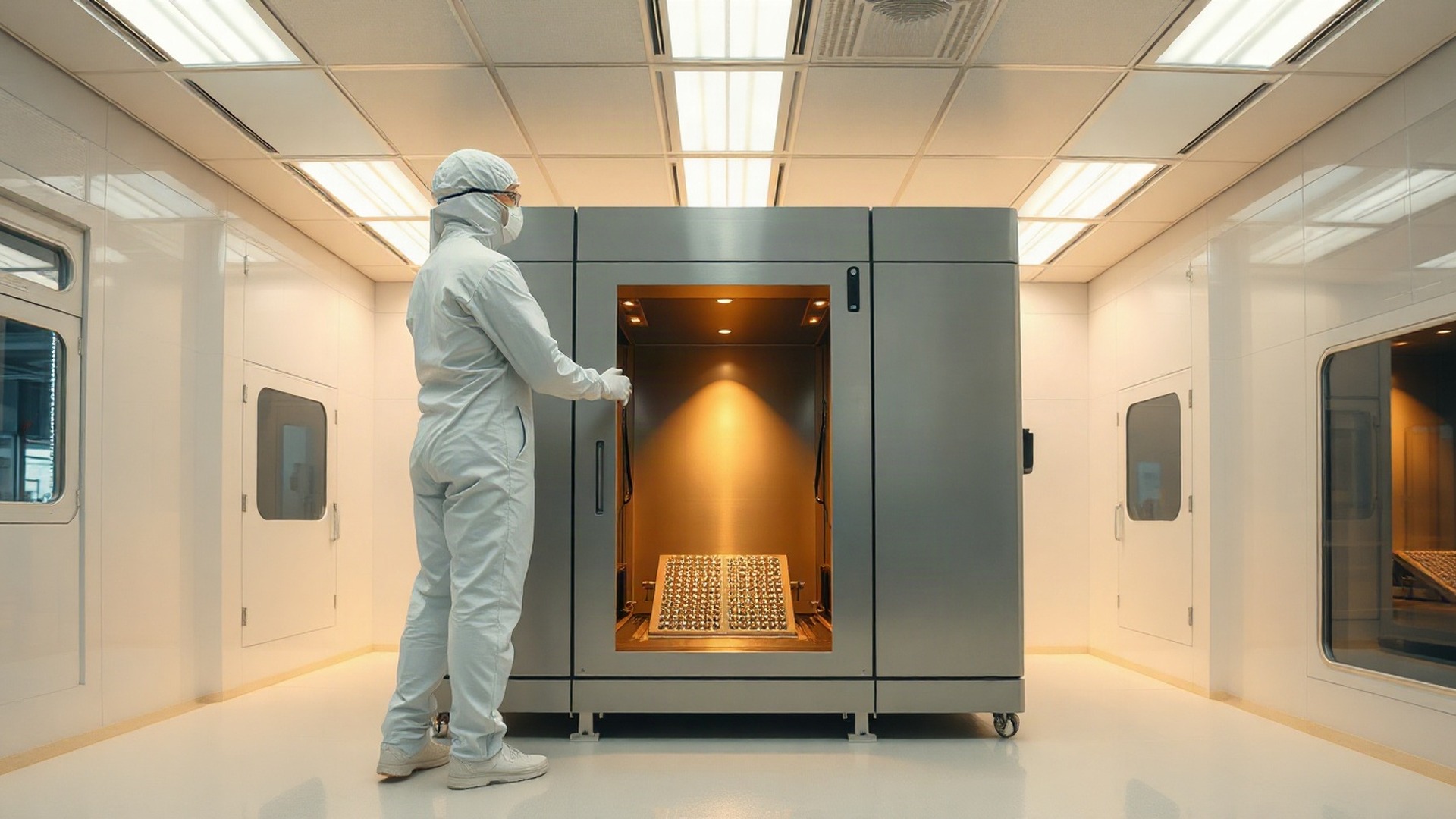
Applied Materials does not build artificial intelligence processors; it manufactures the multi-million-dollar atomic machinery that makes building those processors physically possible.
Whenever a chip manufacturer like TSMC, Samsung, or Intel wants to produce silicon, it buys tools from Applied Materials. The company's machines deposit metallic films a few atoms thick, etch intricate microscopic circuits, polish wafers, and inspect finished dies for microscopic defects.
Nvidia creates the chip designs, TSMC manufactures the silicon, and Applied Materials builds the precision fabrication tools that sit inside the cleanrooms. Once installed, its services division charges steady maintenance fees across a footprint of more than 37,000 operational processing chambers.
Financial performance has set records across the board. In its most recent reported quarter, revenue jumped 25% year-over-year to $9.115 billion, marking the fastest sequential growth in its history. Gross margin came in at 50.3%, operating margin reached 33.7%, and adjusted earnings per share surged 41% to $3.50.
Management guided for current-quarter sales of roughly $10.25 billion, which would represent a 50% jump over the prior-year period. The balance sheet is rock solid, carrying roughly $1.9 billion in net cash and a $12.8 billion share buyback pipeline.
Even with that momentum, the stock has tumbled roughly 47% from its summer high, trading at about 21 times forward earnings. The sudden re-rating began at an October investor gathering, where executive leadership refused to provide an equipment spending forecast for next year. The stock fell nearly 7% that day, took an 8% hit during the mid-October tech selloff, and slumped another 7.5% on Friday after Intel pointed to broader computing weakness.
The risk is a classic semiconductor capital cycle rollover. Memory makers are shifting capacity toward the high-bandwidth chips AI servers need, which leaves standard personal computer and smartphone components short. If device manufacturers cannot secure cheap memory, consumer hardware sales stall, and foundries delay buying new equipment from Applied Materials.
In addition, mainland Chinese buyers account for roughly 28% of the company's equipment revenue. If international trade rules tighten or Chinese fab construction pauses, those record 50% gross margins will erode quickly. At 21 times earnings, the stock offers zero cushion if forward profit forecasts see standard cyclical downgrades.
What we're watching: Fiscal fourth-quarter earnings on November 12. Investors already know the current quarter's targets; the make-or-break data point is guidance for the January quarter, which must top $10.25 billion to prove the fabrication buildout is still accelerating.
Our take: Wait for a better entry. The company owns an irreplaceable technological moat, but cyclical downturns in chip manufacturing equipment typically take multiple quarters to find a valuation floor.
4. Vistra (VST) — The Power Merchant
Vistra is the merchant utility holding the physical keys to the electrical grid, selling the one raw material artificial intelligence cannot operate without.
Unlike traditional regulated power companies that operate on capped, state-approved profit margins, Vistra is an independent power producer. It owns roughly 50,000 megawatts of generation assets, including natural gas turbines, nuclear plants, coal facilities, commercial solar, and grid-scale batteries across Texas, the mid-Atlantic, and the Northeast.
The company makes money in three ways: selling wholesale electricity onto the open grid, selling retail contracts directly to five million consumers through brands like TXU Energy, and collecting standby capacity fees. A capacity payment is cash grid operators pay power generators simply to keep plants ready to fire up during peak demand spikes.
The business is generating substantial operating cash. Second-quarter adjusted EBITDA—a metric showing basic operating profit before interest, taxes, and accounting depreciation—grew more than 30% to $1.767 billion. Management reaffirmed full-year adjusted EBITDA targets between $6.8 billion and $7.6 billion, alongside projected free cash flow up to $4.725 billion.
To shield its balance sheet from wild swings in electricity prices, Vistra locks in supply contracts years in advance. It has already hedged roughly 100% of expected 2026 power output, about 94% of its 2027 output, and 72% of its 2028 generation.
The stock is down about 30% from its 52-week peak and trades at just 9 times this year's expected operating profit. That is an extraordinarily cheap entry point for an essential energy provider.
Investors have grown cautious because wholesale power prices for 2027 delivery in Texas have softened over the past twelve months. Furthermore, recent capacity auctions in the mid-Atlantic cleared at regulated price ceilings, leaving little room for surprise pricing windfalls.
The bear case rests on rising debt against softening future power contracts. Vistra carries about $19.5 billion in net debt and recently closed a multibillion-dollar acquisition of gas operator Cogentrix. It has also committed up to $1 billion to a new digital infrastructure venture alongside Nvidia and private equity backers.
Accounting rules also require the company to record paper gains or losses on its long-term power hedges each quarter. A $472 million paper hedge charge weighed on GAAP net income last quarter, showing how balance sheet volatility can disrupt headline results. If future electricity contracts continue to slide, Vistra will be carrying elevated leverage into a cooling wholesale pricing cycle.
What we're watching: Third-quarter financial results on November 6, where management must confirm that full-year earnings remain on track. In December, regional grid auction results for the 2029 delivery period will prove whether standby power prices can hold near historic highs.
Our take: Accumulate. You are buying the most critical physical input of the digital economy at roughly 9 times cash operating earnings, with 94% of next year's generation locked into fixed pricing.
The bottom line
The market is no longer pricing companies on how convincingly they describe their artificial intelligence roadmaps. Investors are calculating the concrete return on invested capital, and they are punishing anyone whose spending outruns incoming cash receipts. That skepticism is healthy, but it creates mispriced assets when applied with a broad brush.
RTX offers a multi-year defense backlog shielded from commercial tech budgets. Netflix generates high operating margins and still trades at a discount multiple. Applied Materials faces an equipment cycle that has yet to clear its inventory overhang, and Vistra turns power demand into hard cash flows at single-digit valuations.
We will track these four names closely as earnings unfold.
Analysis, not advice. We may own these names and we may sell them at any time.