Twenty-two billion dollars in a single quarter. Nine billion dollars in net income. Twenty-seven billion in free cash flow over the last twelve months. And the stock is sitting at $371 like someone forgot to turn the lights on. Broadcom just printed numbers that would make most Fortune 500 CEOs weep with joy, and Wall Street's response has been a 24.8% drawdown from the $494 high it hit on June 3rd. That's not a pullback. That's the market sleepwalking past one of the most complete AI infrastructure monopolies ever assembled.
| marketCap | $1.77T |
| stockPrice | $371.40 |
| ytdReturn | +7.2% |
| trailingPE | 61.7 |
| forwardPE | 19.1 |
| ttmRevenue | $75.46B |
| ttmRevenueGrowth | +47.9% |
| q2FY2026Revenue | $22.19B |
| grossMargin | 76.3% |
| operatingMargin | 49% |
| profitMargin | 38.8% |
| freeCashFlow | $27.2B |
| operatingCashFlow | $33.6B |
| ebitda | $42.1B |
| totalDebt | $64.9B |
| cashOnHand | $19.6B |
| ethernetSwitchMarketShare | ~70% |
| hyperscalerCustomers | 6 confirmed |
| employees | 33,000 |
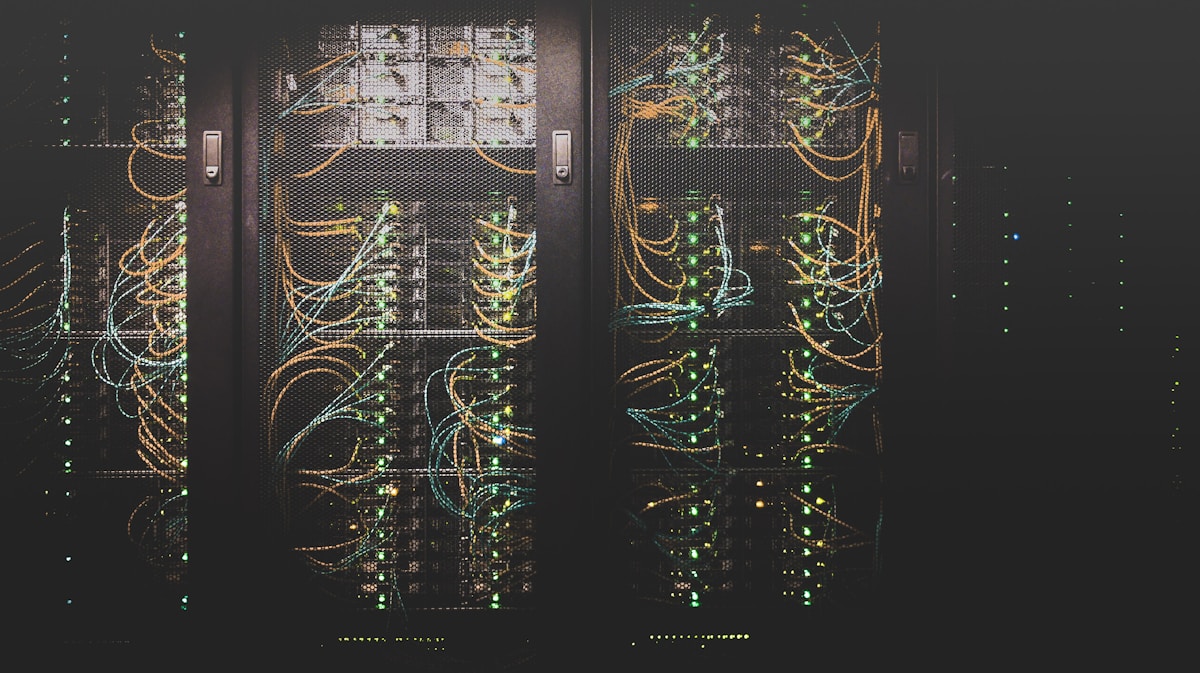
The narrative right now is that AI momentum is fading. That capex cycles are peaking. That the big hyperscalers are done spending. Tell that to Google, Meta, Amazon, and now OpenAI — all of whom rely on Broadcom's custom ASIC business and its Tomahawk and Jericho switching silicon to keep their GPU clusters fed with data. Every training run, every inference request, every model deployment needs networking underneath to move bits at ridiculous speeds across thousands of GPUs simultaneously. That's Broadcom's playground. They own roughly 70% of it.
Then there's VMware. The enterprise software business that most analysts dismissed as a slow-growth relic is quietly becoming a software compounder of serious consequence. Under Hock Tan's capital allocation playbook — cost discipline, subscription migration, margin expansion — VMware is printing at software margins with an installed base spanning virtually every enterprise on the planet. The acquisition looked expensive at $69 billion. At current run rates, it looks like the bargain of the decade.
| Metric | Value |
|---|---|
| Market Cap | $1.77 Trillion |
| Revenue TTM (YoY Growth) | $75.46B (+47.9%) |
| Q2 FY2026 Revenue | $22.19B |
| Gross Margin | 76.3% |
| Free Cash Flow | $27.2B |
| Forward P/E | 19.1x |
Let's run the numbers because the valuation is genuinely absurd at these levels. Revenue is up 47.9% year-over-year to $75.46 billion trailing twelve months. Gross margins sit at 76.3%. Operating margins are 49%. Profit margins hit 38.8%. Free cash flow is $27.2 billion. And the forward P/E is 19.1. Nineteen. For a company growing revenue faster than most SaaS names and generating more cash than entire sovereign wealth funds. The trailing P/E of 61.7 is inflated by one-time acquisition accounting and amortization — it does not reflect what this business actually earns on a normalized basis.
The revenue trajectory tells the real story. FY2023 was $35.82 billion. FY2024 hit $51.57 billion. FY2025 came in at $63.89 billion. TTM is now $75.46 billion. That's revenue basically doubling in three years while maintaining margins that most pure-software companies would envy. At these growth rates, FY2026 revenue is tracking toward $90 billion or higher. The AI networking pipeline — Tomahawk 6 at 102.4 Tbps, custom XPUs for every major hyperscaler, the entire VMware software stack migrating to subscriptions — has no visible demand ceiling.
The debt question comes up because Broadcom carries $64.9 billion of it. Fair enough at first glance. But operating cash flow is $33.6 billion. EBITDA is $42.1 billion. Cash on hand sits at $19.6 billion. The net debt load is declining every quarter as the business generates more cash than it needs for capex, buybacks, dividends, and debt reduction simultaneously. You don't worry about the leverage when the company is printing $27 billion in free cash flow annually. That's fortress-grade balance sheet territory, even with the legacy VMware acquisition debt.
What's actually happening here is a massive dislocation between the stock price and the underlying business trajectory. Broadcom hit $494.22 in early June on optimism about AI spending. Then macro jitters, tariff headlines, and sector rotation dragged it down to $371 — a 25% haircut — while the business continued accelerating. Revenue didn't slow. Margins didn't compress. Custom silicon orders didn't get canceled. The fundamentals are literally at all-time highs and the stock is trading like something's broken.
Thirty-three thousand employees. Six confirmed hyperscaler customers building custom AI chips on Broadcom's silicon. Networking switches running through every major data center on earth. A VMware software business compounding at software margins with near-zero churn. A YTD return of 7.2% that masks the fact that this company just doubled its revenue in three years. And a forward P/E that says this business is barely worth more than a utility.
The question isn't whether Broadcom deserves to be back at $494. The question is whether the market will realize the discount before the next earnings print closes the gap permanently.
Disclosure: The Signal holds no position in AVGO. Positions may change. This is not financial advice.