When the artificial intelligence trade took an ugly hit on Thursday, Axon Enterprise barely blinked. While chipmakers and cloud platforms dropped seven to nine percent in a broad tech retreat, Axon gained roughly three percent. It traded in lockstep with defense primes like Lockheed Martin and public safety rivals like Motorola Solutions. The market has begun sorting AI revenue by who actually signs the checks.
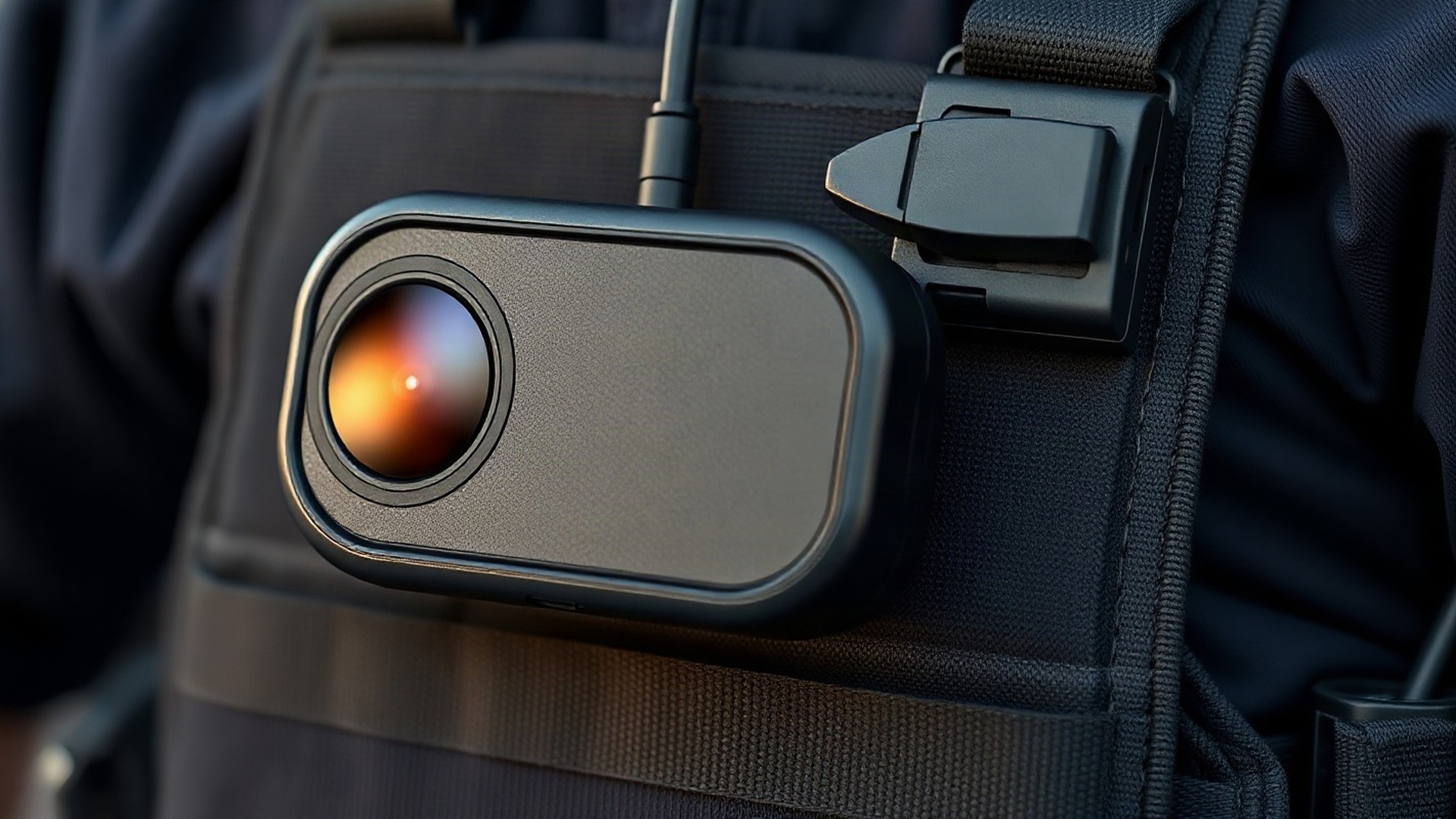
Axon supplies the gear that arms and monitors American law enforcement, then bills agencies monthly to store, search, and summarize the resulting evidence. Think of the company as the electric utility of public safety. Once a police department wires its evidence lockers, patrol cars, and tasers into Axon's cloud platform, turning off the service is practically out of the question. You do not churn off the system holding your murder trial exhibits.
| Price LIVE | $414.60 |
| Market Cap | $33.7B |
| Forward P/E | 39.4x |
| Total Revenue (TTM) | $3.22B |
| 52-Week Low | $339.01 |
| 52-Week High | $764.02 |
| Analyst Consensus | Buy (19 analysts) |
| Analyst Target Mean | $681.68 |
That captive footprint gives Axon an enviable angle on artificial intelligence. While enterprise software startups burn cash trying to convince chief information officers of their return on investment, Axon simply updates a subscription police departments already pay. Tools like Draft One transcribe body-worn camera audio through OpenAI's foundation models to produce first-draft police reports. Officers do not pay token fees or manage graphic processing units. A city council funds the software through its routine municipal budget, wrapping advanced machine learning into an everyday operating line.
Federal procurement officers are leaning into the same workflow. As the federal fiscal year closed, Axon disclosed that agencies added over 22,000 body-worn cameras and digital evidence licenses, alongside an order for over 1,600 TASER 10 devices for Veterans Affairs police. The Department of Homeland Security also tapped Axon's Dedrone platform under an indefinite delivery, indefinite quantity vehicle for airspace monitoring. An IDIQ contract is essentially a federal hunting license—a legal umbrella setting a purchasing ceiling rather than guaranteed, booked cash. Yet it gives Axon a direct channel to draw down federal security funds without renegotiating base agreements.
Beneath the steady government revenue, however, the underlying product mix is shifting fast. In its second quarter, revenue grew more than 35% to surpass $904 million, marking ten straight quarters above 30% growth. But the celebrated body-camera division inched ahead by less than 3%. The real expansion came from the newer platform solutions line, which surged over 122% on heavy demand for drones and counter-drone systems. Axon is increasingly selling physical airborne hardware, which carries thinner margins than pure software.
Despite hiking full-year top-line guidance three times, management left its adjusted EBITDA margin projection flat at roughly 25.5%. Every new dollar of revenue is simply matching corporate-average profitability instead of expanding it.
The short case against Axon centers squarely on that profitability disconnect. Skeptics argue you are paying nearly forty times forward earnings for a company whose growth is becoming structurally more hardware-heavy. Net income slipped year over year in the second quarter, while stock-based compensation consumed around a sixth of total revenue. At the same time, community pushback against surveillance tools is shifting from political noise into delayed checks.
The Los Angeles City Council recently postponed a major artificial intelligence license plate reader pilot. Meanwhile, an ACLU study found veteran officers rated Draft One's automated paperwork noticeably worse on accuracy than human drafts. If revenue growth slips below 30% when Axon reports on November 5, or if body-camera sales turn negative, the premium software narrative unravels into lower-margin hardware reality.
For the equity to mount a sustained recovery from its current drawdown, Axon must prove its software engine can outrun its hardware buildout. The clearest catalyst is a mix shift back toward software and services, pushing the segment past half of total revenue while adjusted software gross margins hold steady near the high seventies. Proving that drone scale actually produces operating leverage—perhaps by lifting the next fiscal year's margin target closer to 27%—would give institutional investors a reason to reward the multiple again.
All eyes now turn to the third-quarter earnings report on November 5 to verify whether federal contract momentum translated into high-margin software receipts. Axon enjoys the defensive moat of government budgets, but keeping its valuation requires software economics to match.
Disclosure: The Signal holds no position in AXON. Positions may change. This is not financial advice.