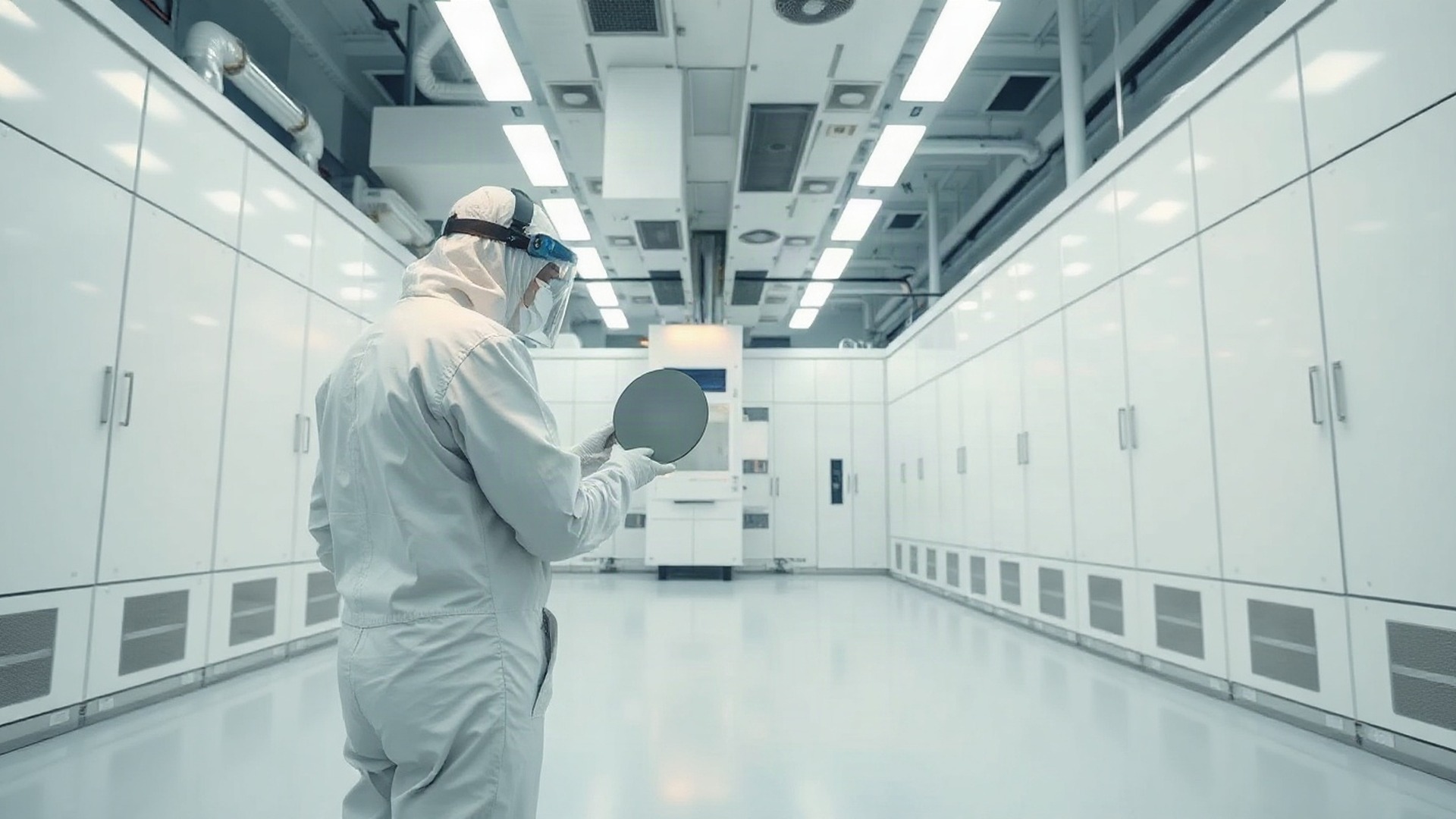
Quick primer, because this company deserves one. Applied Materials doesn't design chips — it builds the machines that make them. Every AI accelerator you've ever read about, every HBM memory stack, every "world's fastest" data-center chip that grabbed a headline this year crawled through an Applied Materials machine on its way to existence. The tools deposit, etch, and polish the microscopic layers that turn a silicon wafer into a brain.
So when this company talks, the AI trade should listen. This week it said something it has never said in its history: it expects a $10 billion quarter. The first-ever guide at that level dropped alongside record revenue and record earnings — and the stock still sold off about 5%. The excuse? China. A market this addicted to AI growth will always manufacture a worry. This time the worry was the gift.
| Price LIVE | $535.31 |
| Market Cap | $425B |
| Forward P/E | 29.3 |
| Total Revenue (TTM) | $30.8B |
| 52-Week Low | $154.47 |
| 52-Week High | $739.67 |
| Analyst Consensus | Strong Buy |
| Analyst Target Mean | $641.03 |
The quarter itself was clean. Record revenue around $9.1 billion, up about a quarter year over year, record earnings, and a guide that has the current quarter crossing $10 billion for the first time — roughly half again what it did last year. The only flat line was gross margin, and a margin that holds while revenue grows that fast is a feature, not a bug.
Here's the part of the story that actually matters. The AI trade has quietly shifted from design to manufacturing. Anyone can announce a chip; the bottleneck is who can physically build enough of them, package them, and stack them into clusters. That's the supercycle Wall Street keeps underrating: not another model demo, but the factory buildout underneath everything. Applied is the biggest shovel seller in that gold rush. Management raised its wafer fab equipment outlook again — spending growth above 30% this year — and advanced packaging, the tech that lets hyperscalers glue more compute into a single package, is growing more than 70% for the company this year.
And this isn't a one-quarter story. Management describes 2027 as "another strong growth year," with foundry-logic, DRAM, and advanced packaging driving the bulk of wafer fab equipment spending over the next two years. The services annuity — a subscription stream on every machine already installed — compounds above 20% on top of the hardware sales. It competes with Lam Research and ASML for sockets, but its tools touch nearly every chip that gets made, which is why it's the biggest revenue line in the group.
Now the China scare, because that's what sent the stock down. China fell from 35% of revenue to 28%. The part the tape missed: the dollars were flat. Those fabs keep buying through every export-control headline, and management expects China revenue to grow this year on 28-nanometer foundry-logic demand. The bear case mistakes mix for momentum.
The stock dropped about 5% on the print, bounced back Monday when analysts rushed to defend the story, and caught a stray in Tuesday's sector-wide selloff. Through all of it, the Street never wavered — consensus is still a Strong Buy, and the company is guiding to roughly 85% earnings growth this quarter while sitting on a net cash position of about $2.7 billion.
Here's what to watch from here: every hyperscaler capex cycle keeps getting bigger, and every increment of that spending has to be built, packaged, and connected before a single model gets trained. Applied's guide says the equipment wave isn't cresting — it's still building. When the market treats that like bad news, you're getting paid to be patient.
Bottom line: this is how you own the AI buildout without picking a chip winner. No matter who wins the model wars, somebody has to build the machines that build the chips — and nobody does it bigger. The panic was the price of admission, and patient buyers just got a better entry than the story deserved.
Disclosure: The Signal holds no position in AMAT. Positions may change. This is not financial advice.