The numbers that landed on Wall Street Wednesday morning were staggering even by defense industry standards. Raytheon Technologies reported second-quarter sales of $24.7 billion — $1.8 billion above consensus — and delivered adjusted earnings per share of $1.89, a 21 percent year-over-year surge that blew past analyst expectations of $1.66. But the headline that had defense investors circling the stock with fresh conviction was buried deeper in the release: a record backlog of $289 billion, up 22 percent from a year ago, with $119 billion of that tied directly to defense contracts that show no signs of slowing.
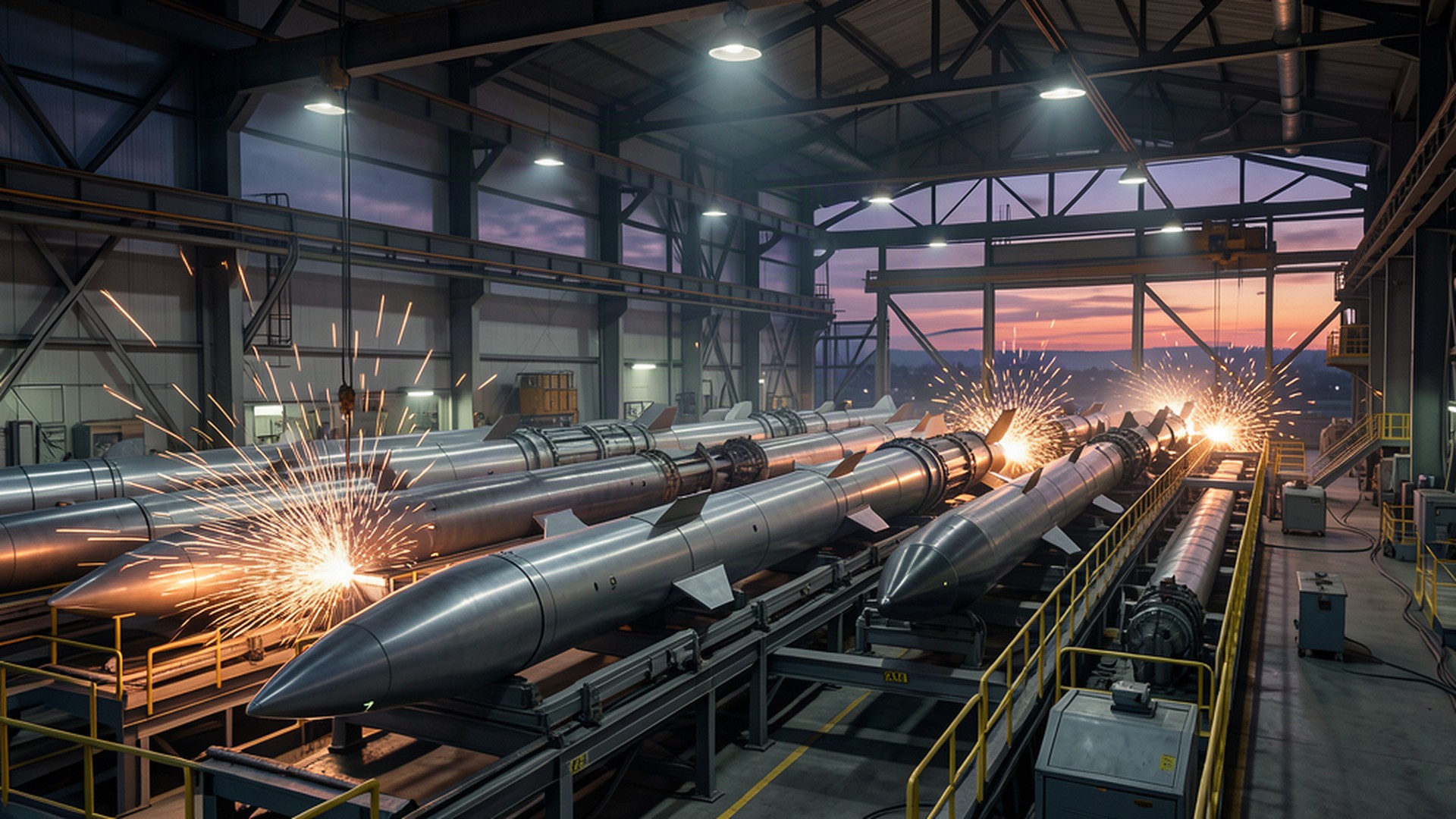
The Iran war — Operation Epic Fury, now in its fifth month — is consuming precision-guided munitions at rates unseen since the peak of the Global War on Terror. Raytheon's nameplate appears on virtually every major weapon system in the theater: Patriot PAC-3 interceptors, Standard Missile-6, THAAD batteries, AMRAAM air-to-air missiles, Tomahawk land-attack cruise missiles, and JASSM-ER penetrating strike weapons. Each firing in the conflict depletes a stockpile that the Pentagon is now racing to rebuild under multiyear procurement authorities that guarantee production runs measured in years, not quarters.
The company's Raytheon segment, which houses its missile and defense systems, grew 18 percent to $8.27 billion in the quarter. Pratt & Whitney, the engine-making arm, posted 16 percent revenue growth to $8.89 billion as aftermarket demand surged 25 percent — a signal that the operating tempo in the theater is driving not just munitions consumption but also aircraft utilization at rates that feed directly back into RTX's aftermarket revenue stream.
Free cash flow swung from negative $72 million a year ago to positive $2.9 billion in the quarter, a staggering reversal that underscores how quickly the operating leverage of this business flips when demand goes vertical. For the full year, management raised guidance to sales of $95 billion to $96 billion, earnings per share of $7.10 to $7.25, and free cash flow of $8.5 billion to $8.75 billion. Those numbers, strong as they are, may prove conservative if the current trajectory holds.
The geopolitical backdrop is doing the heavy lifting. Global military spending reached approximately $2.9 trillion in 2025, and the FY2026 U.S. defense budget allocates $35.7 billion for missiles and munitions alone — a line item that flows disproportionately to Raytheon given its dominant positions across the tactical missile, air defense, and cruise missile categories. The company's CFO disclosed approximately $10 billion in international Raytheon awards during the first half of 2026, roughly $7 billion of which came from European customers accelerating their own procurement schedules in response to the conflict.
The supercycle thesis is straightforward: wars consume munitions faster than peacetime production can replenish them. Unlike the initial invasion phase of a conflict — where markets often sell the news — the replenishment phase tends to be durable, funded by appropriations already authorized and logistically difficult to reverse. RTX's $289 billion backlog effectively provides multiyear revenue visibility that most industrial companies can only dream of.
Wall Street has taken notice. The stock trades near all-time highs, and the consensus analyst target of $227 implies further upside, with the most bullish calls reaching $265. At a trailing multiple of roughly 39 times earnings, RTX isn't cheap by historical standards. But the forward multiple of 28 times begins to look reasonable against a growth trajectory that includes double-digit revenue expansion, expanding margins, and a free cash flow yield that towers over most of the industrial sector.
The bull case does carry risks worth flagging. A de-escalation or ceasefire in the Iran theater would remove the most acute demand driver, even if the replenishment cycle would continue for years as stockpiles are rebuilt. The company carries debt-to-equity of 57 percent, and any broader defense budget reconciliation in Washington could moderate the pace of future awards. But for now, Raytheon's backlog is speaking louder than any hypothetical.
Competitors Lockheed Martin, Northrop Grumman, and L3Harris all benefit from the elevated defense spending environment, but they trade at lower multiples — 22, 18, and roughly 15 times forward earnings respectively — reflecting narrower exposure to the specific munitions categories being consumed fastest. Raytheon offers the most direct, most leveraged play on the replenishment cycle, and the second-quarter numbers suggest the market is only beginning to price that in.
Disclosure: The Signal holds no position in RTX. Positions may change. This is not financial advice.