Astera Labs just posted the cleanest financial quarter in its history, raised its forward guidance, and watched the market cut its equity value in half. The peak arrived on October 6, right alongside the broader market top.
From that close, the stock fell roughly 54%, slashing its market valuation from about $68 billion down to roughly $31.5 billion.
Analysts did not cut their business forecasts after the report. They slashed their valuation multiples.
The underlying panic was not about current profits, but whether the company's foundational technology is running out of road.
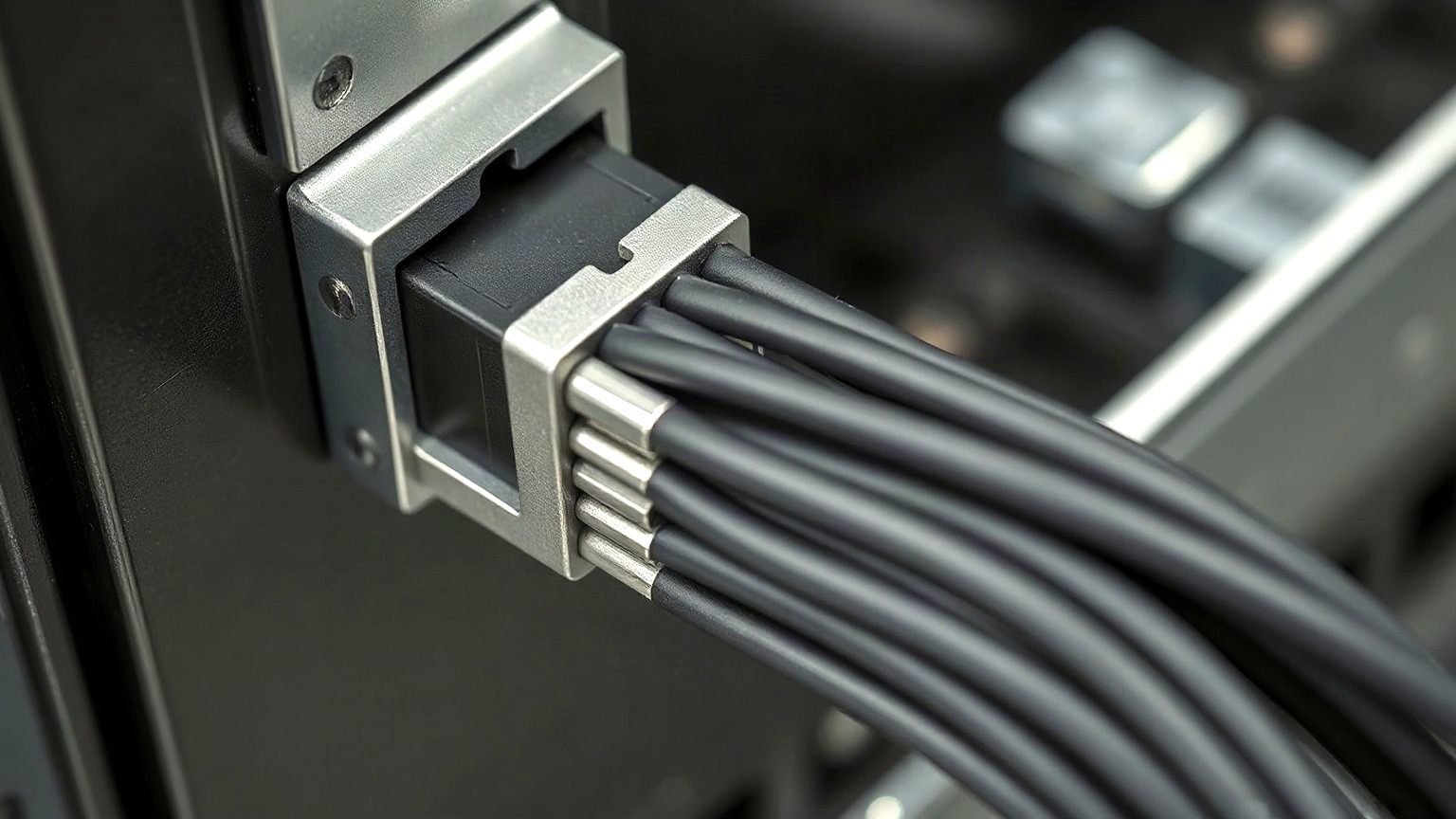
In plain English, Astera builds the electronic plumbing that keeps artificial intelligence clusters from choking on data. When dozens of graphics chips crunch a massive model simultaneously, they must swap information at blistering speeds without losing signal strength over copper wire.
Astera sells the chips that amplify, clean up, and route those electrical pulses across the server rack. If AI accelerators are Formula 1 racecars, Astera builds the precision banking on the track that keeps them from flying off the turns.
Hyperscale cloud providers and their manufacturing partners buy its silicon by the millions.
| Price LIVE | $180.35 |
| Market Cap | $31.5B |
| Forward P/E | 25.2x |
| Total Revenue (TTM) | $1.556B |
| 52-Week Low | $97.89 |
| 52-Week High | $499.48 |
| Analyst Consensus | Buy (22 analysts) |
| Analyst Target Mean | $344.15 |
The product catalog spans four main families: Aries signal retimers, Taurus Ethernet modules, Leo memory controllers, and Scorpio fabric switches.
In the third quarter, revenue leaped 49% sequentially to a record $584.9 million, up 154% from a year ago. Scorpio switch silicon crossed over $1 billion in annualized run-rate, shipping to two production customers.
The dollar content per server is massive. Management estimates it captures over $1,000 per accelerator across switches and copper signal conditioning, and roughly $100,000 for an entire 80-GPU rack using its Orion reference design.
Backed by $1.08 billion in net cash and zero debt, the balance sheet looks pristine.
Yet Wall Street is aggressively repricing the terminal value of that copper toll booth.
Copper cables are cheap and power-efficient, but they face a hard physical limit: the faster data moves, the shorter the distance it can travel before electrical resistance turns the signal into noise. At 200 gigabits per lane inside massive racks connecting 72 chips or more, copper reach collapses, forcing links to switch to optical glass.
That reality struck on November 2, the day before Astera reported earnings. Marvell agreed to buy optical specialist Lumentum in a $115 billion transaction explicitly framed around that physical wall. In that same trading session, Astera tumbled roughly 11%.
Then comes the architectural mismatch. Astera’s stated roadmap relies on PCIe, NVLink Fusion, and UALink protocols. It does not name Scale-Up Ethernet.
Meanwhile, Broadcom confirmed at the OCP Global Summit that its Tomahawk Ultra silicon is already powering Ethernet scale-up across more than five hyperscalers. If the biggest cloud operators standardize their massive server clusters on Ethernet fabrics rather than PCIe or proprietary links, Astera risks running an expensive toll booth on the wrong highway.
The bear case is straightforward: Astera is an over-concentrated copper pure-play entering an inventory buildup right as physical limits force networking toward glass.
One direct customer accounted for 53% of third-quarter revenue, up from 23% a year earlier. The top three customers generated 77% of total sales.
At the same time, inventory more than tripled to $200.9 million, driven by work-in-progress jumping to $160.7 million. If that single lead customer pauses purchases after its initial cluster build, Astera faces an air pocket with lower average selling prices across legacy parts.
The bears will be proven right if first-quarter fiscal 2027 revenue guidance implies less than 10% sequential growth, or if non-GAAP gross margins crack below 70%.
For the equity to re-rate from here, Astera has to prove its technology survives the optical transition.
First, it must announce a third customer taking Scorpio X switches into full volume production, proving it is a universal platform rather than a single hyperscaler project. Second, non-GAAP gross margins must stay near 72% as rack-level Orion systems and software mix in.
Third, management must validate that dollar content per accelerator can truly double on next-generation platforms. Investors refuse to pay peak multiples until they see proof that copper retimers and optical modules can co-exist inside the chassis.
What we are watching is the first calendar quarter of 2027, when Astera's lead customer might transition to its next-generation architecture. That milestone will reveal whether rack-level connectivity remains Astera's toll booth, or if optical giants take the traffic.
Disclosure: The Signal holds no position in ALAB. Positions may change. This is not financial advice.