Wall Street has spent two years begging chipmakers to build faster. On Nov. 24, Analog Devices agreed to do it, and investors handed the company the steepest single-day slide since the March 2020 crash. The shares were down roughly 19% at midday and about 30% below their June peak, one session after a 9.5% rally built on two analyst price-target hikes.
It was an astonishing reception for a company that had just logged its eleventh consecutive quarterly beat. Revenue for the fiscal fourth quarter rose 42% year over year to $4.373 billion, while adjusted gross margins expanded to a lush 74.5%. Yet the equity cratered anyway, because chief financial officer Richard Puccio dropped an expensive reality check on the conference call. ADI is deliberately breaking its long-standing capital spending model for the next twelve months.
| Price LIVE | $378.75 |
| Market Cap | $148B |
| Forward P/E | 18.7x |
| Total Revenue (TTM) | $15.18B |
| 52-Week Low | $229.29 |
| 52-Week High | $445.91 |
| Analyst Consensus | Strong Buy (32 analysts) |
| Analyst Target Mean | $471.91 |
To understand why traders panicked, you have to look at what ADI actually builds. The company does not assemble the screaming graphics processors that train large language models. Instead, it makes the physical-world silicon: sensors that translate heat, motion, and voltage into digital code, alongside power chips that keep electricity from frying circuit boards. Think of it this way: if Nvidia sells the high-horsepower engine, ADI sells the sensors, the fuel injectors, and the diagnostic dyno that checks the car before it leaves the garage.
Whenever you unlock your smartphone with a fingerprint or watch an electric vehicle monitor its battery pack, an analog chip handles the transition between reality and math. Inside an artificial intelligence server rack, that unglamorous plumbing is mission-critical. High-density compute clusters draw blistering amounts of electricity, requiring specialized power regulators, electro-optical transceivers, and liquid-cooling telemetry. ADI supplies all of it, including the automated test gear that validates silicon before hyperscalers bolt it into racks.
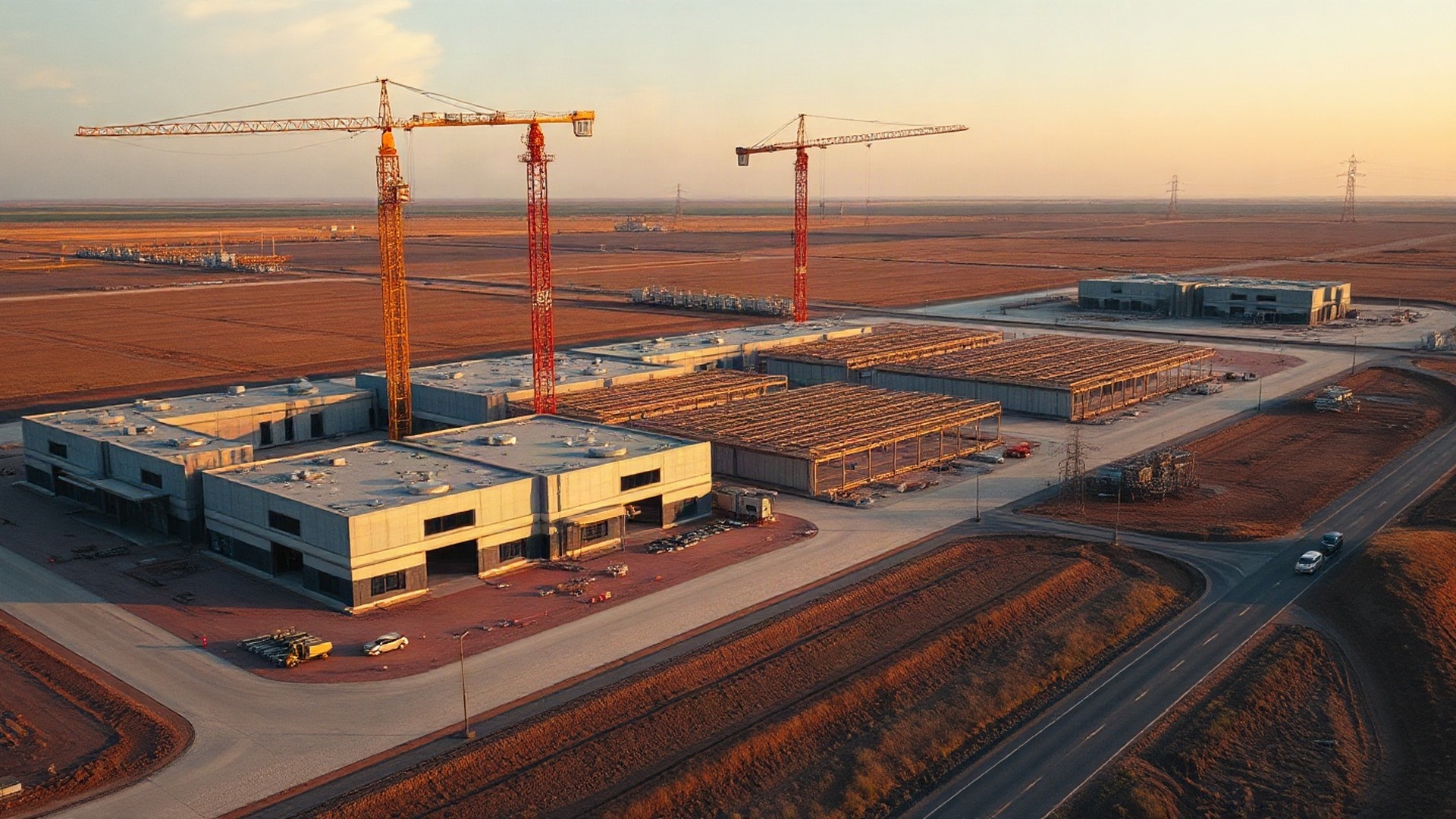
That position pushed data center revenue up more than 100% year over year for a second straight quarter, now generating about $568 million in quarterly sales. Demand is outpacing supply, and factories are jammed. So management chose to build. ADI plans to deploy between $1.6 billion and $1.9 billion in capital expenditures in fiscal 2027, up from $733 million this past year. That pushes capex from roughly 4.8% of revenue to around 9.5%, tearing past its historic 4% to 6% envelope.
The trouble is timing. Puccio noted on the call that the new clean rooms in the United States and Europe will not bring online capacity until the first quarter of fiscal 2028. That leaves a fifteen-month air pocket where cash goes out the door long before a single dollar of fresh revenue comes back in. Even with upcoming CHIPS Act tax credits offsetting part of the tab, the market charged ADI the entire expansion bill upfront.
The selloff exposes an equity caught in an identity trap. Over the past sixty trading days, ADI moved with an eye-opening 0.68 daily correlation to Nvidia. When mega-cap tech sneezes, ADI catches the flu. Yet as chief executive Vincent Roche pointed out, more than two-thirds of the company’s fiscal 2026 growth came from non-AI markets, spanning industrial factories, aerospace, defense, and automotive setups. The stock absorbs pure-play AI drawdowns while trading at a discount to slower-growing analog peers like Texas Instruments.
For the equity to stage a durable re-rate, investors must see evidence that this spending surge is a short-term sprint rather than a permanent structural drag. The bull case rests on ADI locking in scarce, high-margin sockets across Nvidia’s upcoming rack designs while keeping gross margins pinned near 74%. If that holds, the market is discounting top-tier operating leverage because of a temporary construction invoice.
The short seller sees the exact opposite tape playing out. The bear case argues that management is building out capacity at the precise peak of the capital cycle. Sequential revenue guidance for the coming quarter came in essentially flat at $4.4 billion, while adjusted operating margins are slated to contract 180 basis points to 50.5%. Automotive is softening, consumer electronics are down double digits, and a full quarter of expenses from the newly closed $1.35 billion Alif Semiconductor deal will weigh on operating costs. If the AI infrastructure buildout cools before late 2027, ADI will open sprawling, expensive clean rooms right into an industry-wide glut. The bears will be proven entirely right if fiscal 2027 capex creeps above the $1.9 billion ceiling while adjusted gross margin slips out of its prized 73% band.
What we are watching now is the February earnings print, where management will break out data centers as a standalone end market for the first time. That disclosure will show whether end-market bookings can justify a more-than-doubled capex budget, and whether channel inventory stays locked inside its healthy six-to-seven-week comfort zone.
Disclosure: The Signal holds no position in ADI. Positions may change. This is not financial advice.