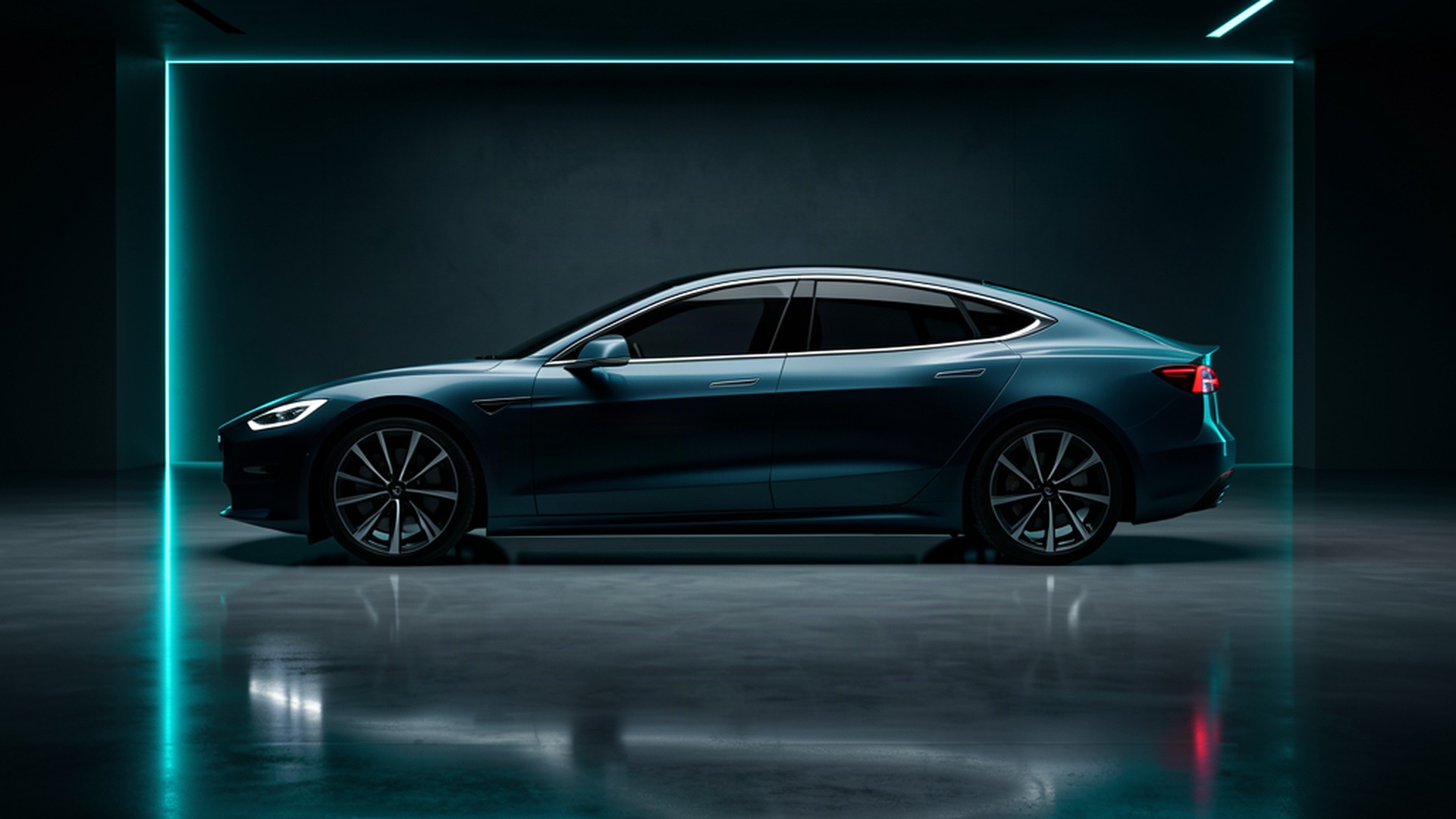
Tesla posted the best quarter of its life on Tuesday. Deliveries hit 480,000 vehicles. Revenue surged past $28 billion on a trailing basis. Both were all-time highs. And Wall Street yawned — then sold.
The stock cratered in after-hours trading as investors pored over a profit-and-loss statement that told a very different story from the top line. Tesla's operating margin landed at just 1.41%. Gross margin, once the envy of the auto industry, slipped to 18.85%. The company is moving metal at a historic clip, but the margins on that metal are getting thinner by the quarter.
This is the central tension of Tesla in 2026: a company that can manufacture and deliver more cars than ever before, yet one that cannot hold onto the profitability that once made it the most valuable automaker on earth. Record revenue is a headline. The income statement is the footnote. And this quarter, that footnote screamed trouble.
Free cash flow turned negative for the first time in two years. The culprit was not hard to find. Capital expenditures doubled year over year to $5.8 billion, as Tesla poured cash into factory expansions in Texas, Berlin, and Shanghai, plus a fresh wave of spending on its Dojo supercomputer and AI training infrastructure. Elon Musk has bet the company's future on autonomy and robotics. That bet costs real money today.
Investors are starting to ask an uncomfortable question: Can Tesla be both a high-volume automaker and an AI moonshot at the same time? The quarterly results suggest the answer is not yet. The core automotive business is generating volume, but the margins are compressing toward industry norms. Meanwhile, the capital-intensive projects that are supposed to justify an astronomical valuation are consuming cash faster than the car business can print it.
Tesla's deliveries number was genuinely impressive. The company navigated supply-chain headwinds, managed the ramp of the Cybertruck, and still pushed 480,000 units out the door in three months. That is a production achievement few automakers can match. But production prowess does not automatically translate to pricing power. Tesla has cut prices repeatedly over the past year to sustain demand, and the gross margin numbers reflect the cumulative weight of those cuts.
The market is now pricing Tesla not as a growth stock but as a conviction trade. Those who still hold are betting on a future where Robotaxis, Optimus humanoid robots, and energy storage revenue dwarf the auto business. The bears look at the same numbers and see a car company trading at a multiple that assumes those future bets have already paid off.
Both sides can point to this quarter and find evidence. The optimists see a company executing flawlessly on production and building infrastructure for the next leap forward. The pessimists see a business consuming enormous amounts of capital to produce returns that are, by any traditional measure, declining. The stock touched levels not seen in months as the market digested the mixed signals.
There is a deeper question lurking beneath the numbers. Tesla has become a company of two halves. One half is a mature automaker competing in a crowded EV market where every competitor from BYD to Ford is slashing prices. The other half is a venture-capital-style bet on autonomy and artificial general intelligence — industries that have yet to produce meaningful revenue. Bridging those two halves is the defining challenge of Musk's tenure, and this quarter proved it is far from resolved.
The much-hyped Robotaxi network, which Musk has promised is coming "next year" for several years running, has yet to launch commercially in any major market. The energy storage business continues to grow but remains a fraction of automotive revenue. Each of these bets consumes cash today for a payoff that remains theoretical.
What made the sell-off notable was not its severity but its signal. The market has been willing to give Tesla extraordinary latitude on valuation for years, treating it as a technology company rather than a car company. This quarter suggests that patience is wearing thin. When you strip away the narrative and look at the cash flows, Tesla is spending heavily to grow a business whose core margins are shrinking. That is not a sustainable equation, even with $28 billion in trailing revenue.
A 1.41% operating margin leaves almost no room for error. One supply-chain disruption, one demand wobble, one Model Y refresh that misses expectations, and that margin collapses entirely. Tesla is running a high-volume manufacturing business with the financial profile of a startup. That worked when interest rates were zero and growth accelerated in every direction. It is a harder sell in a capital-constrained environment where investors demand returns today, not promises for tomorrow.
Disclosure: The Signal holds no position in TSLA. Positions may change. This is not financial advice.