In every technology boom, the loudest names capture the headlines while the quiet ones capture the economics. Tower Semiconductor has spent the past year doing the latter: its silicon photonics run-rate nearly quadrupled, customers have contracted more than a billion dollars of 2027 capacity in advance, and its 2028 revenue target was just raised by nearly a third. The market has noticed; the deeper story is how a mid-sized analog foundry became one of the most strategically positioned companies in the AI supply chain.
| PriceLIVE | $252.95 |
| Market Cap | $28.5B |
| Forward P/E | 38.9x |
| Total Revenue (TTM) | $1.71B |
| SiPho Run-Rate (Q2'26) | $680M |
| 52-Week Low | $46.00 |
| 52-Week High | $319.94 |
| Analyst Consensus | Strong Buy |
| Analyst Target Mean | $321.32 |
Tower is a pure-play specialty foundry, and that distinction matters. Unlike TSMC, which races toward ever-smaller digital transistors, Tower makes its living in analog and mixed-signal processes: silicon photonics, SiGe BiCMOS, RF-SOI and RF-CMOS, BCD power management handling up to 700 volts, CMOS image sensors, and MEMS. Its six fabs span Israel, the United States, and Japan — where it owns 51% of TPSCo — plus a shared 300mm fab in Agrate, Italy, operated with STMicro, serving more than 300 customers worldwide.
The moat is not transistor density; it is analog depth. In RF, power, and photonics, performance comes from process recipes, device physics, and design enablement rather than geometry shrinks — expertise Tower has spent decades accumulating. That positions it between TSMC, focused on leading-edge digital logic, and GlobalFoundries or UMC, competing on mature-node scale, and Tower sells something neither replicates easily: an analog toolkit spanning process and design support. The market is beginning to pay for it, with the company rising from ninth to seventh in TrendForce's Q4 2025 foundry rankings on silicon photonics demand.
The numbers show the compounding. Q2 2026 was a record quarter: revenue of $460 million, up 24% year over year; gross profit of $138 million, up 72%; and record net profit of $91 million excluding one-time items, or $0.80 per share. Management guided Q3 to another record of $520 million, up 31% year over year and ahead of the roughly $490 million consensus. Trailing-twelve-month revenue sits near $1.71 billion, up from $1.566 billion in fiscal 2025, and growth is increasingly concentrated in silicon photonics.
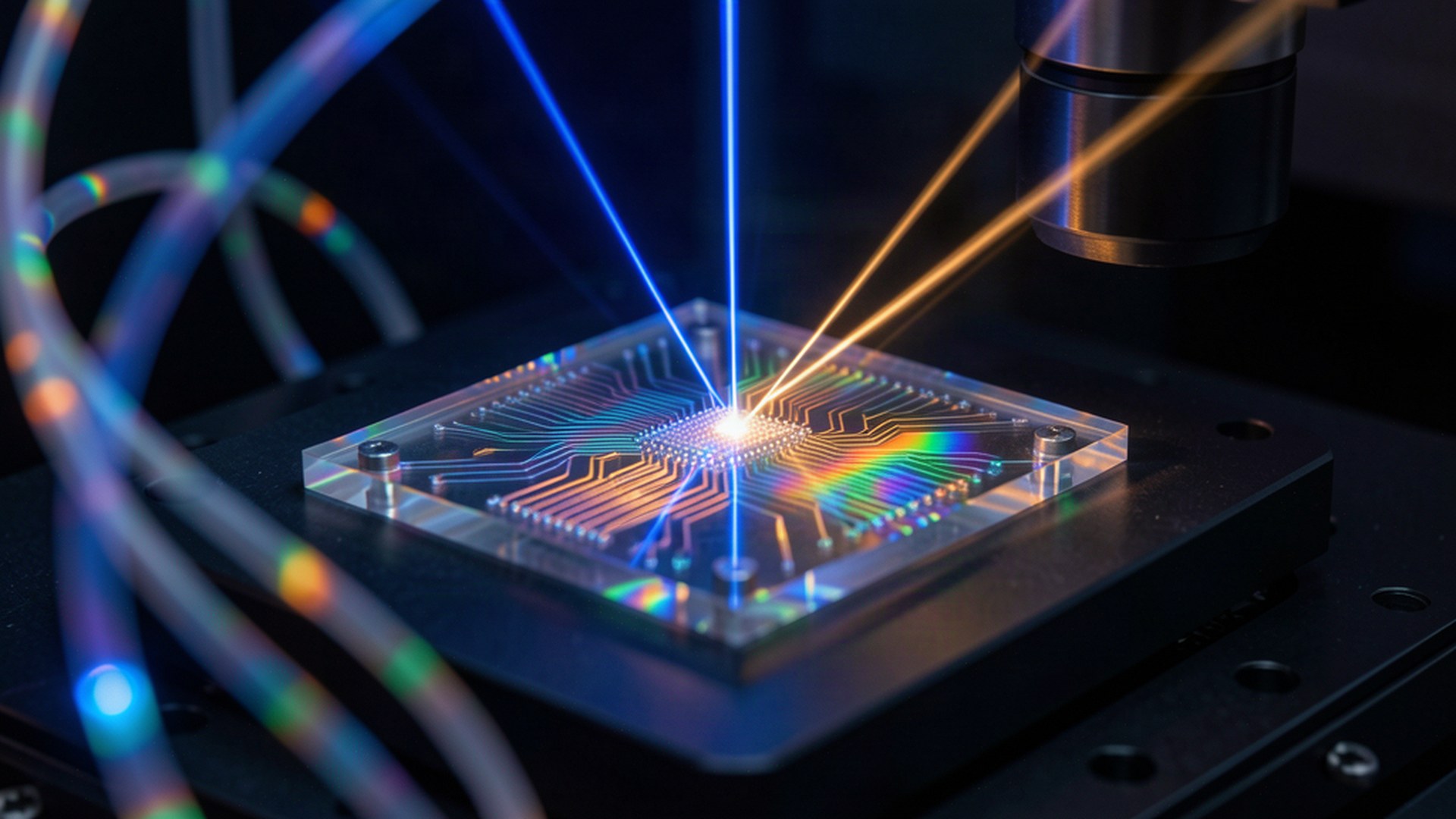
Silicon photonics is the engine. The annual run-rate hit $680 million in Q2 2026, up from $180 million a year earlier, and Tower is guiding toward crossing $1 billion by Q4 2026 with more than 50 active customers. The demand is already contracted: in May, Tower signed $1.3 billion of silicon photonics contracts for 2027 with its largest customers — $290 million in prepayments already received — plus larger 2028 commitments with more prepayments due in January 2027. This is not a pipeline story; the revenue is spoken for.
The customer list explains why. NVIDIA picked Tower's silicon photonics for 1.6-terabit datacenter optical modules, at up to double the data rate; Marvell and Tower have shipped over five million coherent photonic ICs together; and a multi-year indium phosphide supply deal with IQE secures substrate for AI datacenter optics. Capacity is moving too: a $3 billion, METI-backed 300mm buildout in Japan includes roughly $1 billion in government grants, with the repurposed Arai site targeting production by Q4 2027 and a new fab rising next to Fab 7 in Uozu. Tower now targets $3.6 billion in 2028 revenue and $1.2 billion in net profit, up from $2.8 billion and $750 million, a plan it describes as fully spoken for by customers at roughly 85% utilization.
Breadth matters too. Q2 revenue broke down as 25% RF infrastructure, 23% RF mobile, 17% power, 15% sensors and displays, 11% discretes, and 9% mixed-signal and CMOS. Even outside photonics the base compounds: the March restructuring of TPSCo gave Tower full ownership of the 300mm Fab 7 in Japan — roughly four times current 300mm capacity — with Nuvoton keeping the 200mm Fab 5. The AI story is layered on top of a broad, self-funding analog franchise rather than replacing it.
None of this comes without risk. An earlier agreement for Intel to manufacture Tower's 65nm power and RF flows in New Mexico fell apart and remains in dispute resolution; a $10 billion India joint venture with Adani Group has been paused since 2025; and the valuation already prices in a great deal of success. Israel's geopolitical situation adds an unavoidable overhang to a company whose core fabs sit there, and investors are paying for the 2028 plan today with little room for execution slips.
Tower has done something rare in this cycle: it turned a structural megatrend into contracted, prepaid revenue years in advance. Silicon photonics is becoming the nervous system of AI datacenters, and Tower is one of the few places with the analog process depth to build it at scale. The story is no longer a turnaround; it is whether the specialty foundry model gets re-rated as the indispensable supplier of the AI optical era.
Disclosure: The Signal holds no position in TSEM. Positions may change. This is not financial advice.