Let's be real. When a company starts life mining Bitcoin, Wall Street doesn't take them seriously. You're a commodity play. You get lumped in with the boom-and-bust crowd. When IREN — formerly Iris Energy — announced they were pivoting to AI compute, the reaction was a collective eye roll.
Then NVIDIA showed up.
NVIDIA doesn't do vanity deals. Jensen Huang's team doesn't sign $3.4 billion AI cloud contracts with companies that can't deliver. They vetted IREN's infrastructure, toured their facilities, checked their power agreements. And they decided: this former Bitcoin miner is legit.
But here's what everyone gets wrong: NVIDIA didn't save IREN. IREN positioned itself to be unsaveable in the first place.
| NVIDIA Contract | $3.4B (signed, 5-year) |
| Target ARR | $3.7B by Dec 2026 |
| Power Capacity | 5 GW controlled |
| Revenue (TTM) | $757M |
| Pipeline | $4.4B+ |
| Gross Margins | 68% |
The Pivot Nobody Saw Coming
IREN built massive data centers in Texas and Australia to mine Bitcoin. They secured 5 gigawatts of cheap power contracts. They built the electrical infrastructure, the cooling systems, the physical security. Everything you need to run thousands of power-hungry machines 24/7.
The only difference between a Bitcoin mine and an AI data center? What's plugged into the racks.
Bitcoin miners run ASICs — chips designed to do one thing: hash. AI cloud providers run NVIDIA GPUs — H100s and B200s that power the entire generative AI boom. The racks, the power, the cooling, the buildings? Identical.
IREN realized this before anyone else did. They didn't pivot because they were desperate. They pivoted because they realized they were sitting on a $3.4 billion asset that the market was pricing as a commodity.
The NVIDIA Deal: Validation, Not Salvation
This is the part that matters. NVIDIA doesn't invest in companies to save them. NVIDIA invests in companies that already have what NVIDIA needs: power, infrastructure, and the ability to deploy at scale.
When the news broke that IREN had signed a five-year, $3.4B AI cloud deal with NVIDIA, the market treated it like a lifeline thrown to a drowning company. That framing is backwards. IREN had been building industrial-scale infrastructure for years — the power lines, the transformers, the cooling towers, the security perimeters — all funded by Bitcoin mining revenue. By the time NVIDIA came knocking, IREN already had facilities ready to rip and replace ASICs with GPUs.
The $3.4B deal is a bet NVIDIA made on infrastructure that already existed. IREN didn't get lucky. They positioned themselves in a way that made the bet inevitable.
The Factory That AI Runs On
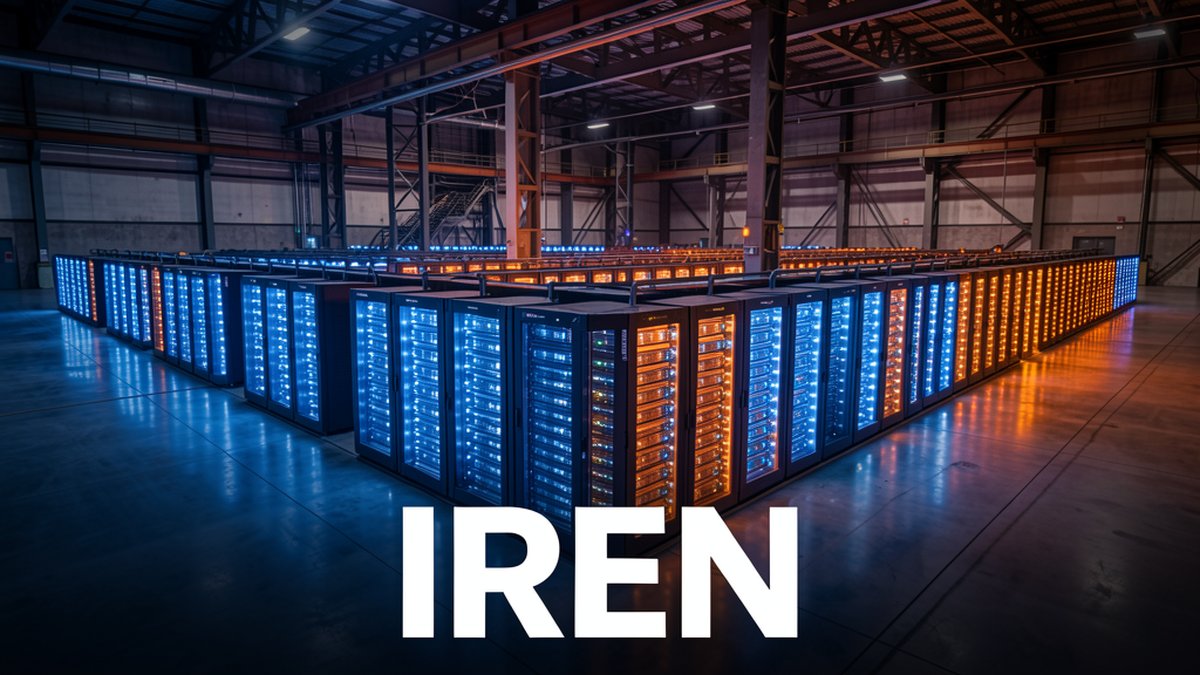
The facility in Texas tells the story. A sprawling industrial campus originally designed for ASIC mining. Racks row after row. Over-engineered cooling for the Texas heat. Redundant power feeds. 24/7 on-site security. All of it was already running, humming, generating revenue from Bitcoin.
Now those same racks hold H100 clusters. The cooling that kept ASICs from melting keeps Blackwell GPUs frosty. The power that lit up SHA-256 hashing now lights up AI inference. Same building. Same infrastructure. Different payload.
That's the thesis. IREN didn't need to invent anything new. They just needed to recognize what they already had and sell it to the right buyer. NVIDIA was the right buyer.
And the pipeline keeps growing. The Motley Fool reports IREN's AI opportunity pipeline at $4.4 billion — larger than just the NVIDIA deal. CoreWeave, Nebius, Applied Digital all followed the same playbook: build cheap power infrastructure, then flip the switch to AI. IREN is executing that blueprint faster because they already had the infrastructure in place before they even announced the pivot.
The Setup
Short sellers are betting against IREN — roughly 16% of the float — arguing the Bitcoin mining roots and debt load make this a house of cards. Operating margins are negative. Free cash flow is negative. The debt-to-equity ratio is high. All true.
But every AI data center play that squeezed in 2026 had the same profile. CoreWeave was bleeding cash before its NVIDIA contract went live and the stock ripped from $30 to $95. Nebius was burning capital before its European HPC deployments went live and the stock surged 80% in a week. The pattern is the same every time: infrastructure under construction looks expensive. Infrastructure that's live and generating revenue looks cheap.
IREN's Texas facility is live. The NVIDIA hardware is in the racks. The power is flowing. The only question is how fast the revenue catches up to the infrastructure spend.
The Verdict
IREN isn't a crypto stock disguised as AI. It's an infrastructure company that used Bitcoin mining to fund a platform that's now worth billions to NVIDIA and the hyperscalers. They didn't pivot to survive. They pivoted because the infrastructure they already built was worth more as an AI data center than as a Bitcoin mine.
NVIDIA's $3.4 billion bet isn't a rescue mission. It's a confirmation that the positioning was right all along.
Disclosure: The Signal does not hold a position in IREN. This is not financial advice.