
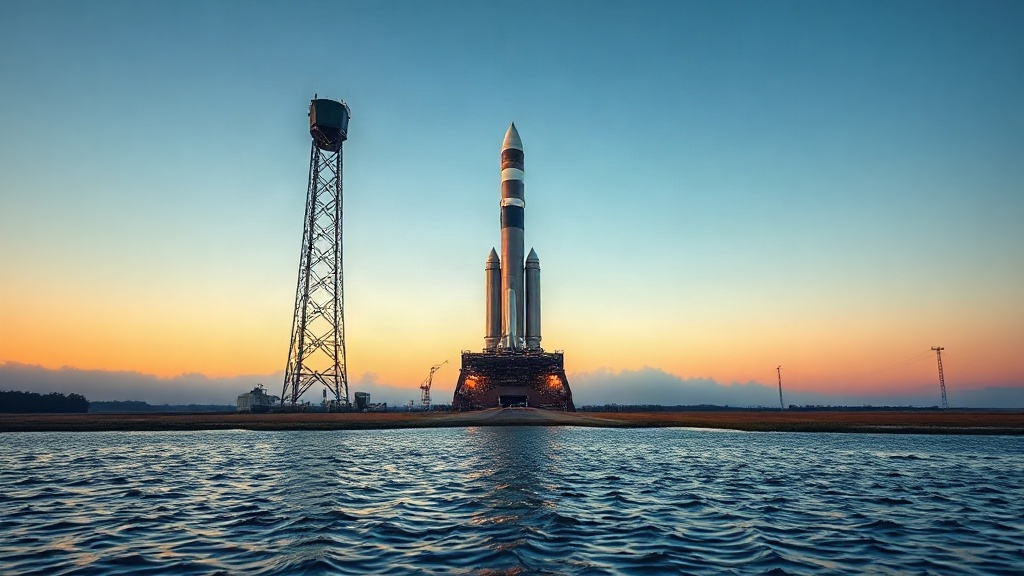
Starship left the pad on Sept. 28 as a test article and came back as infrastructure. The first 13 flights reached space and fell back without delivering a payload anyone would pay for. Flight 14 reached orbit and deployed 26 satellites.
SpaceX sells three things: launches, Starlink broadband, and now AI compute. NASA, the Pentagon and satellite operators buy launches. More than 10 million subscribers in 160 countries buy the broadband. The 26 satellites from that flight are the first Starship payloads that can earn money.
| Price LIVE | $145.47 |
| Market Cap | $1.9T |
| Forward P/E | 83.6 |
| Total Revenue (TTM) | $23.0B |
| 52-Week Low | $104.83 |
| 52-Week High | $225.64 |
| Analyst Consensus | Buy (36 analysts) |
| Analyst Target Mean | $223.80 |
It nearly didn't happen. One of the 33 Raptor engines on the Super Heavy booster shut down early, and the Ship lost one of its six engines during the climb. At first, SpaceX said it would not commit to orbit. Spokesman Dan Huot called it "not the outcome we were hoping to hear today," adding that the team was not giving up on orbit.
Minutes later the team reversed itself, lit a Raptor, and the 19-second insertion burn worked. "Starship is orbital," Mission Control called. The payload door opened 12 minutes later, releasing 26 satellites at roughly 270 kilometers, like a Pez dispenser. SpaceX confirmed contact with all 26.
Each V3 satellite supports about 1 terabit per second of downlink and 160 gigabits per second of uplink. That's roughly 10 times the downlink and 22 times the uplink of a V2. A full Starship carries up to 60, about 20 times a Falcon 9 load. "This one flight was like 20 Falcon 9 flights in terms of bandwidth," Huot said.
This lands in the AI conversation. SpaceXAI is building Starmind, a network of orbital data centers, on top of its Grok, X and compute business. Nvidia said in August that SpaceXAI will fly a space-optimized Vera Rubin NVL72 on the first Starmind satellite. Starship is the only vehicle that can lift it.
The plan is unbuilt: as many as 1 million orbital data centers, starting with an AI1 satellite 20 meters tall with a 70-meter wingspan. Musk said on X that SpaceX and Nvidia designed a space-optimized Vera Rubin NVL72 "for launch to orbit in Q4 next year," with significant scale in 2028.
July's flight released 20 V3 satellites that never reached orbit; they burned up. This time the hardware is alive and taking customers.
SpaceX made no attempt to catch the Ship, so reusability stays a claim, not a measured cost. That's the whole ballgame for the equity. Catching and re-flying both stages turns an expensive one-shot into a vehicle with a route.
Think of a delivery truck whose economics only work if it comes back. Starship did its job and still splashed down north of Hawaii after a little over three hours, not the 10 hours and six orbits planned. The company cited "an abundance of caution given the engine issue experienced during ascent."
Your phone drops to one bar on a highway and the map freezes mid-route. Starlink has more than 11,000 satellites up, and V3 gives each one more capacity.
For SPCX, altitude isn't the milestone. Falling cost is. The shares slipped roughly 2% on the flight and sit about a third below their June high; that muted reaction is the tell. At 83.6 times forward earnings on $23 billion of trailing revenue, investors are already paying for a cost curve Starship hasn't demonstrated.
The bear case is straightforward: one Raptor failed on each stage of the same flight, reusability is unproven, and Musk puts hourly flights 2 to 3 years away. Spending ran near $18 billion in the June quarter against negative free cash flow, and a December lock-up expiry adds supply. Blue Origin, Amazon's Kuiper, AST SpaceMobile and Starcloud want the same capacity dollars.
The proof the bears are right would be a second orbital flight that ends in a splashdown, not a catch. Evercore ISI called Flight 14 "the first point where Starship can begin adding usable broadband capacity," and it still has to prove it can do that cheaply. Orbit is a headline; a caught, re-flown Ship is a business.
What we're watching: the next flight, where SpaceX may attempt the first tower catch of the Ship. Musk put the odds at 50 to 60% and wants both stages re-flown by the end of 2026, or "more likely" early 2027. Watch, too, whether those 26 satellites show up as service within weeks.
Disclosure: The Signal holds no position in SPCX. Positions may change. This is not financial advice.