Think of the artificial intelligence boom as a supply chain of high-performance vehicles. Nvidia designs the screaming, multi-thousand-horsepower engine that everyone wants to own. Super Micro Computer builds the actual car around it. The company engineers the chassis, plumbs the liquid-cooling pipes to keep the silicon from melting, wires the power grid, installs the high-speed networking, and bolts the whole apparatus into eight-foot-tall data center racks. When a cloud operator or an enterprise customer wants twenty thousand graphics processors running by next month, they do not call an architect. They call Supermicro to drop pre-assembled, road-ready clusters onto their data center floor.
That speed made Supermicro one of the sharpest winners of the AI infrastructure wave. Yet over the past year, the company has operated under an inescapable cloud of suspicion. Federal agents wanted to know how billions of dollars of high-end American AI compute kept surfacing inside China despite strict export controls designed to choke off Beijing's access to frontier models.
On a quiet Thursday in federal court in Manhattan, that shadow finally took concrete legal form. Ting-Wei "Willy" Sun, an outside contractor and broker whom prosecutors identified as the scheme’s primary fixer, pleaded guilty to four federal counts. He admitted to conspiring to violate export laws, smuggle goods out of the United States, defraud federal agencies, and obstruct justice.
The plea confirms that roughly $2.5 billion of advanced AI servers were illegally diverted to Chinese end-users through Southeast Asian front companies. Yet Supermicro itself was not charged. The company is not a defendant, and its own exhaustive internal investigation found that current executive leadership was kept entirely in the dark. Still, the company cannot shake its discount just yet. A co-founder still faces a federal trial, and the market is still weighing whether Supermicro is a genuine technological indispensable or a high-velocity assembler running on borrowed governance trust.
| Price LIVE | $41.86 |
| Market Cap | $27.1B |
| Forward P/E | 7.9x |
| Total Revenue (TTM) | $39.06B |
| 52-Week Low | $19.48 |
| 52-Week High | $58.51 |
| Analyst Consensus | Hold (15 analysts) |
| Analyst Target Mean | $41.87 |
The Fixer's Playbook
To understand how high-performance compute leaks across closed borders, you have to look at the mundane machinery of global freight. When the United States rolled out strict export limits on high-performance accelerators, the goal was simple: stop Chinese labs from buying the computational horsepower required to train frontier models. If an overseas company wants to buy advanced AI hardware, it must verify who it is, where the servers will live, and what workloads they will run.
Federal prosecutors revealed that Sun bypassed those rules through a classic pass-through structure. Starting in late 2023, high-density server racks packed with restricted Nvidia silicon were assembled in the United States and sold to a front entity in Southeast Asia. On paper, the buyer looked like a regional data provider setting up local capacity. In reality, the hardware was immediately transshipped to mainland China.
By the time the scheme unravelled, roughly $2.5 billion of hardware had crossed the Pacific. That is not a clerical error. It represents roughly 6.4% of Supermicro’s entire trailing-twelve-month revenue of $39.06 billion.
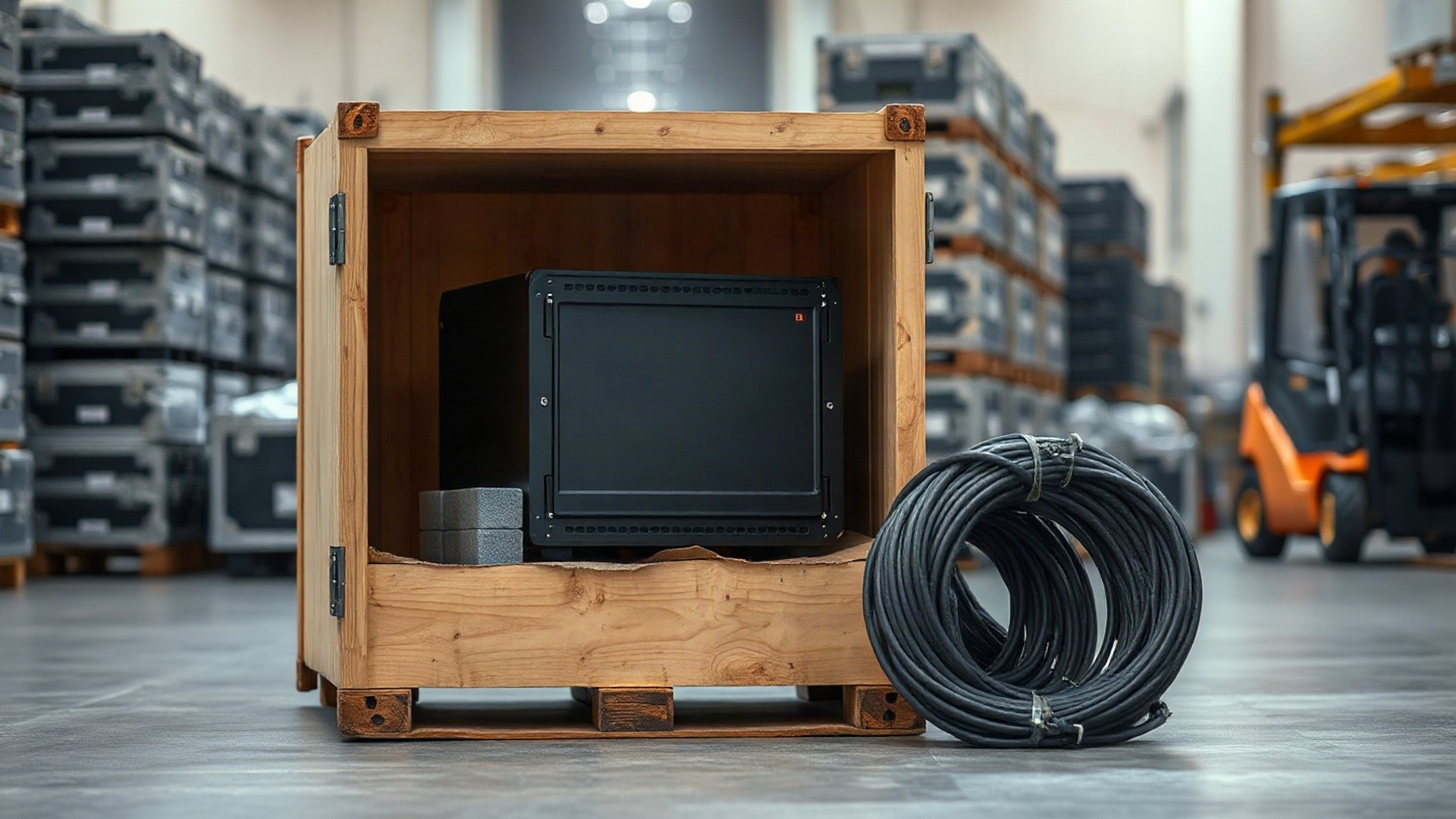
What elevates the case from run-of-the-mill customs fraud to a federal spectacle is the fourth charge Sun admitted to: obstruction of justice. Federal authorities detailed an audacious cover-up effort. When regulators grew suspicious in late 2025, Sun helped stage fake, dummy server racks in a warehouse to fool a Commerce Department inspector during an audit.
Assistant Attorney General John A. Eisenberg bluntly characterized the operation as a campaign of "false documents, staged dummy servers to mislead inspectors, and convoluted transshipment schemes." Jay Clayton, the U.S. Attorney for the Southern District of New York, called it "a tangled web of lies, obfuscation, and concealment." James C. Barnacle Jr. of the FBI described the playbook plainly. Defendants, he said, "fabricated documents, staged bogus equipment to pass audit inventories" and hid behind a pass-through company.
Sun’s guilty plea secures a major conviction for federal prosecutors. For Supermicro, it proves that the diversion scheme was real, criminal, and executed with calculated deception.
The Board Clears the C-Suite
Whenever federal indictments start flying around a vendor’s channel partners, public equity investors instinctively price in existential penalties. But the legal record draws a sharp perimeter around Supermicro's executive floor.
When the Justice Department unveiled its charges in March, Supermicro moved quickly. It put two indicted employees on leave, immediately cut ties with Sun, and confirmed that none of the three have any continuing relationship with the company. More importantly, the board handed the keys to its Lead Independent Director, Scott Angel, and Audit Committee Chair, Tally Liu. They brought in outside counsel from Munger, Tolles & Olson alongside forensic accountants from AlixPartners to comb through the books.
The findings, published in late August, offered the company its cleanest bill of health to date. The forensic audit found zero evidence that any current member of senior management knew about the diversion scheme. It found no evidence that Supermicro had directly sold controlled gear to blacklisted parties, and it confirmed that previous financial statements remained reliable.
The board did not just file the report and move on. It fired employees across sales, technical support, and business development who had skirted internal compliance policies. It adopted every compliance recommendation its independent directors made, and it began cooperating with Taiwanese authorities, who had opened their own parallel inquiry that indicted nine people across the industry.
The legal reality is now bifurcated. On one hand, Supermicro sits unindicted, exonerated by an independent board review, and armed with tightened compliance controls. On the other hand, the ghost in the room has not left. One of the co-defendants indicted alongside Sun is Yih-Shyan "Wally" Liaw, a Supermicro co-founder, former board member, and longtime Senior Vice President of Business Development. A second indicted executive, Taiwan office general manager Ruei-Tsang "Steven" Chang, remains a fugitive.
Until Liaw's trial runs its course, investors know that testimony could generate uncomfortable headlines. The company may be legally clean, but corporate optics rarely follow strict legal definitions.
Engines Need Cars
Strip away the courtroom drama, and Supermicro is caught in an operational sprint. The AI server market is unforgiving: chip architectures change every eighteen months, and thermal dynamics dictate winners and losers.
The newest generation of AI hardware pushes power requirements to staggering levels. When you cluster dozens of modern accelerators together, conventional air fans cannot pull heat away fast enough. The silicon begins throttling, degrading performance. The only solution is direct-to-chip liquid cooling—circulating specialized fluid directly over the processors, piping the boiling heat away, and rejecting it outside the facility.
Liquid cooling is where Supermicro built its technical edge. The company specializes in modular architecture, letting it iterate cooling designs, motherboard configurations, and manifold plumbing faster than slower-moving legacy competitors. That speed matters. As of late September, Supermicro began shipping fully integrated, liquid-cooled racks built around Nvidia's cutting-edge Vera Rubin NVL72 architecture. Each rack packs 72 Rubin GPUs, 36 Vera CPUs, and 20.7 terabytes of ultra-fast HBM4 memory, scaling from five-megawatt deployments all the way up to gigawatt-class cluster footprints.
That manufacturing lead showed up in the company's fiscal fourth-quarter print. Revenue hit $11.1 billion for the quarter, closing out a fiscal 2026 that generated $39.1 billion in sales—up from $22.0 billion the year prior. Even more critical was the margin profile. Supermicro’s gross margin jumped to 17.5%, nearly doubling the 9.5% it booked in the same quarter a year earlier. Adjusted EBITDA margins surged to 15% of revenue, driven by a healthier mix of high-margin enterprise accounts and direct-to-chip liquid-cooling deployments.
Management set fiscal 2027 revenue guidance at a dizzying $65 billion to $72 billion. If you want proof that hyperscalers and enterprises are still desperate for rack-scale compute, that guidance is it.
The Working-Capital Treadmill
Now look at this business through the eyes of a short-seller.
The obstruction count admitted by Sun is the detail that should make your stomach drop. Fixers do not spend their weekends staging hollow server chassis in Asian warehouses to fool federal inspectors unless they are terrified of what an audit will reveal. A co-founder who held a board seat and ran business development is still facing a federal jury. Plaintiff law firms are gathering shareholders for disclosure lawsuits, and the company has already weathered parallel indictments in Taiwan.
Even if you assume the Justice Department never touches Supermicro with a monetary penalty, the underlying corporate economics are brutal. Guiding for $70 billion in sales on an 11% full-year gross margin is not an economic moat; it is an unforgiving working-capital treadmill. To feed that kind of growth, you have to buy billions of dollars of parts upfront before your customers pay you back.
The cash bleed has been stark. Supermicro had to raise up to $7 billion in capital to stay afloat during its inventory surge. That meant tens of millions of new shares and an expensive 7% mandatory convertible preferred stock. By the close of fiscal 2026, the company was sitting on $12.9 billion in inventory and $8.8 billion in total debt against $7.5 billion in cash. In the March quarter alone, operating cash flow ran negative by roughly $6.7 billion.
Meanwhile, enterprise giants like Dell and Hewlett Packard Enterprise are expanding their own liquid-cooled lines. They possess massive corporate balance sheets, deeply entrenched relationships with chief information officers, and decades of enterprise support infrastructure. Worst of all, Supermicro’s entire competitive lead relies on being allocated chips by Nvidia. If allocation patterns shift, or if the enterprise mix falters, margins collapse.
What proves the bear case right is straightforward: watch the gross margin line when Supermicro reports early next month. If margins slide back toward 10%, or if another quarter of heavy cash burn shows that working capital is consuming equity value, the stock will find lower ground.
Why the Multiple Stalled
This tension explains why Wall Street treats Supermicro like an outlier. The stock trades at roughly eight times forward earnings. For context, profitable hardware companies riding generational infrastructure waves routinely command double or triple that valuation. Dell and HPE trade at noticeable premiums despite growing their top lines at a fraction of Supermicro’s pace.
The stock sits roughly 28% below its 52-week high, even though it has more than doubled from its March low. It has not traded on the plea yet; the court filing surfaced after Friday's close. The consensus rating from equity analysts sits at a lukewarm Hold, with an average price target practically sitting right on top of where shares currently change hands.
The market is enforcing an aggressive governance tax. Investors are treating Supermicro like a business that might eventually be handed a massive compliance bill, or one that could face severe export-licensing friction if regulators decide its internal oversight remains inadequate.
For the equity to re-rate, two distinct catalysts must occur. First, the company must prove that its gross margin leap to 17.5% was not a one-quarter aberration. Hardware assemblers trade at single-digit earnings multiples because investors view their cash flows as commoditized. If Supermicro can consistently sustain mid-teens gross margins by selling complex liquid-cooled rack architectures instead of generic white boxes, its earnings power permanently steps higher without requiring another dime of revenue growth.
Second, the governance discount has to burn off through attrition. The internal board investigation cleared the executive suite, and Sun’s guilty plea places legal culpability squarely on an outside broker. Each legal checkpoint that separates corporate Supermicro from individual misconduct pulls that discount down. The equity cannot fully break out until Liaw’s trial concludes, but every step toward resolution shrinks the penalty.
The AI Cold War's Paper Trail
Export enforcement is no longer an obscure regulatory footnote; it is the physical border control of the global AI buildout. As frontier models become instruments of national power, governments will scrutinize the journey of every high-end accelerator from the fab to the server chassis.
Tracing advanced compute is notoriously difficult. Unlike a consumer smartphone that pings cellular towers, a server rack operates behind corporate firewalls. Tracking serial numbers, inspecting shipping manifests, and verifying who actually turns the power switch on in an overseas data center requires immense operational discipline.
Sun’s guilty plea sends an unmistakable signal to the hardware sector: the grey channel is getting dangerous. Setting up shell corporations in neutral jurisdictions and falsifying shipping documents will land logistics brokers in federal prison. For system integrators, compliance can no longer be treated as an administrative backwater. It is now a primary operational cost.
Companies that can prove transparent supply chains will remain trusted partners for sovereign AI programs and Western cloud providers. Those that falter will face endless audits, shipping delays, and the threat of catastrophic enforcement penalties.
Supermicro has survived the first wave of scrutiny without corporate charges. The company’s factory floors are active, its liquid-cooling pipelines are full, and racks of next-generation silicon are heading out the door. The business is executing, but the legal calendar still holds the gavel.
All eyes now turn to Supermicro’s upcoming earnings print in early November, where the gross margin percentage will reveal whether the company's newfound profitability is holding firm.
Disclosure: The Signal holds no position in SMCI. Positions may change. This is not financial advice.