While tech investors spent the day watching semiconductor giants slide, the defense trade quietly soaked up capital. Nvidia dropped roughly a third over the past month, but old-school defense names barely budged. Capital needed a shelter. Then the Pentagon dropped a headline that looked massive on paper: a Navy electronic-warfare contract carrying a $7.1 billion ceiling.
RTX Corporation is effectively three distinct industrial giants sharing a single ticker. Pratt & Whitney manufactures commercial and military jet engines. Collins Aerospace builds the unglamorous essentials inside an aircraft, from landing gear to cockpit avionics. The third leg is Raytheon, which builds the missiles, radars, and digital jamming gear protecting Western warships and skies.
| Price LIVE | $193.44 |
| Market Cap | ~$261B |
| Forward P/E | 23.9 |
| Total Revenue (TTM) | $96.0B |
| 52-Week Low | $166.74 |
| 52-Week High | $226.88 |
| Analyst Consensus | Buy (23 analysts) |
| Analyst Target Mean | $228.13 |
Raytheon sells almost exclusively to the Pentagon and allied governments, making it RTX's primary growth engine. Think of legacy defense procurement like signing an exclusive cable bundle with a single provider. The military handed a program to one contractor, bought the specialized hardware, and stayed locked in for decades. The Navy's new award tears up that playbook. Instead of picking a single champion, the Navy created an app store roster of 28 approved contractors to upgrade surface ships.
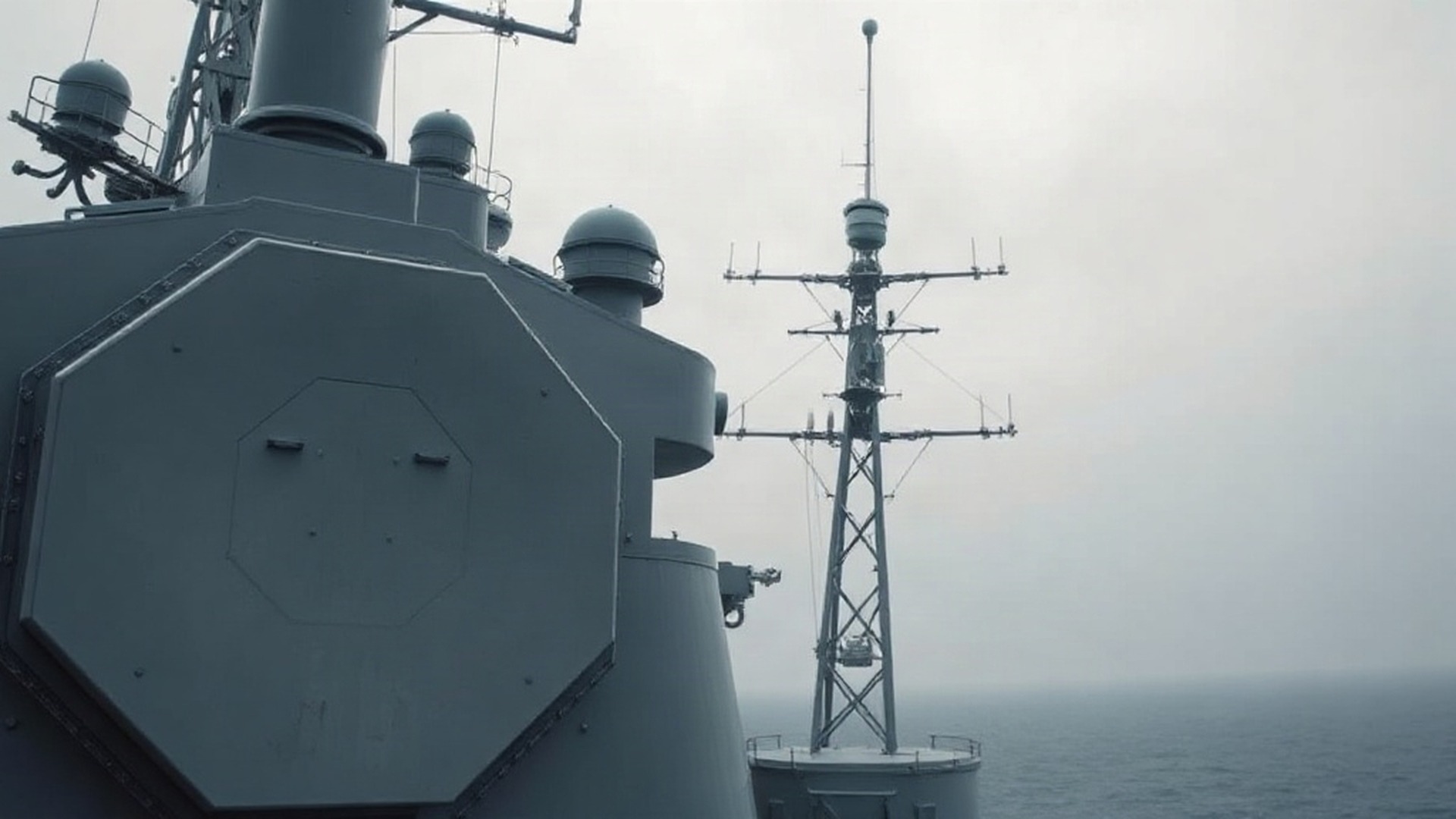
The deal covers the Navy's Surface Electronic Warfare Improvement Program, known across the fleet as SEWIP. These systems sit on ship masts to detect hostile radar signals, warn the crew, and actively jam anti-ship missiles. Raytheon built the original ancestor system back in the 1980s. Yet RTX does not actually own the modern shipboard blocks. Lockheed Martin builds the Block 2 electronic-support upgrade, while Northrop Grumman manufactures the Block 3 jamming suite. Raytheon's premier active electronic-warfare franchise actually flies in the air, powering the dual-pod jammer on the Navy's EA-18G Growler aircraft.
Electronic warfare is the exact point where defense software eats traditional hardware. Out at sea, an incoming anti-ship missile does not announce its frequency. A warship has milliseconds to ingest the raw radio signal, classify the threat, and decide whether to warn or jam before impact. That is an inference problem at the edge, and it is why the roster looks the way it does. By putting 11 small businesses into this 28-firm pool, the Navy is signaling that military dominance belongs to code rather than metal antennas.
For RTX stock, this equity story hinges on Raytheon's margin execution rather than massive headline rosters. Raytheon generated $8.031 billion in third-quarter sales, expanding operating margins to 14.1% as global missile demand surged. The enterprise logged over $81 billion in quarterly awards, proving that frontline kinetic defense remains in tight supply. Defense equities have already enjoyed an aggressive valuation bump as investors fled high-multiple tech. The market is pricing RTX for flawless manufacturing delivery, meaning a shared contract vehicle cannot push the stock higher on its own.
The bear case on this contract is simple: a headline ceiling is not actual revenue. The Pentagon obligated exactly zero dollars to the 28 awardees at signing. Look at history. When Lockheed won a SEWIP contract earlier this year with a $249 million ceiling, the Navy obligated a meager $344,788 on day one. Spread evenly over a decade, this entire pool works out to roughly $254 million per company. Against RTX's massive $164 billion defense backlog, that sum is a 0.16% rounding error.
Then there is the bidder list. Eleven small businesses will aggressively underbid legacy primes on routine fabrication tasks. Operational risk is also piling up elsewhere. The Pentagon's operational test office noted that combat testing for Northrop's Block 3 aboard the USS Pinckney has not even started, yet the Navy keeps purchasing hardware anyway. Within RTX itself, quarterly free cash flow dropped 47% to $2.119 billion, weighed down by a $363 million customer bankruptcy charge inside Pratt & Whitney.
When RTX reports its fourth quarter early next year, the business must generate roughly $2.9 billion in fourth-quarter free cash flow to hit its $9.0 to $9.2 billion annual guidance. Raytheon also has to keep booking more work than it burns.
Disclosure: The Signal holds no position in RTX. Positions may change. This is not financial advice.