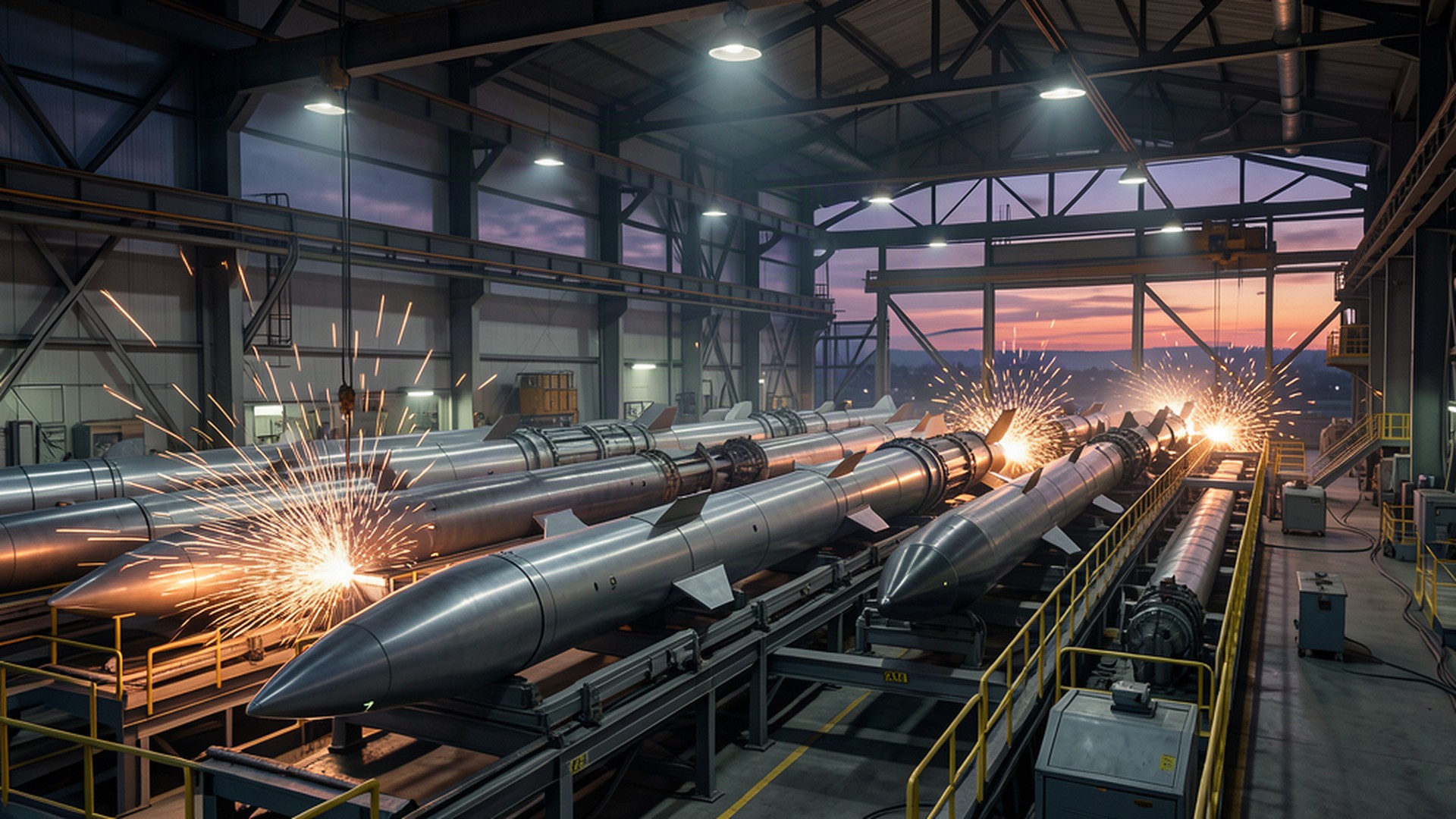

Nobody wants to hand a check to their competitor. That's the entire Rocket Lab thesis in one sentence. SpaceX launches rockets, but SpaceX also operates Starlink — which competes directly with the satellite operators who need launch services. You don't pay your rival to put your constellation in orbit. You find someone else. Rocket Lab is that someone else.
The game isn't catching Falcon 9's cadence. It's being the only credible independent launch provider in the free world. Right now, $RKLB is it.
The Independent Launch Moat
The U.S. government is literally paying Rocket Lab to exist as an alternative. The Electron completed 21 launches in 2025 with 100% mission success. But the bigger story is the customers. National security payloads need redundant launch providers — that's policy, not preference.
The NSSL Phase 3 contract ceiling sits at $5.6 billion. Rocket Lab is one of exactly two companies positioned to win mission awards alongside SpaceX. The Space Development Agency just handed RKLB $816 million for missile-defense satellites plus another $515M for the tracking layer. Over $1.3 billion in defense contracts that say: we need you to exist.
It's Not Even a Rocket Company Anymore
Here's what people miss. Rocket Lab Space Systems — solar panels, reaction wheels, star trackers, and the Photon spacecraft bus — now generates about two-thirds of total revenue. Over $400 million. These components go on somebody else's satellite whether it launches on Electron, Falcon 9, or a vehicle we haven't named yet.
Revenue is north of $600 million, growing 38% annually. The Space Systems contracted backlog is 74% of that total — meaning most of what you already sold is recurring hardware revenue, not rocket launches. That's not a launch company. That's a platform.
| Metric | Value |
|---|---|
| Revenue TTM | $600M+, growing 38%+ annually |
| Space Systems | ~$400M, two-thirds of revenue |
| Electron Launches (2025) | 21 missions, 100% success |
| Total Backlog | $2B+, doubled year-over-year |
| Liquidity | $2B+, minimal debt |
| Gross Margins | Mid-30s, targeting 40% |
Neutron: The $50 Million Catalyst
The Neutron story is straightforward. Medium-lift, reusable, 13,000 kg to LEO, carbon-composite structure. Priced at $50-55 million per launch versus Falcon 9's $67 million. First flight targeting late 2026. A tank test issue pushed the timeline slightly — but a failed pressure test isn't a failed company. It's data. SpaceX did the same thing for years.
The Bottom Line
This isn't about beating SpaceX. SpaceX has 200+ launches a year and a cost structure approaching physics. What Rocket Lab is building is more durable: the indispensable alternative in a market that structurally cannot accept a single provider.
The defense budget demands redundancy. Satellite operators demand independence from their biggest competitor. And Space Systems — growing toward $500M on its own — gives Rocket Lab revenue that doesn't depend on a single launch manifest. Over $2B liquidity. A doubled backlog. Analyst targets clustering in the $100-110 range. Everyone's looking at what SpaceX does next. Rocket Lab is building what the rest of the space economy can't do without.
Disclosure: The Signal holds no position in RKLB. Positions may change. This is not financial advice.