Jensen Huang walked onto the Computex 2026 stage in Taipei with the energy of a man who knows he's holding all the cards. And for the next two hours, he laid them face-up on the table — one generational platform after another — daring the competition to match what NVIDIA just put into production.
The message was unmistakable: the AI infrastructure buildout is accelerating, not slowing down, and NVIDIA owns every layer of the stack.
Vera Rubin: The Next Architecture Epoch
The headliner was Vera Rubin — NVIDIA's first truly post-Blackwell architecture, named after the astronomer who proved dark matter exists. Jensen clearly chose the name deliberately: Vera Rubin is the invisible force holding the AI universe together.
The numbers are staggering. Vera Rubin delivers 4x the inference throughput of Blackwell at the same power envelope, thanks to a complete rearchitecture of the tensor core pipeline and a new HBM4 memory subsystem pushing 8TB/s of bandwidth per GPU. The architecture introduces FP4 native compute, cutting memory requirements for frontier models by 60% while actually improving accuracy through stochastic rounding techniques that DeepMind helped validate.
"Moore's Law is dead. Huang's Law is alive," Jensen said, pointing to a chart showing NVIDIA's compute-per-watt doubling every 12 months for the last six years. The slide drew audible gasps from the audience — 3,500 engineers and investors who know exactly how impossible that curve should be.
The Vera Rubin platform will ship in two configurations: a dual-GPU Vera Rubin Ultra board for cloud hyperscalers, and the Vera Rubin NVL144 — a rack-scale system connecting 144 GPUs through NVLink 6 at 3.6TB/s of bisection bandwidth. That's an entire exascale AI cluster in two racks.
Arizona Is Real, and It's Producing Blackwell Ultra
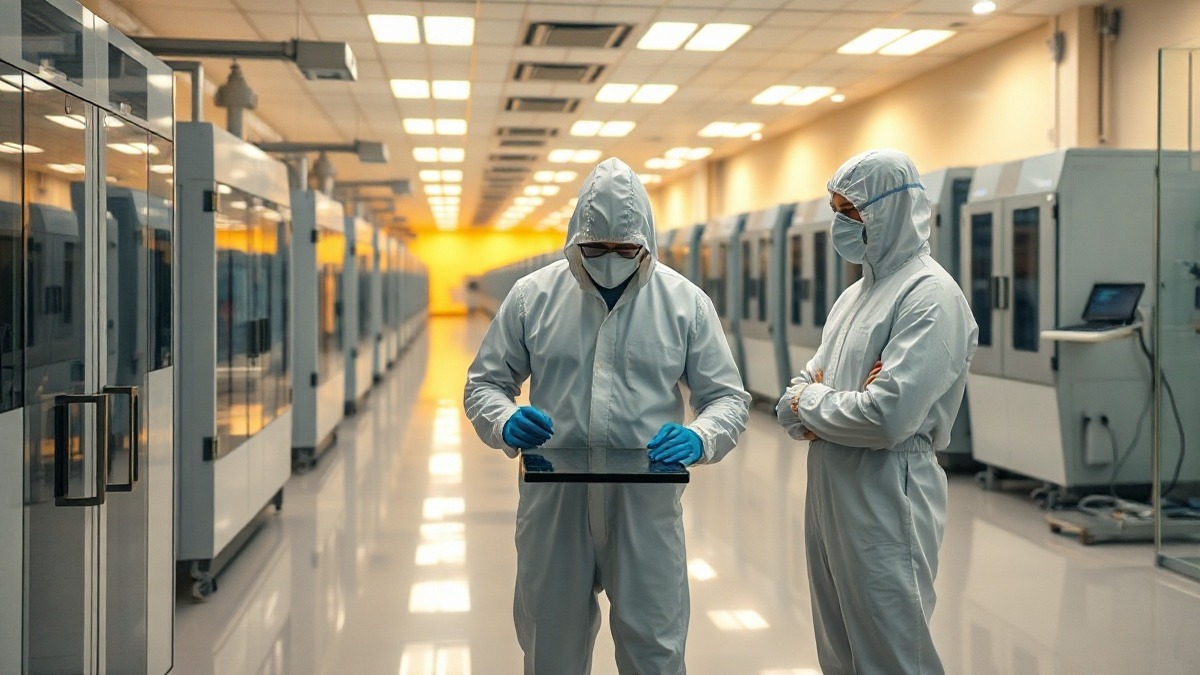
This was the moment that shifted the geopolitics of AI. Jensen confirmed that TSMC's Arizona fab — the one Washington spent $6.6 billion in CHIPS Act money to build — is fully operational and producing Blackwell Ultra GPUs at commercial scale.
He held up a Blackwell Ultra GPU fabricated in Phoenix, Arizona. The crowd went silent. Then they stood up.
"This chip was designed in Santa Clara, manufactured in Phoenix, and will ship to data centers around the world," Jensen said. "The AI supply chain is no longer a single point of failure."
The Arizona fab is producing at 4nm process node with yields that TSMC described as "matching Taiwan within 3% of target." By end of 2026, Arizona will account for roughly 15% of NVIDIA's advanced packaging volume, rising to 30% in 2027. For investors, this is the biggest de-risking event in NVIDIA's history — the Taiwan Strait risk premium just got materially smaller.
GB300 Grace Blackwell Ultra: One Board, One Supercomputer
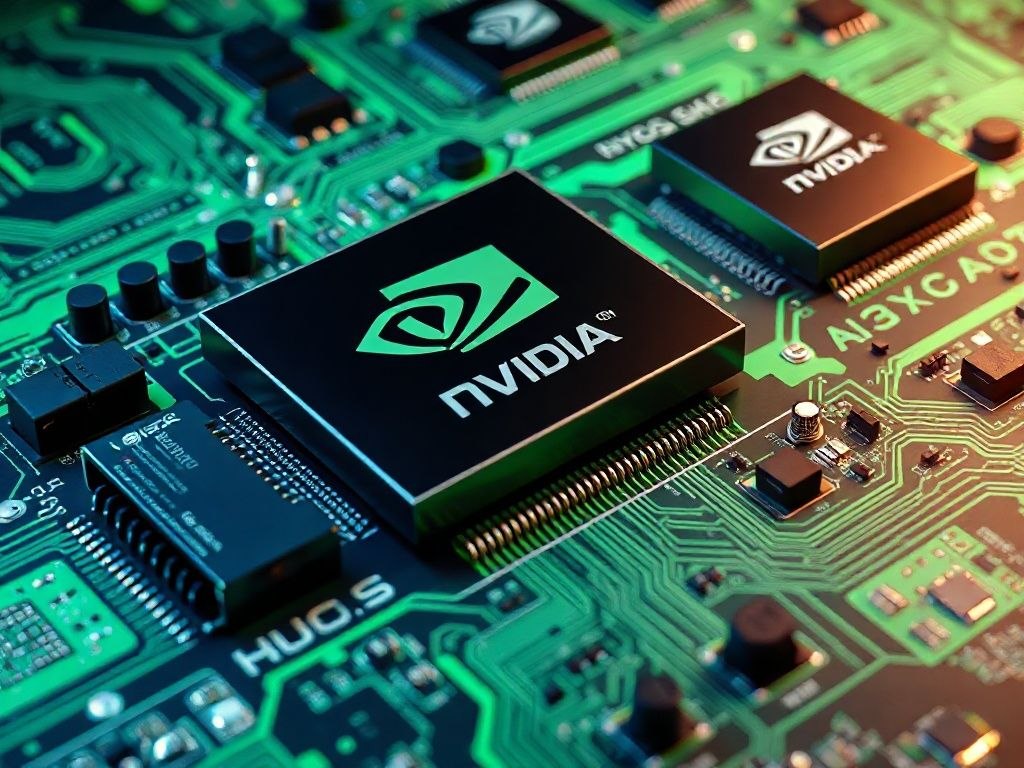
Jensen then unveiled the GB300 Grace Blackwell Ultra Superchip — a single board that combines a Grace CPU, Blackwell Ultra GPU, and 288GB of HBM4 memory connected through a coherent NVLink-C2C interconnect running at 900GB/s.
"This is a supercomputer on a board," Jensen said, holding the GB300 module between his fingers. "One of these runs Llama 4 405B at interactive latency. Two fit in a 1U server. A rack of 72 is the world's largest AI supercomputer that fits in a standard datacenter footprint."
Microsoft, Meta, Amazon, and Google have already committed to GB300 deployments starting in Q4 2026. The pre-orders alone represent roughly $45 billion in revenue that NVIDIA hasn't even officially booked yet.
Spectrum-X Photonics: The Network Is the Computer
The sleeper announcement was Spectrum-X Photonics — a co-packaged optics switch that moves data between GPUs using light instead of electrical signals. 1.6T Ethernet per port. Under 500 nanoseconds of latency. 40% less power than electrical interconnects.
Jensen explained the physics simply: "Electrons hit a wall at 200G signaling. Photons don't. Spectrum-X Photonics is how we scale to million-GPU clusters without melting the power grid."
This puts Broadcom and Marvell on notice. NVIDIA is no longer just competing at the silicon layer — it's vertically integrating into the networking fabric. Every Spectrum-X port sold is a Tomahawk or Teralynx port that isn't. The optical interconnect market alone represents a $20 billion TAM by 2028.
The Signal: Why This Matters
Computex 2026 was not an incremental product update. It was NVIDIA demonstrating that its moat is widening, not narrowing. Three structural advantages became clear:
- Architecture cadence: Vera Rubin proves NVIDIA can maintain an annual architecture cadence while competitors struggle to ship a single competing product. Blackwell Ultra to Vera Rubin in 12 months is a pace nobody can match.
- Supply chain sovereignty: Arizona manufacturing means the Taiwan geopolitical risk is being actively managed, not ignored. Every chip produced in Phoenix is one less chip vulnerable to a strait crisis.
- Vertical integration: From the GB300 Superchip to Spectrum-X Photonics to the NVL144 rack-scale system, NVIDIA is capturing more value per AI dollar spent. The TAM expansion from silicon to systems to networking is real and accelerating.
Jensen ended the keynote the way he always does — with a chart showing the acceleration of everything. But this time, there was a new line on the graph: Arizona production volume. It starts small in 2026 and curves up sharply in 2027. The message was clear: we're not just designing the future of AI. We're building it on American soil.
$NVDA closed at $211.81 ahead of the keynote. If history is any guide — and Jensen's Computex track record is flawless — the market hasn't finished pricing in what just happened in Taipei.