Rocket Lab spent the daylight hours riding a wave it had nothing to do with. Shares jumped about 11% when NASA unveiled its Moon Base logistics partners, lifting the entire space sector in sympathy. The catch was that Rocket Lab was nowhere on NASA’s list. By evening, when the company reported third-quarter earnings, gravity caught up. A wider-than-expected net loss sent the stock tumbling roughly 8% in after-hours trading, on a rocket already parked until 2027.
Strip away the orbital romanticism, and Rocket Lab operates a straightforward two-part business. It is the other Western company flying commercial launch at scale besides SpaceX, selling rides to orbit and the hardware required to survive there. Electron is its delivery van, a proven small rocket that has flown 99 times. Space Systems is the parts counter, building the satellite buses, solar arrays, and reaction wheels that other operators launch. In the third quarter alone, 12 Rocket Lab-built spacecraft reached orbit, with more than 55 more sitting on the factory floor.
| Price LIVE | $58.86 |
| Market Cap | ~$37.6B |
| Forward P/E | N/M |
| Total Revenue (TTM) | $881.9M |
| 52-Week Low | $37.57 |
| 52-Week High | $151.00 |
| Analyst Consensus | Buy (20 analysts) |
| Analyst Target Mean | $102.15 |
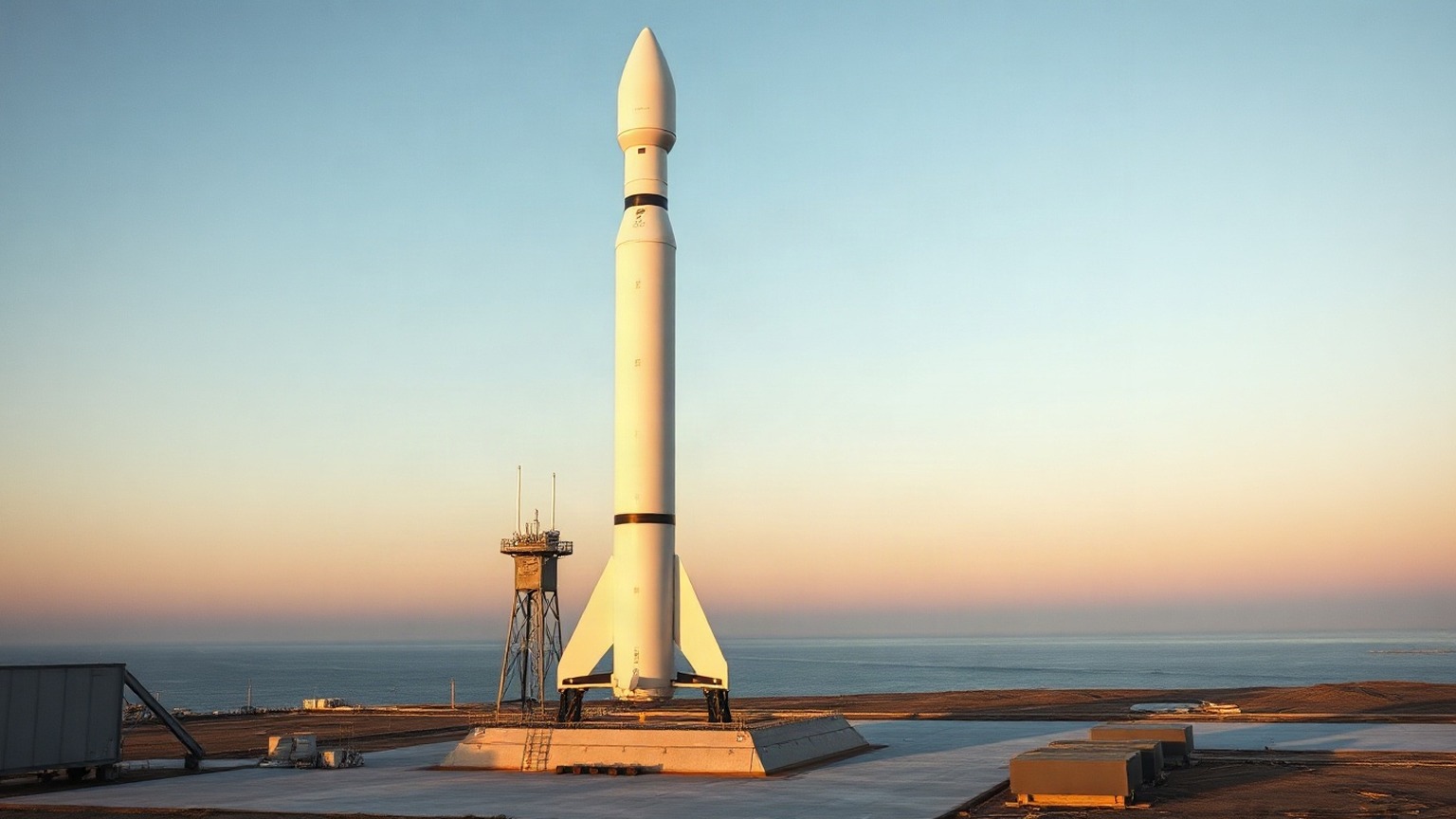
The vehicle that dictates the equity valuation, however, is Neutron. Think of it as the eighteen-wheeler. Commercial space currently suffers from a toll-road dilemma: SpaceX sets the toll because no one else can match its medium-lift flight rate. Breaking that monopoly requires a reusable vehicle that can lift roughly 13 tonnes at a cut-throat price. That strategic bottleneck is why constellation operators want an alternative, and why the Department of War just signed a $150 million conditional loan commitment to lift Neutron's flight rate beyond its first launch.
The quarter proved that customers are eager to buy. Rocket Lab generated $267.8 million in revenue, up 72.7% year over year, while expanding its backlog to a record $3.57 billion, with 117 launches now booked. More than $515 million of that paper is tied to 16 Neutron missions from unnamed constellation operators, with the base price lifted to $70 million on several of them. That $70 million sticker price is the company's whole economic thesis. Customers have already handed over $423.6 million in contract liabilities to hold their places.
Yet the underlying plumbing reveals cracks. GAAP gross margins fell to 33.6% from 37.0% a year ago, and the adjusted figure slipped to 38.4% from 41.9%, even though both beat the company's own guidance. The company posted a net loss of $79.7 million, or negative $0.12 per share, missing expectations. To fund future ambitions, including a pending cash-and-stock purchase of satellite operator Iridium, Rocket Lab raised $3.91 billion through share sales in nine months. Its share count is up 15.4%.
For the equity to re-rate from roughly 43 times trailing sales, the market has to stop pricing the punchline before the setup. Rocket Lab is being valued as if its industrial transition is already complete, but three dominos must fall first. Neutron must reach orbit safely, the $70 million launch price must hold against SpaceX's rideshare pricing, and gross margins must reverse their decline as satellite manufacturing scales. The stock is currently priced for seamless execution, leaving zero cushion for the realities of rocket science.
The bear case is that Rocket Lab is selling tickets for a train that has no engine. Neutron was supposed to fly in 2024, then 2025, then late 2026, and the timeline just hardened to no earlier than 2027. That delay follows two distinct structural failures: a January test tank rupture and voids discovered inside the carbon-composite forward dome in October. Booking 16 missions on an unproven rocket means half a billion dollars of backlog is purely theoretical.
At a $268 million quarterly pace, working through that $3.57 billion backlog represents over three years of execution, and government development contracts can easily be re-phased. With gross margins down roughly 340 basis points, negative operating cash flow through nine months, and heavy share dilution, the company is burning margin while chasing SpaceX. If Neutron fails to fly by mid-2027, or if fourth-quarter revenue lands below $270 million, the premium unravels.
What we are watching next is the production line for the redesigned forward propellant dome and fourth-quarter revenue guidance pegged between $270 million and $290 million. Booking commercial payloads before validating the airframe is like selling ride passes for a roller coaster still being welded to the track. Rocket Lab has built a real space business, but the market is betting on a vehicle that remains bolted to the factory floor.
Disclosure: The Signal holds no position in RKLB. Positions may change. This is not financial advice.