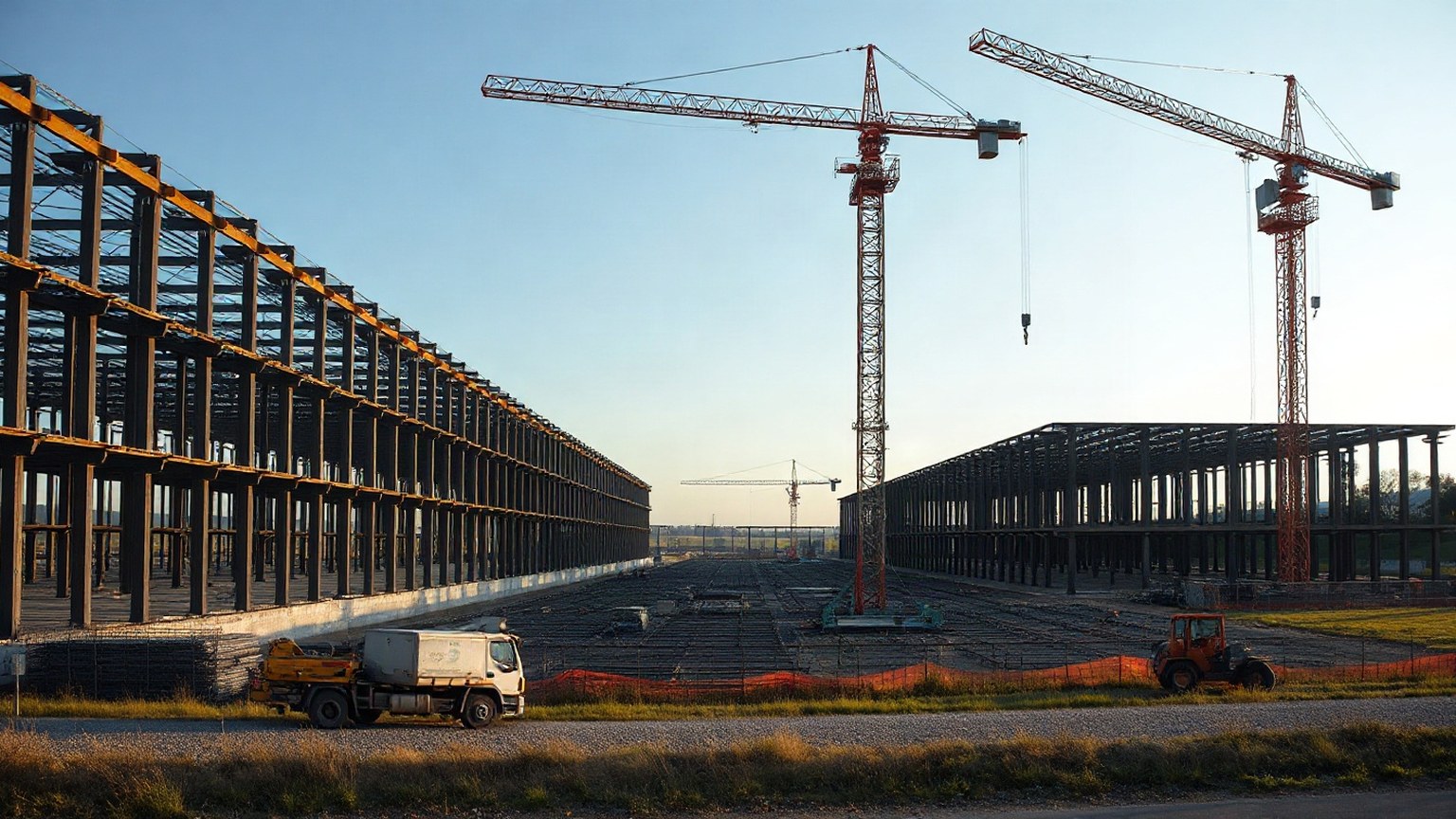
You plug your phone into the wall each night and take the current for granted. But when an artificial intelligence cluster moves into the neighborhood and demands the output of a small nuclear plant, voters start reading utility bills. That quiet realization finally hit the stock market on Nov. 5, and it did not fall evenly. While the cloud giants purchasing compute slipped just two to four percent, Nvidia tumbled over nine percent on nearly triple its typical trading volume.
The divergence between the buyers and the suppliers reveals the entire story. Nvidia designs the specialized processors, networking switches, and complete rack-scale supercomputing systems that train and run frontier AI models. It does not run foundries or pour concrete. It designs the brains, lets partners build the physical hardware, and sells the complete architecture to Microsoft, Amazon, Alphabet, and Meta. In its last quarter, enterprise data centers generated ninety-two percent of its revenue.
| Price | $181.60 LIVE |
| Market Cap | ~$4.39T |
| Forward P/E | 11.4× |
| Total Revenue (TTM) | $303.0B |
| 52-Week Low | $164.27 |
| 52-Week High | $243.37 |
| Analyst Consensus | Strong Buy (58 analysts) |
| Analyst Target Mean | $327.14 |
Think of Nvidia as an engine maker selling high-performance locomotives to rail companies that have not finished laying their tracks. For two years, Wall Street treated this buildout as a simple wafer supply problem. If TSMC could stamp out the silicon, the revenue would show up on schedule. Yet the physical constraint just migrated from semiconductor cleanrooms to county zoning offices.
The mechanism here is municipal cost allocation. When a massive server farm connects to a regional grid, someone has to pay for the upgraded substations and transmission lines. If local regulators force operators to shoulder those costs upfront, the return on investment for an upcoming facility collapses overnight. That friction showed up across forty-one local ballot measures in ten states, where voters approved new data-center restrictions in forty of them. With governorships also flipping in primary data-hub states like Texas and Ohio, the regulatory floor for new power lines just became the regulatory ceiling.
This political shift lands directly on Nvidia's disclosed pipeline. In Pike County, Ohio, the company secured power and land access alongside SoftBank for an eight-gigawatt tech campus slated to break ground this year. Ohio's incoming governor campaigned specifically on conditional moratoria that force operators to cover all grid upgrade costs. When a local municipality caps project size or freezes an interconnection queue, the cloud giant simply pauses capital spending. The company that already bought the components carries the bag.
That asymmetry explains why the selloff matters directly to the stock. Nvidia has already shed nearly a quarter of its value since its October peak, wiping out roughly $1.4 trillion in market capitalization and round-tripping its entire yearly advance. Its trailing valuation has compressed from thirty times earnings down to roughly twenty-three times.
To re-rate higher from here, Nvidia does not need to announce a faster chip. It must prove during its Nov. 17 earnings report that its customers' 2027 and 2028 orders survived the ballot box. If any major cloud buyer trims an upcoming capital expenditure line, that compressed multiple has much further to fall.
The short seller's argument is that the financial structure supporting these purchase orders is far shakier than the headlines suggest. To keep the pipeline moving, Nvidia has increasingly deployed customer financing structures and credit guarantees, teaming up with private equity heavyweights to mobilize hundreds of billions in third-party capital. Meanwhile, its own purchase commitments for foundry supply exploded from $119 billion to $279 billion in a single quarter. If project timelines slip, Nvidia absorbs the inventory charges just as it did during prior export bans.
At the same time, its customers are increasingly leaning on off-balance-sheet vehicles and elevated debt loads while depreciating their existing chips far slower than their actual technological lifespan. Throw in a five-year manufacturing backlog for industrial transformers and sold-out gas turbines, and the physical grid was destined to stall this buildout anyway. The election merely forced Wall Street to acknowledge the calendar.
What we are watching now is whether the Nov. 17 guidance holds to its projected $108 billion print while leaving its multi-year visibility intact. The real bottleneck in artificial intelligence is no longer the speed of the chip. It is the patience of the power grid.
Disclosure: The Signal holds no position in NVDA. Positions may change. This is not financial advice.