Let's get one thing straight — Micron isn't just another chip stock riding the AI wave. This is the company that makes the memory those models actually run on. And if you blinked this year, you missed possibly the most consequential pivot in semiconductor history.
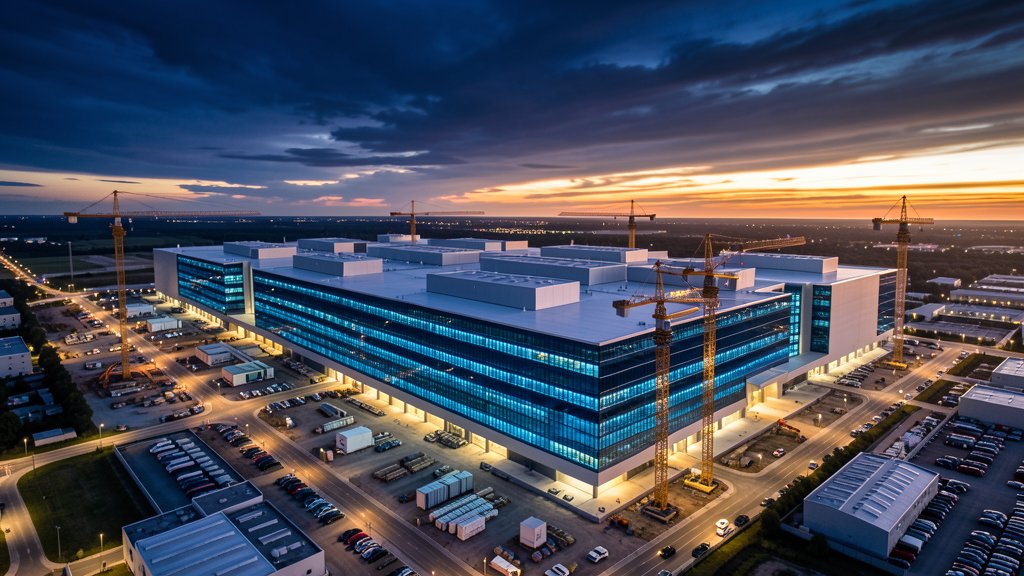
On July 9, Micron dropped $250 billion. That's the new total commitment to US chip manufacturing through 2035 — a $50 billion bump from their already-staggering $200 billion pledge. And they didn't just raise the number. They poured the first concrete at their Clay, New York megafab ahead of schedule. When's the last time a major semiconductor project came in early?
The goal: 40% of Micron's DRAM produced on American soil, up from basically nothing a few years ago. That's 90,000-plus jobs, a $6.1 billion CHIPS Act grant, and a manufacturing footprint designed to outlast whatever political headwinds come next. This isn't just reshoring — it's a complete rewiring of the global memory supply chain.
But the real fireworks came from a partnership that should scare the hell out of their competitors.
On June 22, Micron locked in as Anthropic's primary memory supplier. Not just a vendor — the supplier. HBM4 stacks, DRAM, enterprise SSDs — Claude's next-generation models will be trained and inferenced on Micron memory. The deal covers four pillars: guaranteed supply of high-bandwidth memory, architecture co-design where Micron engineers sit in the room while Anthropic designs new model architectures, Claude Enterprise deployment across Micron's operations, and a Series H investment tying the companies at the hip. Anthropic was valued at $965 billion in that round. Let that sink in.
Micron gets a guaranteed customer for their highest-margin products. Anthropic gets a seat at the table designing the memory their models need — instead of buying whatever SK Hynix feels like shipping that quarter.
Speaking of SK Hynix — the Korean giant landed on Nasdaq July 10 with a $26.5 billion IPO, the largest foreign debut in US history, 7x oversubscribed. They still lead HBM with roughly 56 to 62 percent share, while Micron sits around 20 percent. On paper, that looks like a problem. But here's the thing about being the smaller player with the faster trajectory: you have room to run. The Anthropic anchor deal flips the narrative from "catching up" to "architecturally irreplaceable."
The numbers are frankly ridiculous. Micron's at $979 with a $1.1 trillion market cap. Forward P/E of 6.5 — not a typo. Revenue grew 345 percent year over year. Q3 hit $41.46 billion — a record — and Q4 guidance points toward $50 billion. Operating margins of 80 percent. Profit margins of 56 percent. Free cash flow of $7.6 billion, operating cash flow of $51.4 billion. Total debt of just $6.4 billion against $26 billion in cash. This balance sheet is a fortress.
BofA's Vivek Arya raised his price target to $1,550 after Q3 earnings, maintaining a Buy rating. That's nearly 60 percent upside from here. When one of the Street's best semi analysts is that loud, you listen.
Now for the other side, because there's always one.
Michael Burry — yes, the Big Short guy — announced a short position on July 1 at $1,051, calling Micron a "greater fool theory" trade. And look, the man has been right before. But memory is historically a boom-bust business. In 42 years, the industry has seen 34 drawdowns of 30 percent or more. If you bought every one, you'd still be up a thousand times over.
The difference this cycle? Sixteen take-or-pay supply agreements locking in roughly 40 percent of Micron's revenue for five years. These aren't handshake deals — customers pay whether they take delivery or not. That's the kind of visibility the memory industry has never had. It doesn't eliminate the cycle, but it sure as hell flattens it.
The thesis is straightforward. AI models are getting hungrier for memory, not less. Training clusters suck down HBM like it's water. Micron is the only US-based volume manufacturer of both DRAM and NAND, and they're the exclusive memory partner for one of the two most important AI labs on the planet. The stock is up 309 percent year to date. The 52-week range runs from $103 to $1,255. If you bought at the bottom, congratulations. If you didn't, the window is closing.
Micron isn't just building chips in America. They're building the memory that runs the future. And this time, the future is being built on US soil.
Disclosure: The Signal holds no position in MU. Positions may change. This is not financial advice.