Remember when Intel was the only name in chips? Neither do they. The same company that defined Silicon Valley spent a decade watching its empire slip through its fingers — piece by piece, one missed bet at a time. Mobile? They let ARM walk away with the smartphone revolution without firing a shot. AI? They watched NVIDIA grab every seat at the table while Intel was still trying to ship a decent GPU driver. And the real dagger — AMD — once a laughingstock near-bankruptcy, now a legitimate threat eating Intel's lunch in servers, laptops, and mindshare.
The numbers tell a brutal story. Intel went from commanding over 90% of the server market to watching AMD carve out more than a third of it. Revenue cratered from $63 billion down to under $53 billion between 2022 and 2025. Over $150 billion in market value vaporized. It's the kind of collapse that kills most companies. But Intel still has the fabs, the talent, and a US government that can't afford to let them fail. That's why what happened next matters.
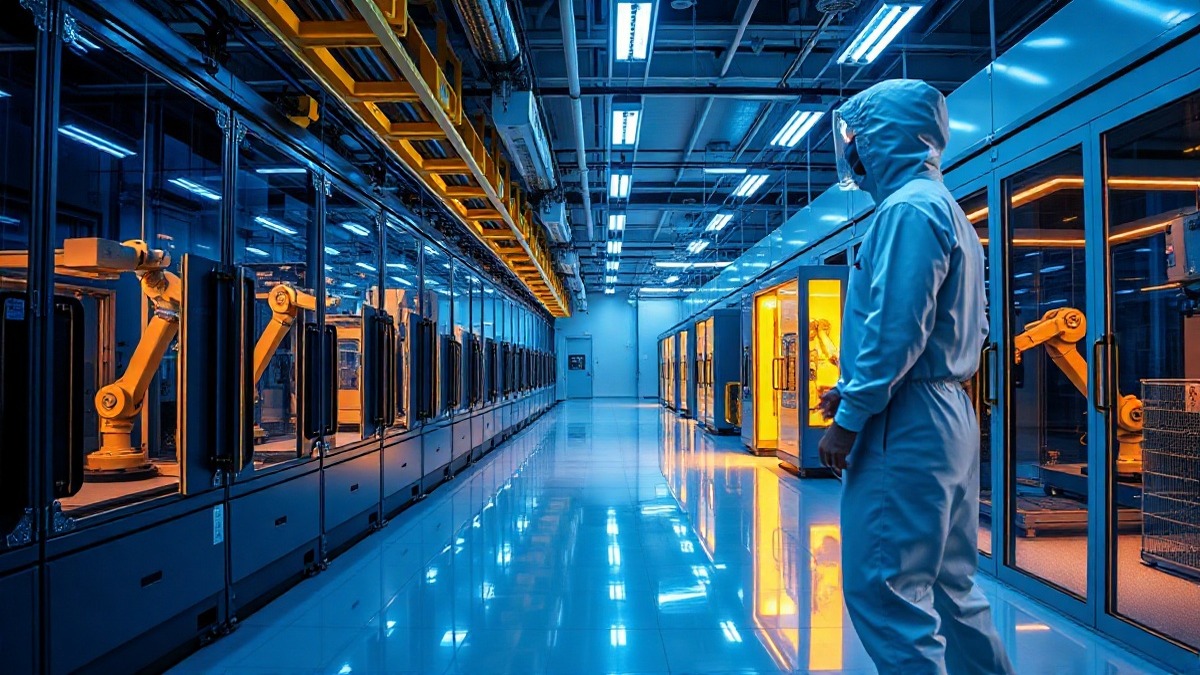
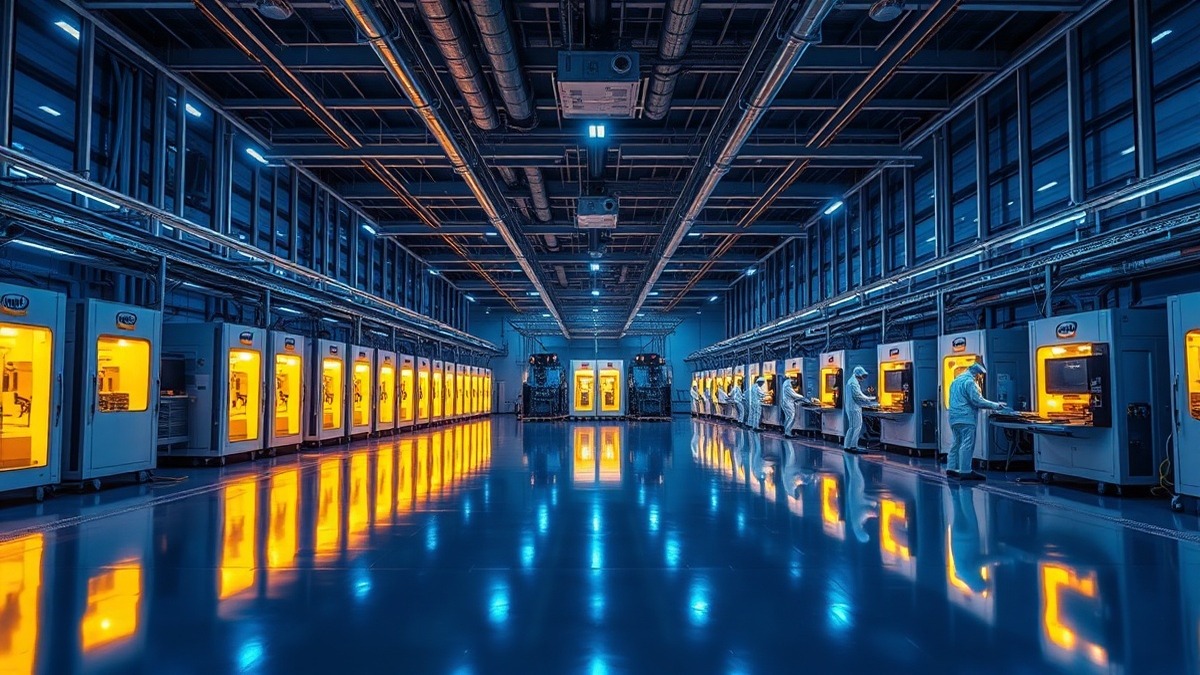
Here's where the story gets wild. Instead of doubling down on what made them rich, Intel decided to burn it all down and rebuild. The foundry pivot — IDM 2.0, IFS, whatever you call it — is a $75 billion Hail Mary thrown directly at TSMC's face. The entire bet rests on a single question: can Intel make chips for other companies competitively? The answer lives or dies on 18A, their next-gen process node, the one that's supposed to leapfrog whatever TSMC has cooking. It's audacious bordering on reckless, and everyone in the industry is watching with the nervous energy of a high-wire act.
New CEO Lip-Bu Tan walked through the door in March 2025 and immediately swung an axe 20,000 jobs deep, restructuring like a surgeon who doesn't have time for anesthesia. And here's the crazy part — it might actually be working. Q2 of this year posted over $16 billion in revenue. Gross margins clawed back from the mid-20s to above 40%. Free cash flow finally turned positive after years in the red. But the mountain is still steep: $50 billion in debt, a debt-to-equity ratio near 58%, and TSMC sitting on 64% gross margins while Intel struggles to hit half that. The real question isn't whether the gamble is smart. It's whether Intel has any alternative left.
But here's the thing the market keeps missing. Intel stopped being just a company the moment geopolitics got real. When the US government sank nearly $40 billion in CHIPS Act subsidies into Intel and took a 9.9% equity stake in August 2025 at roughly twenty bucks a share, they weren't making a portfolio play — they were making a sovereignty statement. America cannot afford to let a single geopolitical flashpoint in Taiwan hold the keys to the entire global semiconductor supply chain. Intel is the only American company with the scale, the fabs, and the legacy to seriously challenge TSMC. That transforms Intel into something rarer than a turnaround story — it makes Intel a national champion.
The math changes when your shareholder roster includes the United States Treasury. The math changes when every earnings call is also a national security briefing. And the math definitely changes when your $464 billion market cap sits against TSMC's $2 trillion — because that gap represents exactly how much the world needs a backup plan. This is why Intel's survival matters beyond any portfolio. This is why the government won't let them drown.
The bull case is straightforward but fragile: 18A delivers, the foundry gains traction, the government keeps the checks coming, and Intel emerges as the Western world's semiconductor lifeline. The bear case is equally clear: 18A flops, the foundry bleeds cash, TSMC maintains its lead, and Intel is left holding a $75 billion tab with nothing to show for it. But here's the uncomfortable truth — even if Intel stumbles badly, the US government can't afford to let it fail. That puts Intel in a bizarre position: a turnaround bet, a national security asset, a geopolitical bargaining chip, and a proxy for American manufacturing ambition all rolled into one volatile package.
You don't invest in Intel because you trust management — you've been burned too many times for that. You don't invest because the fundamentals scream buy — they don't, not yet. You invest because you believe the most important company you can't quite trust is too strategically vital to let fail. In today's market, with today's geopolitical realities, that might just be crazy enough to work.
Disclosure: The Signal holds no position in INTC. Positions may change. This is not financial advice.