When Intuitive Machines beamed back images from the lunar south pole, it looked like a high-stakes scientific adventure. Today, the Houston firm is quietly trading romantic lunar dust for gritty assembly line grease. The Moon is the brand now. The factory is the business.
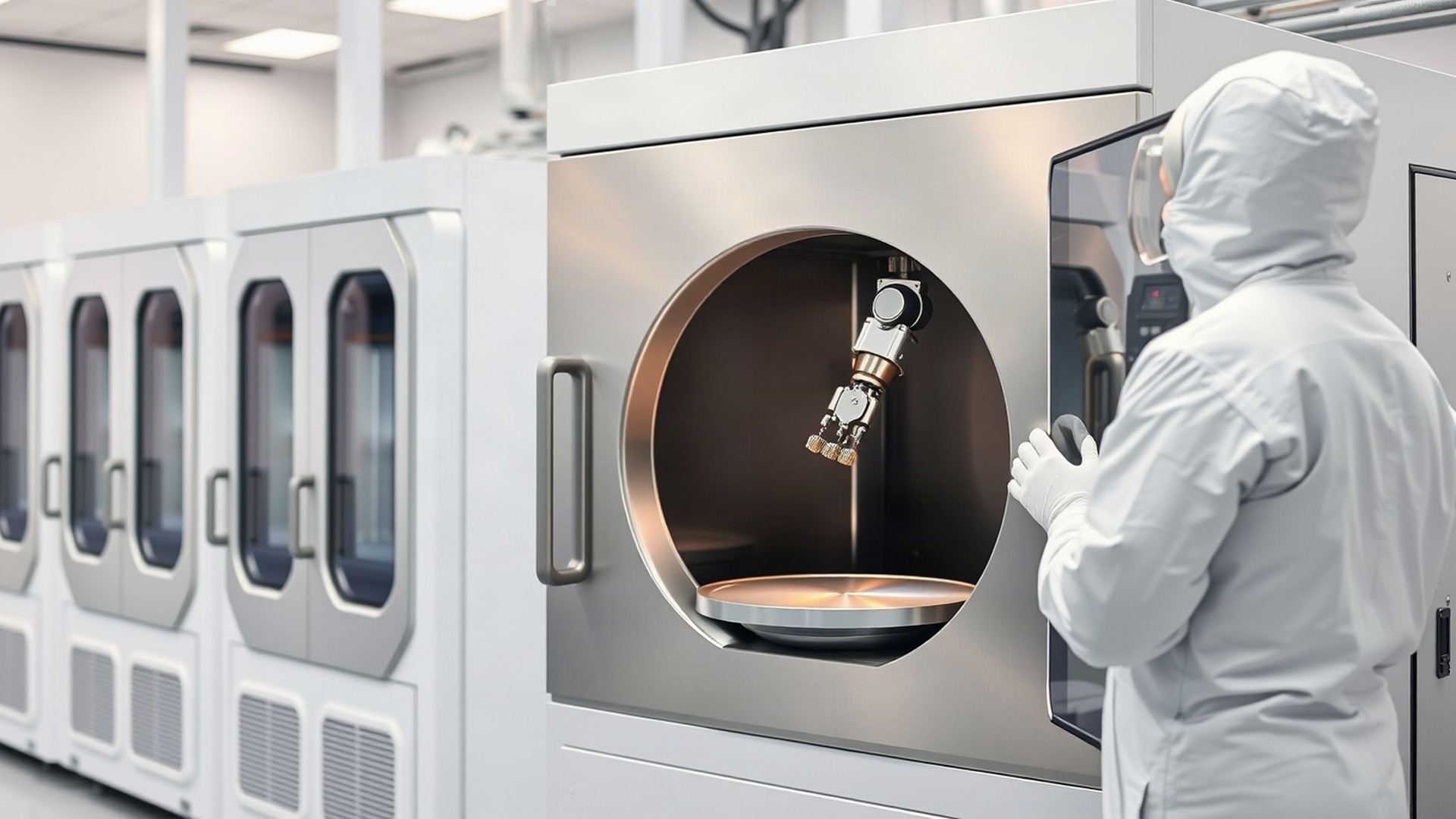
The company builds robotic landers that ferry scientific payloads to the Moon for NASA. Over the past year, though, it has transformed into an industrial contractor that builds satellite buses for national security and commercial constellations.
The shift in identity resembles buying a gym membership to instantly feel athletic. Think of the lunar lander as the sports car parked out front to catch your eye. The real economic engine is the satellite factory running double shifts out back to pay the bills.
In January, the company closed its $853 million acquisition of Lanteris Space Systems. That purchase bought an operating manufacturing floor, and it turned a speculative space venture into an active defense supplier.
The headline development is that quarterly revenue surged more than fivefold, lifting the stock roughly 15% in morning trade. Total revenue reached $269.3 million, up from $52.4 million a year earlier.
Headline figures can mask the mechanics underneath, though. Strip away the newly acquired factory line and legacy lunar delivery services grew just 3.4%, while satellite hardware accounted for more than 99% of the expansion.
| Price LIVE | $12.18 |
| Market Cap | ~$2.8B |
| Forward P/E | N/M |
| Total Revenue (TTM) | $707.0M |
| 52-Week Low | $7.78 |
| 52-Week High | $46.75 |
| Analyst Consensus | Strong Buy (10 analysts) |
| Analyst Target Mean | $27.11 |
The mechanism powering that burst is factory absorption. When an assembly line produces satellite frames at volume, fixed plant overhead spreads across more units. Gross margin climbed to 26% from roughly 11% a year ago. That throughput pushed adjusted EBITDA to positive $8.3 million, the company's first quarter of positive adjusted EBITDA.
Management also acknowledged that unquantified one-time contract adjustments boosted those margins. That leaves underlying unit profitability open to question.
The quality of reported earnings demands a careful look. Intuitive Machines reported a narrow net loss of $3.4 million, but a $30 million non-cash warrant adjustment rescued that result. Operating loss was $34.2 million.
Quarterly operating cash flow reached $66.2 million, yet that liquidity came from working capital swings and upfront customer deposits rather than cash earnings. Across the first nine months of the year, free cash flow remains firmly negative at $112.3 million.
Winning government prestige is also distinct from owning the customer relationship. NASA recently named Intuitive Machines one of eight eligible vendors for its $10 billion CLPS 2 ceiling, but eligibility is a ticket to compete rather than guaranteed revenue.
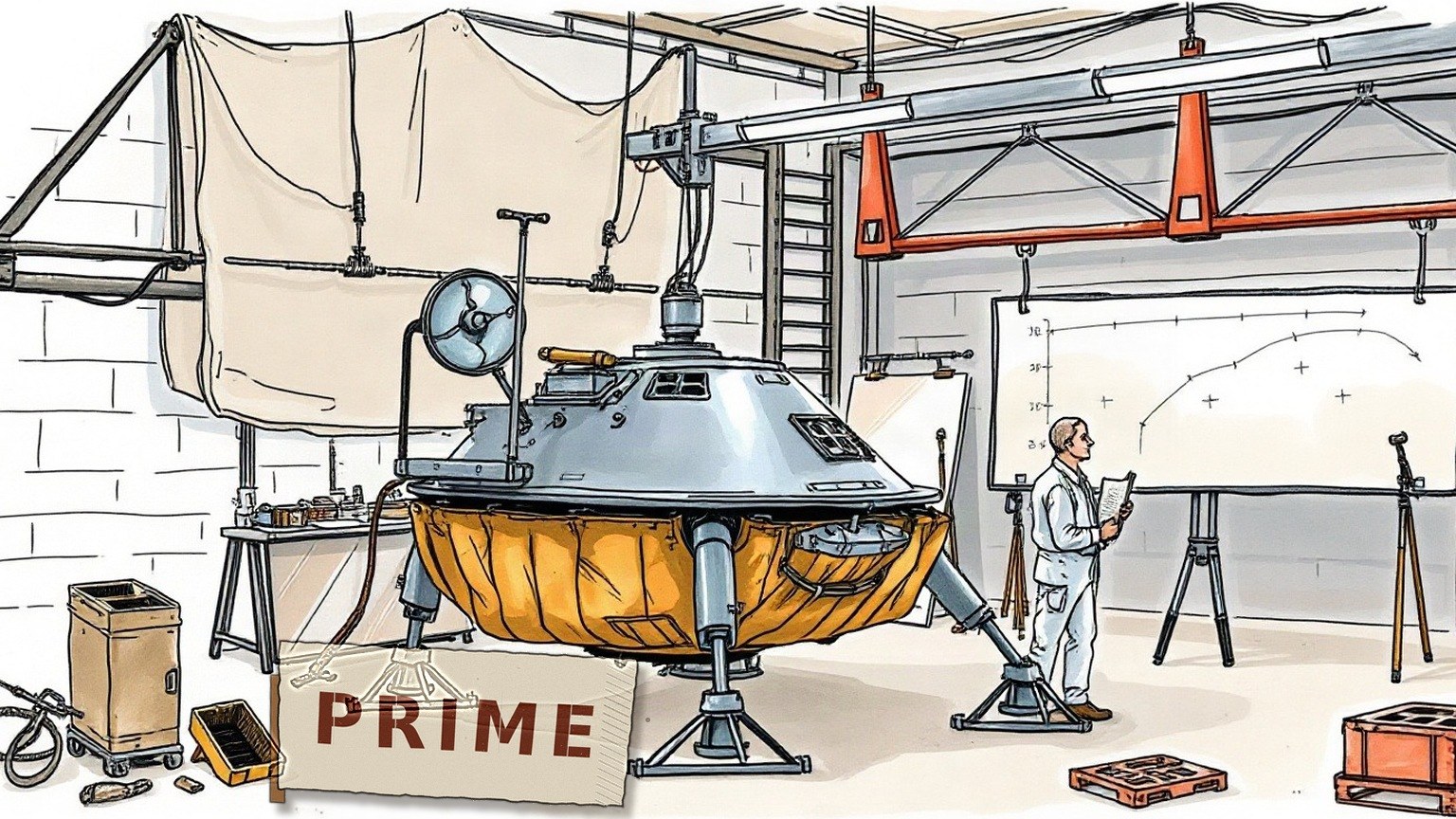
In national security, the company builds its AMDT3 missile-defense spacecraft as a subcontractor for L3Harris rather than holding the prime award. That reinforces heavy customer concentration: four clients generated 84% of revenue earlier this year.
The short case is that Intuitive Machines paid to import growth, and the market is now valuing that revenue twice. Growth was imported, not earned. It acquired Lanteris at roughly 1.35 times sales, yet the consolidated entity trades near three times forward revenue for the same production capacity.
Backlog additions slowed to just $105 million this quarter, after project descopings erased nearly $95 million of contracted work. Share count is up 40% year over year, a $500 million equity program is active, and in-the-money converts threaten further dilution. Any delay in defense deliveries would compress the valuation quickly.
For the equity to re-rate from here, investors need evidence that satellite production margins can endure without one-time accounting credits. The market has treated the company like an agile, high-multiple aerospace pioneer. Hardware manufacturing earns a durable multiple only when assembly lines reach predictable, repeatable unit economics.
Full-year positive adjusted EBITDA is an essential threshold, but guidance implies a fourth quarter that is roughly flat sequentially. Until production runs show steady, cash-generative compounding, the market will hesitate to pay a premium prime-contractor multiple.
What we are watching is the targeted March launch window for the IM-3 lunar mission. That window also carries the deployment of the company's first Altus-1 lunar data satellite, the first operational test of its orbital communications network. If those spacecraft hit their marks, they validate the company's commercial data ambitions and prove its flight hardware works as advertised.
Execution on the launchpad will validate the brand, but factory throughput determines the stock.
Disclosure: The Signal holds no position in LUNR. Positions may change. This is not financial advice.