Most people still think of HIVE Digital Technologies (NASDAQ: $HIVE) as a crypto mining stock that never recovered from 2022. They're not entirely wrong about the past — but the story today is completely different, and most of the market is still catching up.
| contractValue | $220M |
| annualRecurringRevenue | $70M |
| gpuCount | 2,304 |
| gpuType | NVIDIA Grace Blackwell GB200 NVL72 |
| paraguayCapacity | 300 MW |
| swedenCapacity | 32 MW |
| torontoCapacity | 320 MW |
| goLive | Late 2026 — Early 2027 |
Based in Vancouver, Canada, HIVE started life as HIVE Blockchain Technologies — a pure-play Bitcoin miner riding the 2017 and 2021 crypto booms alongside peers like Riot Platforms and Marathon Digital. When the 2022 crypto winter hit, it got crushed like everyone else.
But management realized something fundamental: the same GPUs that mine crypto can train AI models. And the same hydro-powered data centers that keep mining electricity costs near-zero are perfect for the energy-hungry AI workloads the entire world is now scrambling to run.
So they rebranded. HIVE Blockchain → HIVE Digital Technologies. And they started a methodical pivot most investors have completely slept on.
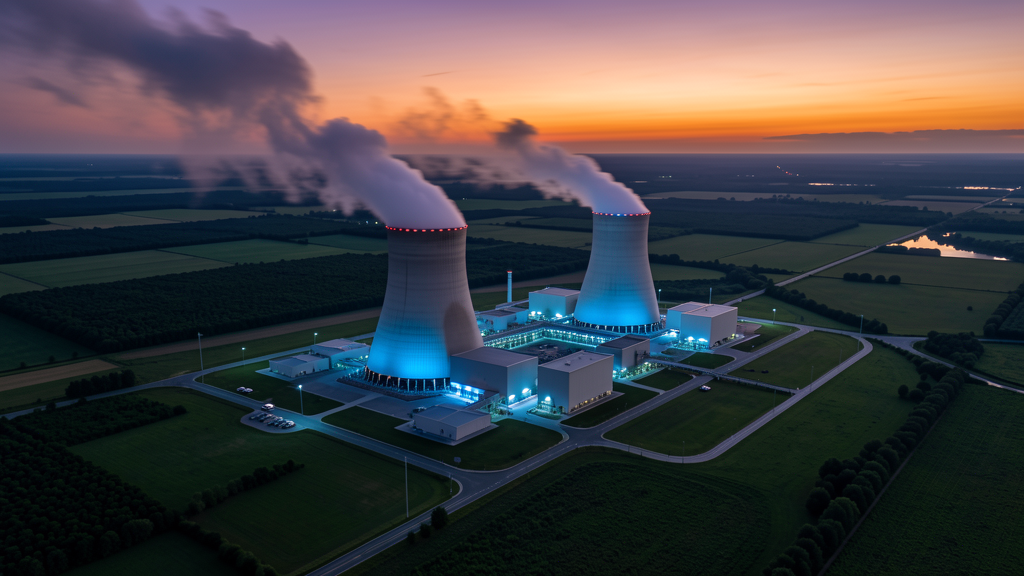
Today HIVE operates Nvidia GPU clusters across four countries: Canada, Paraguay, Sweden, and Iceland. Their crown jewel is Paraguay — 300 megawatts of hydro-powered infrastructure with another 100 MW under development — giving them access to some of the cheapest renewable energy on the planet.
The $220 Million Contract That Changes Everything
The headline announcement that sent the stock soaring: a roughly $220 million, three-year GPU cloud contract secured by HIVE's wholly owned subsidiary BUZZ HPC, in partnership with Bell Canada and enterprise AI firm Cohere Inc. — one of Canada's leading AI foundation model companies.
The specifics are substantial: 2,304 NVIDIA Grace Blackwell GPUs configured as GB200 NVL72 rack-scale systems, deployed at Bell's data center in Merritt, British Columbia, expected to go live between late 2026 and early 2027. The deal is expected to generate roughly $70 million in annual recurring revenue for HIVE.
It's a "sovereign AI" deal — meaning Canadian AI workloads and data stay in Canada, on Canadian infrastructure. The partners give the contract institutional weight: Bell (telecom giant), Cohere (founded by former Google Brain researchers), and Hypertec (hardware and cloud solutions).
For context, HIVE's estimated Q1 2026 revenue is roughly $83 million. Adding $70 million in annualized revenue from a single contract is transformative — it validates that HIVE has successfully repositioned itself as a legitimate AI cloud player, not just a miner with extra GPUs sitting around.
Boden, Sweden — From Tenant to Owner
Separately, the Boden Municipal Council in northern Sweden approved HIVE's acquisition of the Big Boden 32 MW data center — a facility the company has operated as a tenant since 2018. HIVE plans to upgrade it to Tier III standards to support next-generation AI and HPC workloads.
This turns an eight-year operating relationship into a balance-sheet asset — a small but symbolic step that shows HIVE is moving from renting compute to owning infrastructure. Sweden's cold climate and green energy grid make it an ideal location for HPC, and HIVE now has a permanent foothold there.
Columbia University Validation at NeurIPS
Also moving the stock this week: researchers from Columbia University validated HIVE's Paraguay GPU cluster in a study submitted to NeurIPS — the world's premier AI research conference, held every December.
The researchers trained neural networks remotely on HIVE's Paraguay infrastructure, studying ways to make large language models more efficient. The key finding: HIVE's Nvidia A40 GPUs delivered performance comparable to newer systems for certain LLM efficiency workloads.
Being accepted into a NeurIPS publication is a major credibility stamp for a company that started as a crypto miner. It signals that top-tier academics found HIVE's infrastructure production-grade enough for publishable research — not merely adequate, but comparable to cutting-edge alternatives for the workloads that matter most.
The Toronto AI Gigafactory
Earlier this year, HIVE announced plans for a 320-megawatt AI facility in Toronto that could eventually support more than 100,000 GPUs — positioning it as one of the largest dedicated AI compute sites in North America.
The Bottom Line
The pieces are coming together: a 2,304 Grace Blackwell GPU contract with Bell and Cohere providing real recurring revenue visibility, the Boden data center adding owned infrastructure in a strategic Nordic market, academic validation from Columbia and NeurIPS, and the Toronto gigafactory as a long-term growth anchor.
The bear case: AI infrastructure is brutally capital-intensive, competition from established players like CoreWeave and Lambda is fierce, and HIVE's legacy Bitcoin mining operations still introduce earnings volatility. The stock's historic 52-week range underscores the high-volatility nature of the name.
The bull case: they've built a moat in cheap hydro energy that hyperscalers can't easily replicate, they now have institution-grade academic validation, and they're winning anchor contracts from blue-chip Canadian enterprises. The "sovereign AI" angle — keeping data within national borders — is a growing concern for governments worldwide, and HIVE is positioned to capitalize on it.
Most investors still see HIVE as a zombie crypto stock. That gap between perception and reality is exactly what makes the story interesting.