Eaton just delivered the cleanest operational quarter in its century-long run, raised its full-year guidance for the third time, and watched the market immediately stage a violent reversal. Shares popped roughly 7% on the print, only to drop nearly 10% the following session on nearly twice normal trading volume. The company did not miss a number or lose an analyst upgrade. Instead, its equity ran straight into an election result in Austin.
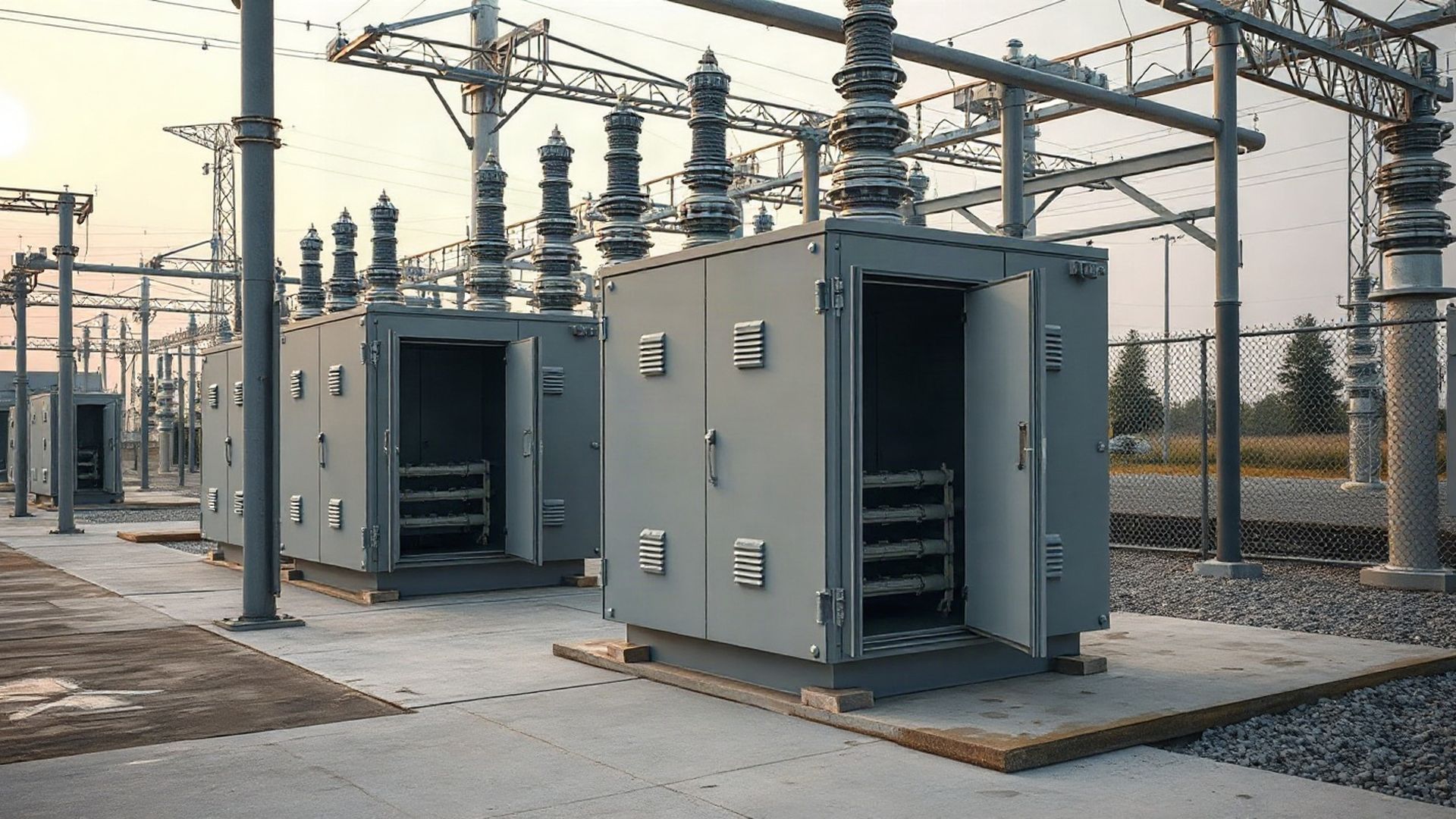
Strip away the trading noise and Eaton’s core business is delightfully straightforward. If an AI cluster is a high-performance engine, Eaton builds the transmission, the radiator, and the heavy-gauge wiring harness keeping the entire rig from torching the garage. The company manufactures the industrial electrical plumbing between a high-voltage utility line and a server rack: switchgear, transformers, circuit breakers, power distribution units. It also owns the liquid-cooling hardware that came with Boyd Thermal. When a cloud giant orders hundreds of megawatts to train models, someone has to physically deliver, step down, and protect that current. Eaton sells that gear to the builders.
| Price | $353.08 |
| Market Cap | ~$137B |
| Forward P/E | 21.6× (FY27 est.) |
| Total Revenue (TTM) | $32.0B |
| 52-Week Low | $311.92 |
| 52-Week High | $478.00 |
| Analyst Consensus | Buy (26 analysts) |
| Analyst Target Mean | $482.47 |
That role as the physical tollbooth of the AI buildout showed up across the third-quarter numbers. Net sales climbed 28% year over year to $8.95 billion, powered by 19% organic growth and record segment margins of 25.3%. Data center sales grew 65% across the company, matching the prior quarter's pace and marking the ninth consecutive quarter above 35% growth. More importantly, the backlog expanded to a record $20.37 billion in the electrical divisions alone, with Electrical Americas booking more than $5 billion in fresh orders during the quarter. Management said on the earnings call that demand keeps running ahead of what the company can convert. Eaton tracks roughly 366 gigawatts of announced data center projects against an installed base of just 50 gigawatts.
Then came election night, when Texas voters elected Democrat Gina Hinojosa to the governor's mansion. The state was already operating under an administrative pause on new grid connections. Hinojosa campaigned on an explicit moratorium on new data center approvals until the legislature passes stricter community protections. That turned a temporary bureaucratic review into an open-ended regulatory bottleneck. Texas accounts for an estimated 27% of all planned data center capacity in the United States. Analysts estimate that roughly 13 gigawatts of planned capacity are immediately exposed, threatening to push unpermitted projects out by 12 to 18 months.
The resulting sell-off was an exercise in pure sector rotation. Big tech hyperscalers held their ground, while the hardware and power builders across the board caught double-digit beatings. European competitors saw a mixed reaction—Siemens gained while Schneider Electric and ABB slipped modestly—but domestic grid names took the direct hit. Investors abruptly stopped valuing Eaton’s bulging order book and started pricing the risk that those orders cannot be plugged in.
Eaton is not standing still while politicians debate power allocations. The company is deep into a $500 million manufacturing push across the United States. Eighteen of its 25 expansion projects are already finished, and a new medium-voltage switchgear plant in Nebraska opens early next year. Management announced general price increases taking effect in January, confident that its lead times give it pricing power over frantic contractors. It is also spinning off its legacy vehicle mobility unit into a merger with Dana, shedding roughly $3.3 billion of lower-margin revenue to mechanically lift the corporate growth rate.
A short seller, however, looks at this exact setup and sees an unhedged cyclical peak. A book-to-bill ratio above one can signal desperate customer demand, but it can also signal an overbooked reservation system. Eaton’s own regulatory filings warn that open backlog orders are not binding commitments. When data center permits become political footballs, developers pad their queues just to hold a spot in line. Meanwhile, everyone is rushing new capacity into the market at the same time, from GE Vernova’s multi-billion-dollar grid acquisitions to massive plant investments across the equipment sector. When supply catches up, lead times collapse, annual price hikes evaporate, and a 25% operating margin quickly looks unsustainable.
Add more than $19 billion in net debt and a pause on share buybacks. The Americas margin already dipped under wage and commodity pressure. That leaves the equity with no margin of safety if the order book pauses.
For the stock to push back toward its prior highs, Eaton has to prove that its backlog is made of steel rather than speculative paper. Roughly 72% of the company's total backlog is scheduled for delivery over the next twelve months, meaning immediate revenue is essentially locked in. The multiple compression happening today reflects fear about the pipeline after that delivery window closes.
Watch the fourth-quarter print and the implementation of the January price hikes: Electrical Americas book-to-bill needs to hold above 1.0 while Texas decides whether it is open for business. If orders stay sticky, the political panic will look like an overreaction to an inevitable grid buildout.
Disclosure: The Signal holds no position in ETN. Positions may change. This is not financial advice.