Everyone's watching the chipmakers. Nvidia, AMD, Broadcom — they get the headlines, the analyst upgrades, the conference stage time. But none of those GPUs turn on without electricity. And one company has quietly positioned itself as the only player on earth that can deliver power from the utility grid all the way down to the individual chip rack.
That company is Eaton Corporation. And it might be the most durable monopoly you've never heard of.
$22.8 billion in backlog. Electrical Americas orders accelerating at 42% organically. Data center revenue growing 50% year-over-year. And margins expanding for five straight years — now north of 30% in their core power business. This isn't a cyclical upswing. This is structural.
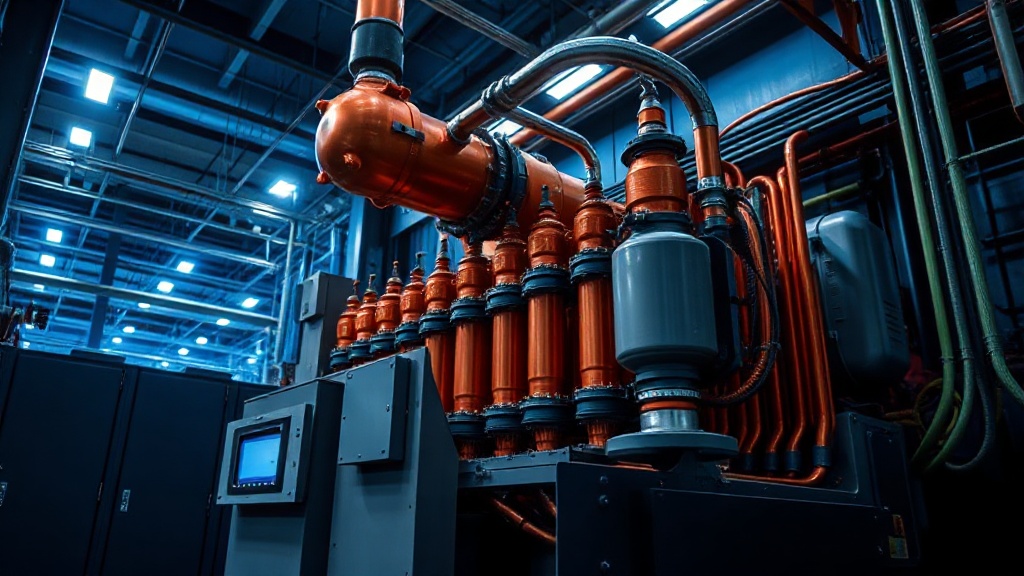
Here's what makes Eaton different from every other industrial company on the market: they own the entire chain. Utility switchgear. Transformers. Uninterruptible power supplies. Power distribution units. Busways. Liquid cooling, ever since they acquired Boyd Thermal earlier this year. No other company on the planet covers that full spectrum. Schneider Electric comes close on software. ABB has width but lacks depth. Vertiv is niche. Eaton is the only one who can walk onto a hyperscaler's site and say "we'll handle everything from the street to the server."
And the hyperscalers are listening. Microsoft, Amazon, Google, Meta — each one is building data centers at a pace that would have been unimaginable three years ago. Every single megawatt of capacity needs Eaton equipment. After the Boyd acquisition, Eaton's wallet share per data center jumped from roughly $2.9 million per megawatt to $3.4 million. They're not just selling more units — they're selling deeper into each facility.
The backlog numbers tell you everything you need to know about demand durability. Electrical Americas backlog grew 44% year-over-year in Q1. Electrical Global backlog jumped 73%. And 68% of that $22.8 billion is targeted for delivery within the next twelve months. This isn't speculative pipeline — these are contracted, signed commitments that Eaton has to manufacture and install.
The moat rests on five structural pillars that competitors literally cannot replicate. First, the installed base. Once Eaton equipment is specified into a building or data center design, it stays there for decades. Switching vendors means re-certification, re-engineering, and downtime that critical infrastructure operators simply won't accept. That lock-in is why Electrical Americas runs 30% operating margins — you don't negotiate price when you can't switch suppliers.
Second, regulatory barriers. UL certifications, NEC compliance, FAA qualifications in their aerospace business — these take years to obtain and create artificial scarcity in the qualified supplier pool. Third, the distributor network. Eaton has spent a century building relationships with Graybar, WESCO, and Rexel across North America. You can't download a distribution channel. Chinese competitors are locked out of the US market not by tariffs but by the sheer impossibility of building these relationships from scratch.
Fourth is the grid-to-chip coverage itself. Even if a competitor wanted to match Eaton's breadth, they'd need decades and tens of billions in M&A to replicate it. Fifth: brand. In critical infrastructure, engineers specify Eaton because it's been the safe choice since 1911. Bussmann fuses. Crouse-Hinds connectors. Cooper power tools. These are generational brands in the electrical trades.
The financial architecture backs all of this up. Revenue grew from $20.8 billion in 2022 to $27.4 billion in 2025 — that's nearly $7 billion in incremental top-line in three years. Free cash flow hit a record $3.6 billion last fiscal year. Return on invested capital sits around 16%, well above the cost of capital. Management raised organic growth guidance from 8% to 10% at the midpoint, and they're spinning off the automotive mobility division in early 2027 to become a pure-play power management company with 26%+ margins.
The one thing that gives pause is valuation. At a trailing P/E around 39 and a forward P/E of 25, Eaton is priced like a tech company, not an industrial. Debt-to-equity at 110% runs elevated — though debt-to-EBITDA has compressed from 3.1x to 1.7x, and cash conversion exceeds 100%. The premium is rational if you believe data center power demand is a multi-decade structural shift. If you think the AI buildout slows in 2027-2028, you're paying too much.
But here's the thing: even if AI capex moderates, the underlying electrical grid modernization cycle doesn't stop. The US power grid needs trillions in upgrades regardless of what happens with GPU orders. Renewable energy integration, EV charging infrastructure, grid resiliency after extreme weather events — all of these are Eaton businesses. The data center supercycle is the accelerant, not the foundation.
Wall Street consensus sits at BUY with a mean target around $456 and a high of $534. At the current price, you're paying for a company that has done everything right operationally while the market slowly catches up to what makes its moat structurally unassailable.
You can debate chip companies, cloud margins, and software valuations all day. But the atoms still have to move. And nobody on earth moves atoms through electrical infrastructure quite like Eaton.
Disclosure: The Signal holds no position in ETN. Positions may change. This is not financial advice.