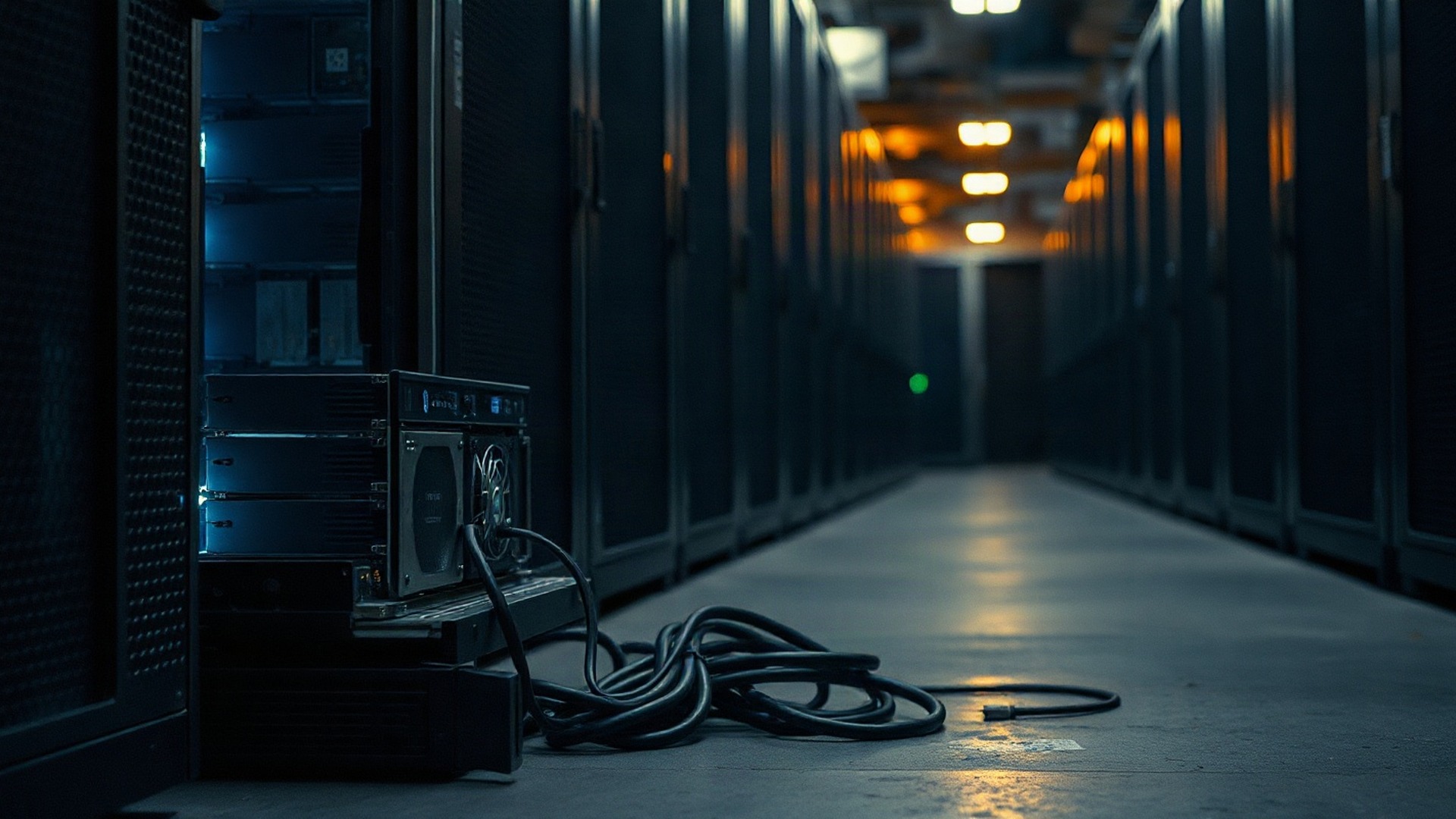
Everyone photographs the chips. You have seen Nvidia’s glowing silicon across your social feeds, but nobody posts an Instagram reel of an enterprise networking switch. Yet if a hundred thousand graphics processors cannot whisper to each other with zero lag, an artificial intelligence cluster is just a warehouse full of expensive space heaters. That digital plumbing is Cisco Systems’ home turf, and it explains why a forty-year-old networking stalwart suddenly finds itself in the middle of the AI buildout.
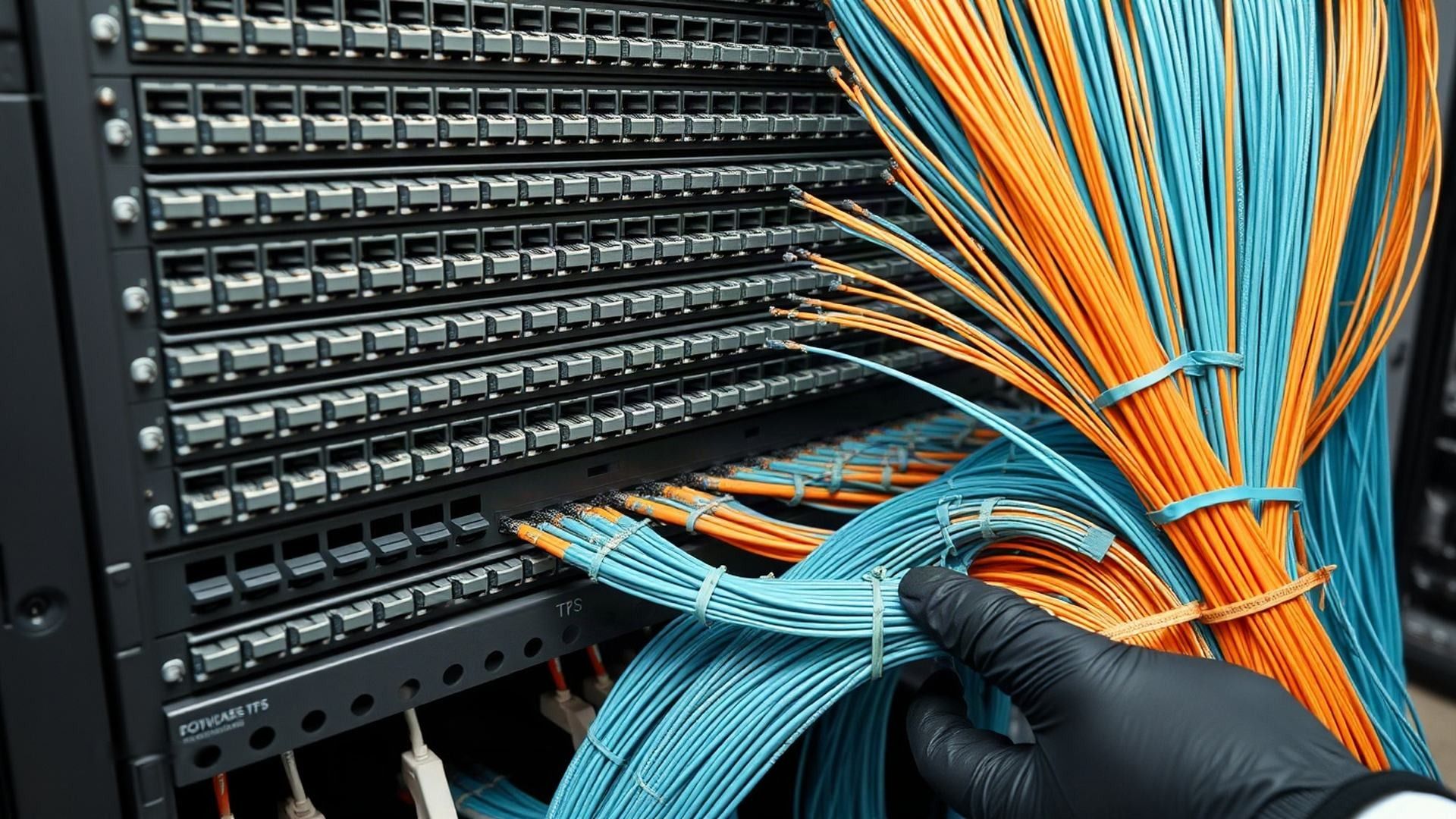
Cisco builds the routers, switches, and optical gear that move data between computers. If a company runs an office, a university campus, or a server room, Cisco almost certainly sold them the gray boxes on the rack. For the past decade, the company layered high-margin software subscriptions and maintenance contracts on top of that gear. Now, as the world’s largest cloud providers spend fortunes wiring up new data centers, Cisco is selling the high-speed Ethernet pipes required to keep those GPUs fed with data.
| Price LIVE | $102.01 |
| Market Cap | $402B |
| Forward P/E | 18.1x |
| Total Revenue (TTM) | $67.0B |
| 52-Week Low | $72.80 |
| 52-Week High | $130.37 |
| Analyst Consensus | Buy (24 analysts) |
| Analyst Target Mean | $135.79 |
On paper, the strategy is working. Cisco just delivered its fastest revenue growth in fifteen years, raising its fiscal 2027 target for AI infrastructure revenue to nine billion dollars—more than double what it booked in fiscal 2026. Networking sales alone surged 43%. Yet tucked inside that victory lap is an awkward confession: the AI revenue Cisco is celebrating carries far worse margins than the traditional business it replaces.
Think of Cisco as a premium car dealership whose fastest-growing line of business is changing tires at cost. Non-GAAP product gross margin dropped 350 basis points over the past year to 63.7%. Across nearly fifteen billion dollars of quarterly product sales, that decline represents roughly $513 million in gross profit that vanished compared to what identical sales generated a year ago. Management chalks the drop up to a higher hardware mix and rising component costs, which is corporate shorthand for an uncomfortable reality: selling metal boxes is a tougher business than renewing software licenses.
To understand why Cisco’s margins are eroding, you have to look at what actually sits inside an AI order. Cisco sells two distinct components into these clusters. The first is Silicon One, its proprietary switching chips where the company captures high-value engineering markups. The second is optical transceivers—the lasers and glass cables that link servers together.
Optics are largely pass-through hardware, bought from component suppliers and bolted onto the chassis. In Cisco’s order books, four out of every ten AI dollars are these pass-through optics. The company is driving massive top-line volume, but nearly half of it is low-margin resale work.
Nor does Cisco enjoy the luxury of setting market prices. In the race for high-speed Ethernet AI back-end switching—the most critical tier of data center networking—industry tracker Dell’Oro Group ranks Cisco fourth. It trails an outsourced electronics manufacturer in Celestica, a chip vendor in Nvidia, and a pure-play networking rival in Arista. Cisco gained market share faster than anyone last quarter, but gaining ground from fourth place rarely gives you pricing power. You take the contracts you can win, even if the gross margin has to absorb the discount.
That margin bleed explains why the stock refuses to re-rate. When the earnings report landed, shares surged nearly 7% in after-hours trading, only to surrender almost the entire gain within forty-five minutes as analysts dug into the profitability line. For the equity to break out from its current valuation, Cisco does not just need to stack up more hyperscaler revenue. It has to prove that its AI business can defend its profit margins. That requires Silicon One systems expanding well beyond sixty percent of the AI order mix, pass-through optics shrinking, and product gross margin carving out a durable floor in the mid-sixties. Until that happens, the market will treat Cisco as a commoditized hardware vendor riding an infrastructure cycle rather than an indispensable platform layer.
The short seller’s case is that Cisco’s AI boom relies on a dangerous customer concentration. A tiny circle of cloud giants accounts for the sudden order surge, and those orders are notoriously lumpy and booked well ahead of deployment. When four hyperscalers drive your growth, a minor architecture shift or capital pause leaves a gaping hole in quarterly guidance. Tellingly, management quietly dropped its annual AI order targets, removing the forward-looking metric bulls relied on to track momentum. If product gross margins slide another two hundred basis points while hyperscalers pause their lumpy procurement, Cisco is left carrying all the manufacturing risk of the hardware cycle with none of the pricing leverage.
What we are watching over the next two quarters is whether product gross margin can stabilize above sixty-four percent while AI shipments ramp. Winning an infrastructure contract is easy when you underwrite the discount; keeping the profit is where the moat lives.
Disclosure: The Signal holds no position in CSCO. Positions may change. This is not financial advice.