Landlords don't sign the next tenant a decade before the first one moves in. Cipher Digital did exactly that on Sept. 25, and the market's shrug tells you what is really for sale at Barber Lake. It isn't computer space. It's a credit instrument with a substation attached.
| Price LIVE | $17.73 |
| Market Cap | $7.4B |
| Forward P/E | 134.5 |
| Total Revenue (TTM) | $191.1M |
| 52-Week Low | $11.01 |
| 52-Week High | $30.14 |
| Analyst Consensus | Strong Buy (22 analysts) |
| Analyst Target Mean | $30.93 |
Cipher Digital is a landlord. It owns fenced land already wired into the Texas grid and rents it by the megawatt to companies that fill it with AI computers. The tenants bring the GPUs and the customers: Fluidstack, an unnamed 'leading AI lab' and, at another site, Amazon.
Think of it the way a bank thinks about a mortgage. The building is the collateral, but the tenant's credit is what you are really lending against. In AI, the building is a power site, and the credit is a lease.
Cipher has spent two years proving it can be that landlord. Its Wink site, leased to an investment-grade hyperscaler for 15 years at roughly $5.5 billion, came online two months early in August — with rent already flowing.
Here is why that makes Cipher interesting. The binding constraint on AI is no longer chips. It is energized land with a fence around it and a slot in the interconnection queue.
The companies that own those slots happen to be former bitcoin miners, and Cipher holds roughly 4.4 gigawatts of development pipeline inside a portfolio that spans about 11 sites. When a hyperscaler needs power next year, the shortlist is not long.
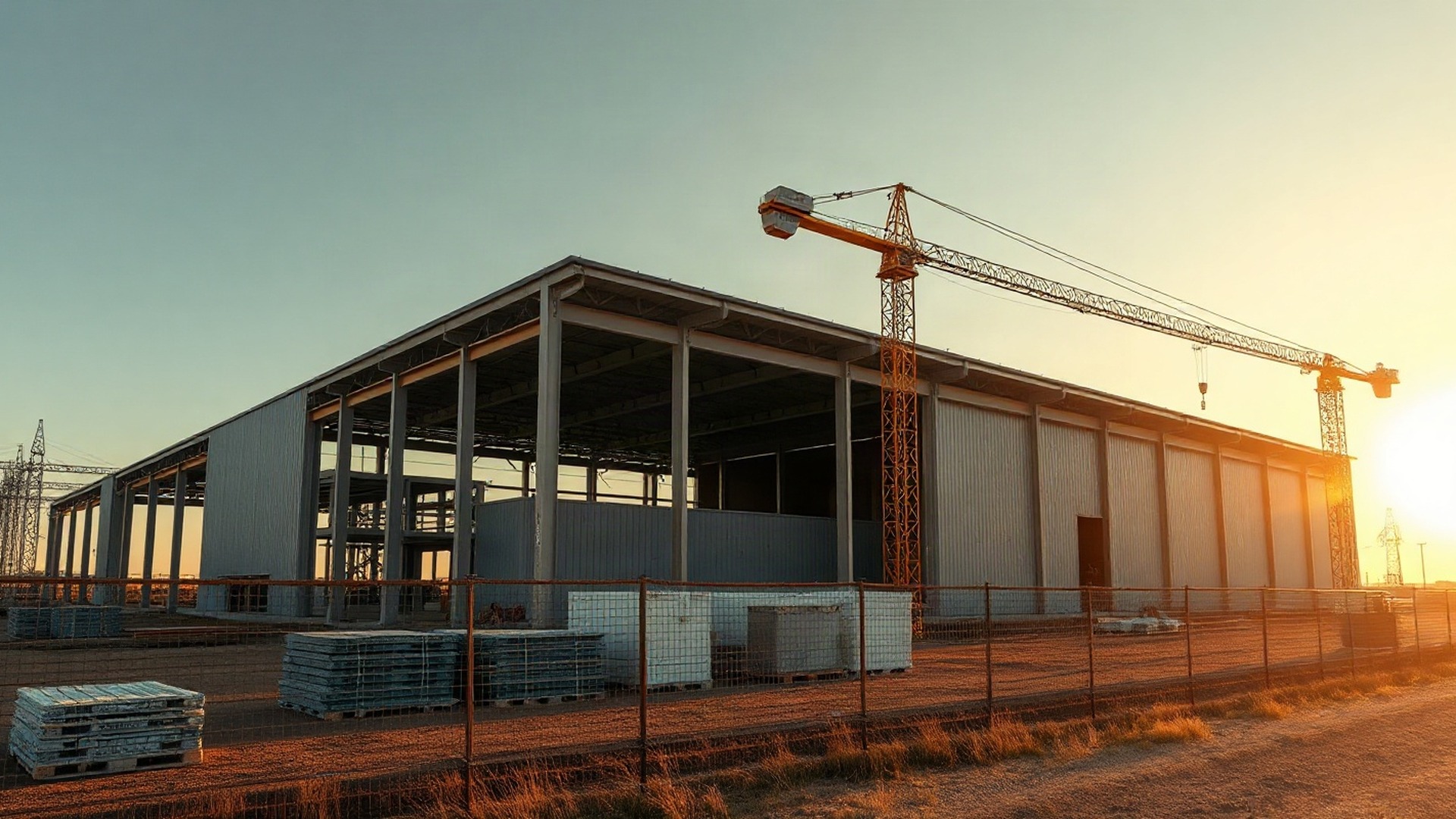
Now the deal itself. Barber Lake sits on 587 acres near Colorado City, Texas, with 168 megawatts of critical IT load and room for roughly 500 more. Cipher pushed its contracted life from 10 years to 20.
The extra decade comes from a second tenant, an unnamed 'leading AI lab,' on a lease that starts only after the first one ends. That signature added about $5.2 billion of contracted revenue, lifting the campus total from $3.8 billion to more than $9 billion.
Chief executive Tyler Page framed it plainly. The extension reflects 'the enduring value of the infrastructure we're building,' and a campus whose 'long-term utility and strategic relevance' stretches across two decades.
Here is the part that makes this a credit story rather than a rent story. Cipher eats the first $359.3 million of construction overruns above the lease's initial budget. The tenant reimburses half of anything beyond that, spread over 20 years as extra rent.
That $359.3 million is roughly 64 percent of the company's $562 million of book equity, which makes the landlord the first loss piece. Data halls deliver in phases from the fourth quarter into early next year, and rent starts per hall as each one comes online.
The market's reaction is the tell. On the news the stock popped about 2.7 percent at the open and ran up 3.3 percent, then gave it all back and closed the session lower. Buyers wanted more than a press release; they wanted a name they could credit-check.
Analysts remain firmly onside, with a strong buy consensus across 22 analysts. But the equity is being valued as a landlord while the rent has not started. The market is paying roughly 38 times trailing revenue for cash flows that have not begun. The re-rate needs rent to start and capex to roll off into free cash flow.
Watch two things now. Rent commencement is expected in the fourth quarter, and the next quarterly print, due around Nov. 2, is where the delivery schedule gets tested.
Now the bear case, and it is not a hedge. The second tenant has no name, no disclosed cancellation terms and no credit backstop — even the first lease came with Google warrants attached. That second lease's rent does not arrive until roughly the late 2030s, so a decade of interest bills come first.
Delivery already slipped from September. The balance sheet carries about $6.0 billion of debt, most of it non-recourse at the project level, against $562 million of equity, and unrestricted cash of $832 million is roughly a quarter of the recent burn. Mining revenue has fallen for four straight quarters, from about $72 million to $25 million, and the zero-coupon converts sit in the money. The equity is the shock absorber.
The triggers to watch are specific. Rent slipping past the fourth quarter, an overrun through the $359.3 million bucket, or another lease with no named, creditworthy tenant. Any one of those turns a signed lease from an asset into a liability.
Disclosure: The Signal holds no position in CIFR. Positions may change. This is not financial advice.