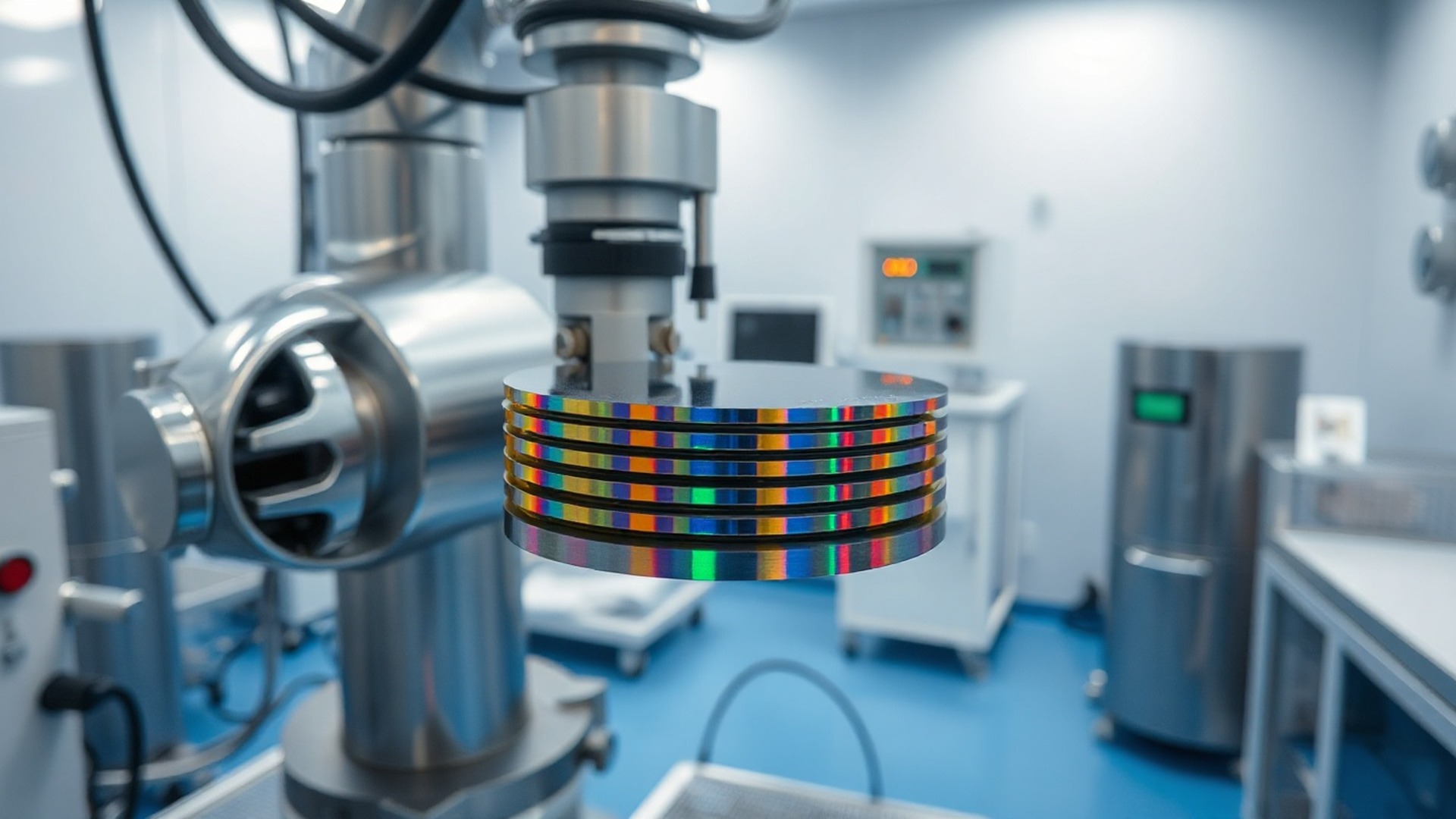
The biggest bottleneck in the AI race is not just finding enough clean power or booking space at a silicon foundry. It is drawing the blueprints. Before a fabricator can stamp billions of transistors onto a slice of silicon, engineers must lay out, simulate, and verify every microscopic wire. Cadence Design Systems sells the software, the pre-built circuit blocks, and the refrigerator-sized emulation computers required to do that job.
If an advanced chip is a microscopic metropolis, Cadence is the architectural software and the municipal building code rolled into one. Alongside Synopsys, Cadence operates an airtight duopoly over electronic design automation. Switching vendors is almost unheard of because foundries certify tools node by node, and engineering teams build their careers around proprietary scripts. Every custom AI chip built by Big Tech, every smartphone processor, and every networking switch pays a toll here first. Design wins compound too, because a chip team that has spent years tuning its scripts, libraries and signoff recipes to one vendor's flow has very little reason to start over on a brand-new node with unfamiliar tools.
| Price | $322.17 LIVE |
| Market Cap | $95.8B |
| Forward P/E | 32.9x |
| Total Revenue (TTM) | $6.13B |
| 52-Week Low | $262.75 |
| 52-Week High | $416.69 |
| Analyst Consensus | Strong Buy (25 analysts) |
| Analyst Target Mean | $409.89 |
Now the complexity of artificial intelligence is straining human capacity, and Cadence is betting that autonomous software agents will break the logjam. In October, the company unveiled Maestro, a portfolio of domain-specific models designed to run its tools without constant human babysitting. These proprietary models power specialized bots like ChipStack and AuraStack, using reinforcement learning to optimize chip floorplans. The pitch is precision. Cadence claims its specialized models deliver up to 30% higher quality and five times better token efficiency than generic frontier chatbots.
Early production numbers validate the concept. MediaTek used ChipStack in digital verification to boost test coverage by up to 70% while cutting engineering effort in half. Nokia credited AuraStack with a fivefold acceleration in workflow, and Renesas saw microcontroller productivity jump 34-fold. While rival Synopsys partnered directly with OpenAI on a revenue-share model, Cadence is keeping its models in-house. Whoever owns the agent that navigates the design flow will capture the next wave of pricing power.
Yet underneath that technical triumph sits an awkward financial reality. Cadence delivered its third guidance raise of the year, lifting expected revenue to roughly $6.40 billion for fiscal 2026. Backlog reached an all-time peak of $8.2 billion, with $4.2 billion slated to convert over the next twelve months. Revenue surged 22% in the third quarter to $1.633 billion. But GAAP operating margin collapsed from 31.8% to 26.2%, leaving GAAP earnings completely flat at $1.05 per share.
The divergence highlights a subtle shift in the business model. Software subscriptions generate steady, predictable cash, which makes recurring revenue the lifeblood of software valuations. But while total revenue grew 22%, recurring revenue expanded by only 18%, shrinking from 82% to 79% of the mix. The fastest growth came from System Design & Analysis and record shipments of emulation hardware. Cadence is selling plenty of physical gear. Its highest-quality revenue stream is lagging the headline figure.
That tension is precisely what matters to the stock. The shares trade at roughly 33 times forward earnings, a premium multiple that requires pristine fundamentals. To justify that price, Cadence cannot just sell hardware; it must prove that autonomous agents drive recurring software consumption rather than one-off design projects. If customers pay higher subscription rates for agent seats, the valuation holds. If agents simply accelerate project completion while margins remain depressed, the multiple faces real downward pressure.
The short seller’s case is straightforward. Profit quality is eroding while the headline numbers look deceptively clean. GAAP operating margins fell nearly six points, and even non-GAAP margins slipped 3.5 points despite robust revenue growth. The CFO acknowledged that the recently acquired Hexagon business contributes virtually zero operating profit this year, diluting historical incremental margins below their normal 55% threshold. Meanwhile, Maestro is an early-access experiment that contributes nothing to fiscal 2026 guidance. More than 100 customer engagements do not equal booked software revenue.
Synopsys is already roughly 1.5 times Cadence’s size and backed by OpenAI’s commercial reach, creating serious platform risk. China is still 16% of revenue, and export controls are an explicit assumption inside guidance. A stalled bottom line leaves no margin for error.
What we are watching is the fourth-quarter recurring revenue run-rate and the February guidance for fiscal 2027. If recurring revenue growth matches total sales growth and non-GAAP margins stabilize above 44%, the growth story remains intact. An AI model can draft a complex circuit in seconds, but someone still has to sign the building permit. Cadence owns the code, but it still has to prove the agents can expand its bottom line.
Disclosure: The Signal holds no position in CDNS. Positions may change. This is not financial advice.